 Retro Replay Retro Gaming History, Reviews & Emulation


Retro Replay Review
Gameplay
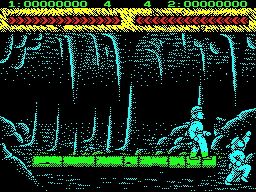
Shanghai Karate opens with a clean, immediate contest: one fighter, one opponent, and an edge that can end a life in a hurry. Each combatant starts with four lives, so you are not merely protecting a health bar. You are constantly watching your footing, trying to turn a successful exchange into a shove toward the side of the screen. That makes even a short match feel more tense than its simple setup suggests.
The control scheme has real ambition. Eight directions combined with the fire button produce 16 moves, including punches, kicks, sweeps, and blocks, so there is room to experiment instead of mashing the same attack. The fun begins when you stop treating it as a race to throw strikes and start thinking about distance: when to block, when a sweep might upset an opponent’s position, and when to press forward for the ring-out.
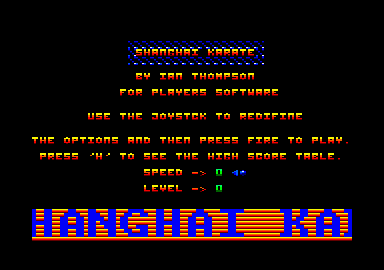
Its limits arrive quickly. The main journey is only four one-on-one fights, and every level is selectable from the start, which removes much of the sense of building toward a difficult climb. That is handy for practice, but it also makes Shanghai Karate feel more like a set of individual challenges than a sustained campaign. The dedicated practice mode is therefore valuable rather than disposable; spend time there before judging the moves too harshly.
Two-player matches on the Great Wall are the strongest reason to revisit it. Against another person, the edge pressure and the four-life format create a brisk contest in which each lost life matters. Solo, the game is a short martial-arts detour. With a rival beside you, its compact rules have more bite.

Graphics
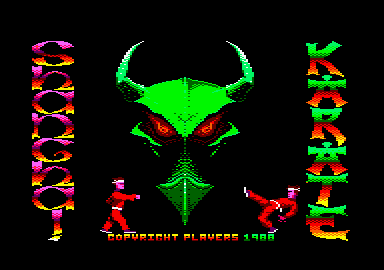
The action is shown from the side, with bouts staged at Chinese landmarks including the Great Wall, the Yangtze River, the Loyang caves, and the Dragon temple. The changing backdrops give the four fights distinct stops on Yo Lin’s route to Shanghai rather than leaving every duel in the same anonymous arena.
Story
The setup is classic revenge fare: Wang Chen destroys the Changchun Academy, Yo Lin survives with its sacred scrolls, and the journey ends with a confrontation against the man responsible. It is direct, suitably martial-arts melodramatic, and gives the series of duels a clear purpose.
What works is the economy. You understand why Yo Lin is fighting and why Wang Chen’s warriors keep coming after him without the game needing to linger over exposition. The sacred scrolls provide a simple stake beyond revenge, while the route from Changchun to Shanghai gives the landmark stages a loose sense of travel.
Do not expect the story to carry the experience on its own. This is a frame for four fights, not an elaborate tale with room for the cast to develop. The final Dragon temple confrontation is the natural payoff, and the story does enough to make reaching it feel like more than ticking off a last stage.
Overall Experience
Shanghai Karate is a small, focused fighting game whose best idea is making the edge of the arena as dangerous as your opponent’s attacks. It does not need a long ladder of combatants to make that rule interesting; the constant threat of losing one of four lives to a badly timed retreat gives its duels useful urgency.
The trade-off is brevity. Four selectable levels and a single opponent in each mean you can see the whole solo structure quickly, and the game asks its move set and positional combat to supply the replay value. If you enjoy old-school fighters where practice, blocking, and spacing matter, that may be enough. If you need a lengthy campaign or a broad roster, it will feel slight.
Give it a chance for the local two-player option and for the satisfaction of learning how to control space near an edge. Go in expecting a compact Spectrum or Amstrad martial-arts contest, not a sprawling fighting game, and Shanghai Karate can be an entertainingly scrappy one.


Reviews
There are no reviews yet.