 Retro Replay Retro Replay gaming reviews, news, emulation, geek stuff and more!




Retro Replay Review
Gameplay
Viaje al centro de la tierra delivers a varied and engaging gameplay experience across its three distinct sections. The opening jigsaw puzzle challenges players to assemble a torn map from a first-person perspective under a strict time limit. This sequence tests both observational skills and composure, as pieces must be rotated and aligned quickly or risk restarting the level.
(HEY YOU!! We hope you enjoy! We try not to run ads. So basically, this is a very expensive hobby running this site. Please consider joining us for updates, forums, and more. Network w/ us to make some cash or friends while retro gaming, and you can win some free retro games for posting. Okay, carry on 👍)
In the second section, the game shifts to a side-view platformer with three interchangeable characters. Each adventurer carries unique items and abilities, demanding strategic swaps to overcome environmental hazards such as geysers, cascading waterfalls, and subterranean chasms. Mastering their individual strengths becomes essential when confronting the lake monster that lurks in the depths.
The final segment retains the side-view format but places players on one of three divergent ascent routes back to the surface. Each path presents its own perils—ferocious tigers, carnivorous plants, and treacherous quicksand—forcing careful planning and split-second reactions. Choosing the optimal route and using character-specific tools correctly are key to a successful escape.
Graphics
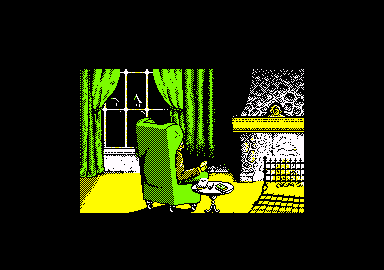
As an 8-bit release, Viaje al centro de la tierra embraces the era’s blocky charm rather than high-resolution fidelity. Character sprites are clearly defined, with distinguishable costumes and props that help players quickly identify which adventurer they’re controlling. Environmental elements—like dripping stalactites and pool-rippling water—benefit from simple yet effective animation loops.
The color palette is vivid without being garish, leaning into earthy browns and muted volcanic reds that evoke the subterranean setting. Transitions between levels and puzzle interfaces are clean, and the occasional parallax scrolling in platform sections adds depth to backgrounds of rocky tunnels and twisting caverns.
While modern gamers accustomed to pixel-perfect art may find the visuals rudimentary, the nostalgic aesthetic holds its own. The deliberate design choices highlight important gameplay elements—such as dangerous ledges or interactive puzzle pieces—ensuring that style never gets in the way of substance.
Story
Based on Jules Verne’s classic novel Journey to the Centre of the Earth, this Spanish adaptation captures the spirit of adventure and scientific curiosity. The narrative is conveyed through brief in-game text and chapter introductions, which succinctly summarize each character’s motivations as they descend into the planet’s core.
While the storyline doesn’t delve deeply into philosophical musings or detailed dialogue, it provides enough context to make each challenge feel meaningful. The map puzzle represents the initial expedition’s planning phase, the platforming stages symbolize the physical journey through uncharted terrain, and the escape routes reflect the characters’ desire to return home safely.
Fans of Verne’s work will appreciate the nods to classic tropes—mysterious underground creatures, natural hazards turned obstacles, and the triumph of human ingenuity over nature’s extremes. The game doesn’t attempt to retell the entire novel but instead offers a distilled, action-oriented take on the source material.
Overall Experience
Viaje al centro de la tierra stands out as an inventive 8-bit title that combines puzzle solving, cooperative character mechanics, and branching platform challenges. Its pacing is well-judged: the time-pressured map sequence wakes you up, the multi-actor platforming sustains interest, and the final choice of ascent routes adds replay value.
Players seeking a retro gaming experience with varied gameplay styles will find much to enjoy here. The difficulty curve is fair—puzzles demand quick thinking, platform sections reward memorization and timing, and the branching paths encourage multiple playthroughs to discover every secret and hazard.
Though modest in presentation by today’s standards, Viaje al centro de la tierra delivers a satisfying adventure that honors its literary roots while carving out its own identity. For enthusiasts of classic game design and Jules Verne adaptations, this title offers a compelling subterranean journey well worth embarking upon.



Reviews
There are no reviews yet.