 Retro Replay Retro Replay gaming reviews, news, emulation, geek stuff and more!

Retro Replay Review
Gameplay
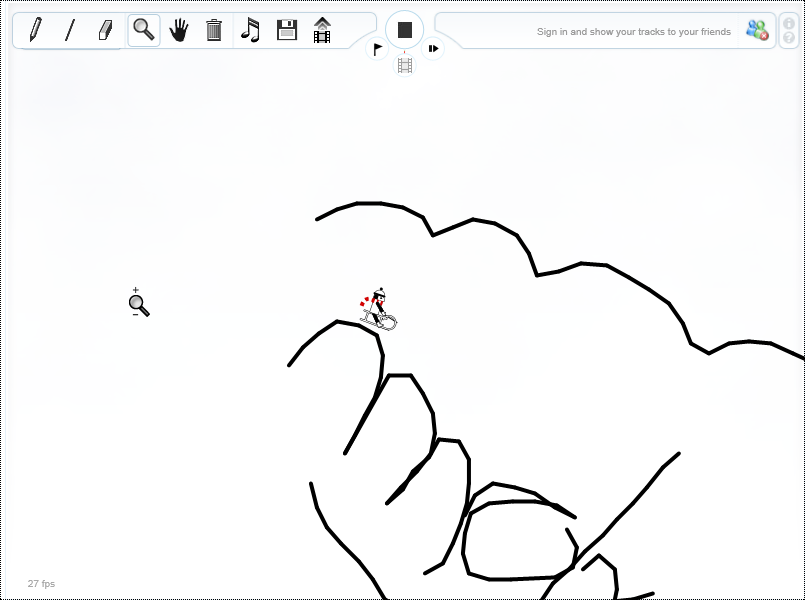
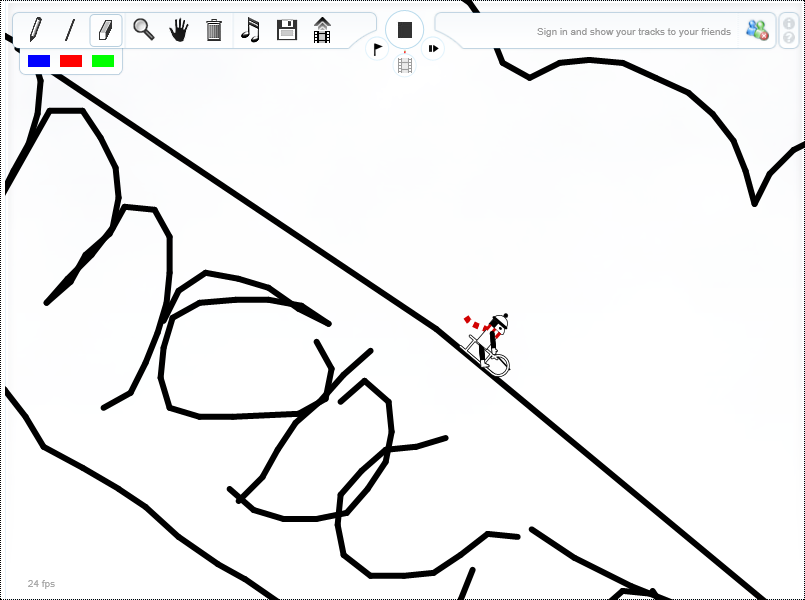
Line Rider places you in the driver’s seat of creativity and physics, tasking you with drawing the very track that Bosh the penguin will sled upon. Using three distinct line types—solid track lines, intangible scenery lines, and velocity-boosting lines—you sculpt a 2D slope that obeys simulated gravity down to the finest detail. Every curve, incline, and loop you sketch directly influences Bosh’s speed, trajectory, and the thrills (or spills) he experiences.
(HEY YOU!! We hope you enjoy! We try not to run ads. So basically, this is a very expensive hobby running this site. Please consider joining us for updates, forums, and more. Network w/ us to make some cash or friends while retro gaming, and you can win some free retro games for posting. Okay, carry on 👍)
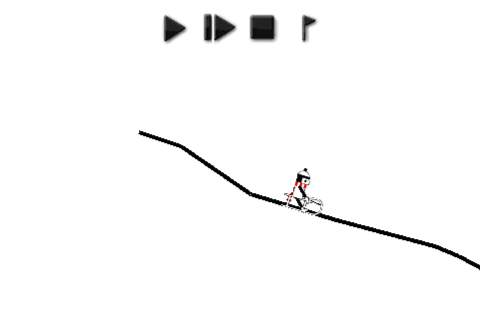
Once your track is drawn, you simply press play and watch the magic unfold. Cheer as Bosh careens at breakneck speeds, his little scarf flapping wildly, or hold your breath when he launches into mid-air flips. Emergent moments of triumph—where a perfect ramp sends him soaring and landing gracefully—are counterbalanced by gut-wrenching tumbles when a misplaced bump sends him flying off his sled in ragdoll splendor.
Replayability is baked in. After a spectacular crash or a flawless ride, you can instantly clear the track to tinker with angles and slopes, or load a friend’s masterpiece to see how your drawing skills compare. The community aspect of sharing and downloading custom tracks keeps the sandbox fresh, as does the natural drive to refine tracks for smoother rides, higher speeds, or more daring stunts.
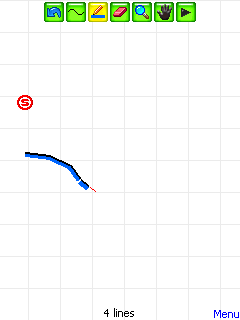
On mobile devices, the core line-drawing mechanics remain intact despite smaller screens. However, developers have sweetened the deal with destructible line segments that collapse beneath Bosh’s weight, customizable sled choices for added variety, and a multiplayer puzzle mode that challenges you and friends to construct the ultimate course. These extras serve as a charming prologue to the more robust Line Rider 2: Unbound experience without sacrificing the elegant simplicity of the original.
Graphics
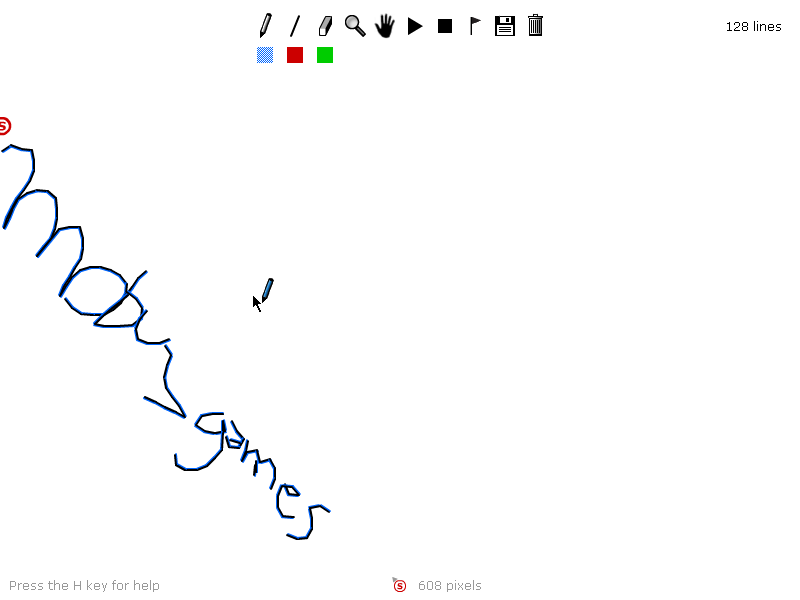
Visually, Line Rider embraces minimalism to superb effect. The game world is essentially a blank canvas interrupted only by the lines you draw. Solid rails appear in crisp black, while intangible scenery lines often fade into softer shades, ensuring that your focus remains on the sledding action. The overall aesthetic harkens back to a digital sketchbook come alive.
Bosh himself is delightfully pixelated, a small yet expressive figure whose scarf and toboggan provide just enough detail to convey momentum and impact. When he flips in mid-air, his silhouette against the clean background highlights the physics at play, turning every jump into a clear, readable visual spectacle. The simplicity allows for instant comprehension of speed and trajectory without visual clutter.
Backgrounds and scenery lines let you add flavor—trees, hills, or abstract shapes—without bogging down performance. Even on mobile devices, the frame rate remains solid, allowing smooth playback of repeated runs. While Line Rider is not a showcase for hi-res textures or fancy lighting, its stark, elegant design suits the gameplay perfectly, making every drawn line feel purposeful.
When compared to its successor, Line Rider 2: Unbound, the original’s graphics are deliberately understated. Yet this restraint is part of the charm: you aren’t distracted by over-the-top visuals, and the focus remains squarely on your creativity and the sandbox physics engine that underpins every slide.
Story
Line Rider doesn’t offer a traditional narrative—there’s no scripted storyline, cutscenes, or dialogue. Instead, the “story” emerges organically from your track designs. Each course you craft tells a unique tale of speed, risk, and triumph. The hero of this sandbox epic is Bosh, the intrepid penguin whose mission is simply to sled safely (or spectacularly crash) on every line you provide.
Your imagination fills in the blanks: is Bosh racing to rescue fellow penguins? Is he on a leisurely toboggan adventure through icy landscapes? Or are you pushing him to defy gravity on purpose-built stunt ramps? That freedom of interpretation becomes a form of storytelling, where each run’s outcome—whether victory lap or ragdoll disaster—is a chapter in an adventure of your own making.
On mobile, the added puzzle challenges bring a light narrative framework by setting specific track-building goals. You’re not just drawing aimlessly; you’re solving problems—design a track that breaks at the right moment, guide Bosh to collect an item, or build a slope that loops him back to the start. These bite-sized objectives give your creations context while preserving the open-ended spirit of the original.
Ultimately, Line Rider’s “story” is what you choose to draw. Its narrative potential lies in the interplay between your imagination, the physics engine, and Bosh’s adorable determination to latch back onto his sled. The result is a nontraditional, player-driven tale that can be as simple or as elaborate as you desire.
Overall Experience
At its core, Line Rider is a sandbox playground that marries the joy of doodling with the unpredictable thrills of a physics simulation. Whether you’re a casual player sketching a few gentle slopes or a die-hard tinkerer constructing the world’s most intricate stunt courses, the game adapts to your level of ambition. There’s something deeply satisfying about watching a hand-drawn line transform into a dynamic ride.
The learning curve is gentle but fosters endless experimentation. Beginners quickly grasp the basics: draw a hill, press play, and adjust. Advanced users dive deeper—crafting complex loops, calculating gravity-defying jumps, and even scripting subtle scenery lines to frame cinematic moments. The community aspect of sharing tracks adds a social layer, inviting you to both showcase your best runs and try out other creators’ wildest ideas.
On desktop browsers, it remains free and instantly accessible—no installation headaches. Mobile versions, though constrained by screen size, add worthwhile extras like destructible segments and multiplayer puzzles, ensuring that the core sandbox remains engaging on the go. And for those eager for more, Line Rider 2: Unbound awaits, expanding on the foundation with richer visuals and more advanced tools.
In the end, Line Rider is less a game with goals and more a digital toy that sparks creativity. The simplicity of its presentation, combined with a robust physics engine and user-driven content, makes it a timeless classic. For anyone intrigued by physics-based puzzles, hand-drawn creativity, or just the thrill of sending a penguin careening down a slope, Line Rider delivers a charming, endlessly replayable experience.



Reviews
There are no reviews yet.