 Retro Replay Retro Replay gaming reviews, news, emulation, geek stuff and more!


Retro Replay Review
Gameplay
Streets of Rage delivers an instantly accessible beat ’em up experience built around simple yet satisfying mechanics. With just three buttons—one to jump, one to attack, and one to call in a ranged police car strike—the core loop is easy to pick up but hard to master. Each of the three protagonists (Adam, Axel, and Blaze) brings a distinct play style to the table: Adam hits hard and jumps well, Axel moves quickly and deals powerful blows, and Blaze combines speed with a solid aerial game. This balance encourages replaying levels under different strategies.
(HEY YOU!! We hope you enjoy! We try not to run ads. So basically, this is a very expensive hobby running this site. Please consider joining us for updates, forums, and more. Network w/ us to make some cash or friends while retro gaming, and you can win some free retro games for posting. Okay, carry on 👍)
The level design itself is a classic side‐scrolling affair, where you move from left to right (with a couple of clever exceptions) while cleaning the streets of goons. Enemies appear in waves, each with their own attack patterns, pushing you to time your punches, kicks, and grapples with precision. The occasional “death drop” sections and elevator stages break up the monotony, forcing you to juggle spatial awareness with offense. Scattered weapons—knives, pipes, and even fried turkeys—add an extra layer of tactical choice to each skirmish.
Cooperative play is where Streets of Rage truly shines. Tag attacks, where one player rides on another’s shoulders before smashing down on foes, add a playful twist to teamwork. When you and a friend learn to combine your characters’ strengths—Axel’s speed for crowd control and Adam’s brute force for bosses—the game feels like a finely tuned action movie. Despite its simplicity, the depth of move sets and enemy variety keeps you coming back for “just one more” run.
Graphics
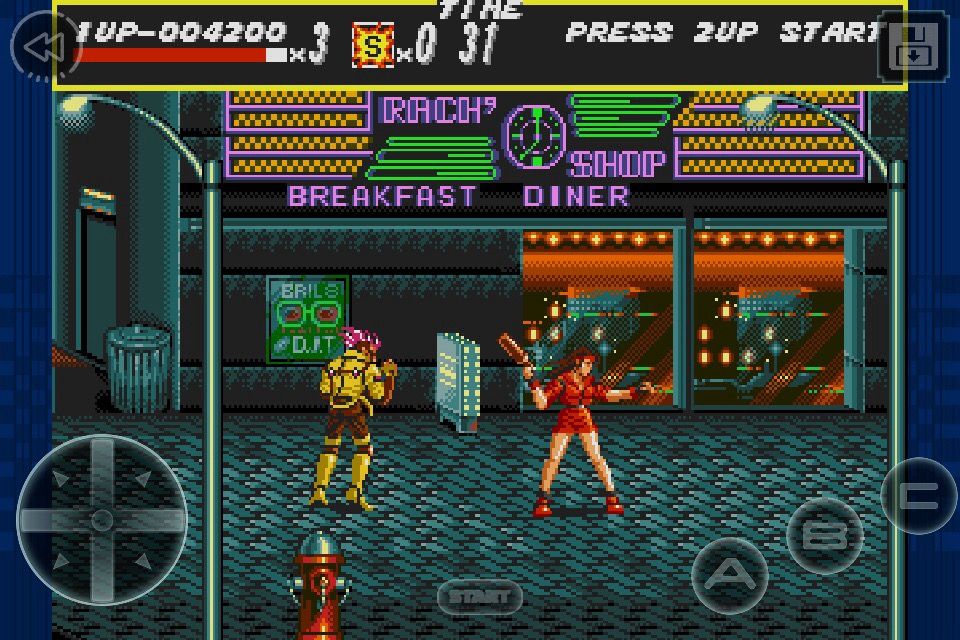
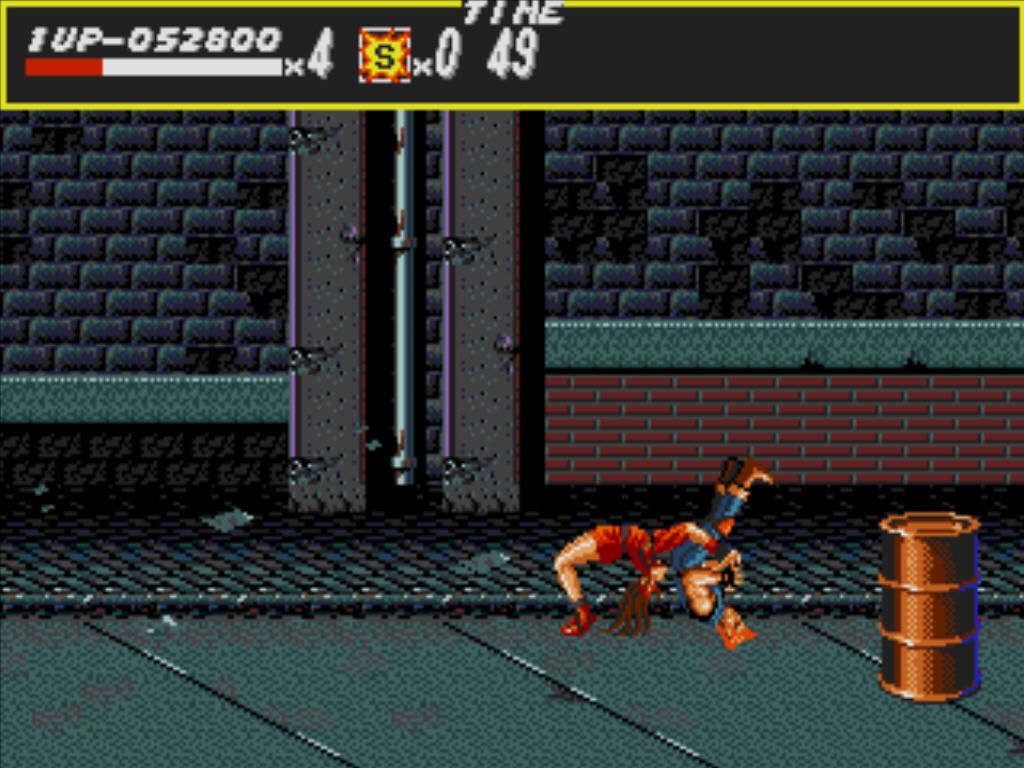
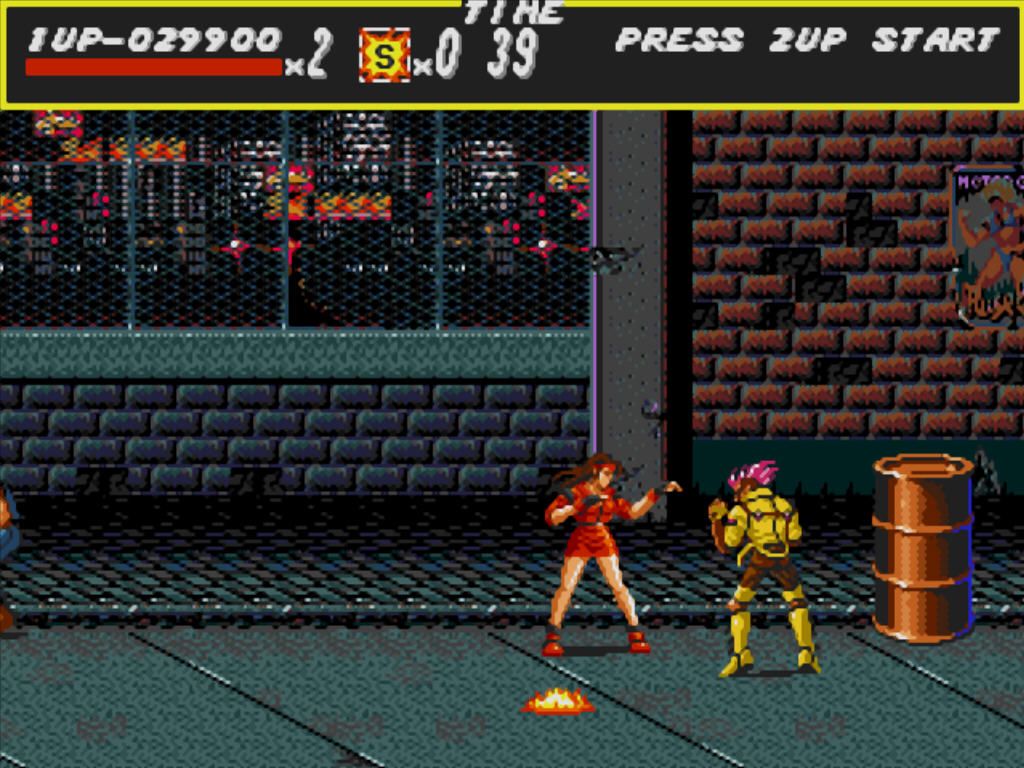
Streets of Rage harnesses the Sega Genesis’s 16-bit power to create colorful, detailed pixel art that still holds up decades later. Each character sprite is well-defined, with smooth animations that convey the weight of every punch and kick. Enemies range from hooded thugs to bizarre ninjas, each sporting their own distinct look and animated behaviors. The bosses, in particular, stand out with larger sprites and more elaborate attack sequences.
The stages themselves are richly textured, featuring grimy city streets, neon-lit back alleys, and even a high-rise elevator shaft. Background elements like flickering streetlamps or moving traffic add atmosphere without distracting from the on-screen action. Parallax scrolling layers underscore the sense of depth, making environments feel more alive than typical one-plane brawlers. Even trivial details—a steaming car engine or a distant police siren—contribute to the game’s gritty urban mood.
Technical performance is rock-solid, with a steady frame rate and minimal slowdown even when the screen is filled with enemies. Color palettes are vibrant without feeling garish, striking the right balance between realism and arcade flair. While later beat ’em ups would push the hardware further, Streets of Rage established a high bar for sprite work and environmental design that still resonates with pixel art enthusiasts today.
Story
The narrative in Streets of Rage is deliberately straightforward: three police officers—Adam Hunter, Axel Stone, and Blaze Fielding—quit the force to rescue their city from a crime syndicate ruled by the mysterious Mr. X. This simple setup mirrors 1980s action-movie tropes, giving players an immediate sense of purpose without bogging them down in cutscenes or dialogue trees. The tale unfolds mostly through title cards and brief in-game prompts, letting the fight sequences remain front and center.
While the story may lack twists or deep character arcs, it excels at setting the right tone for a gritty street brawl. Each hero’s profile hints at a backstory, whether it’s Adam’s strong sense of justice, Axel’s desire for fast-paced action, or Blaze’s blend of martial arts finesse. These archetypes provide enough flavor to make you care about your chosen fighter without interrupting the flow with heavy exposition. Mr. X, the unseen villain, looms large as the final adversary, making each stage feel like one step closer to reclaiming the city.
Interim boss battles and short cutscenes—such as rescuing hostages or stopping armored cars—create a loose narrative thread that ties levels together. This approach keeps momentum high, ensuring you’re never stuck watching text crawl across the screen. Although plot purists may crave more depth, the minimalist storytelling perfectly complements the arcade-style action, delivering a bang-for-your-buck storytelling experience.
Overall Experience
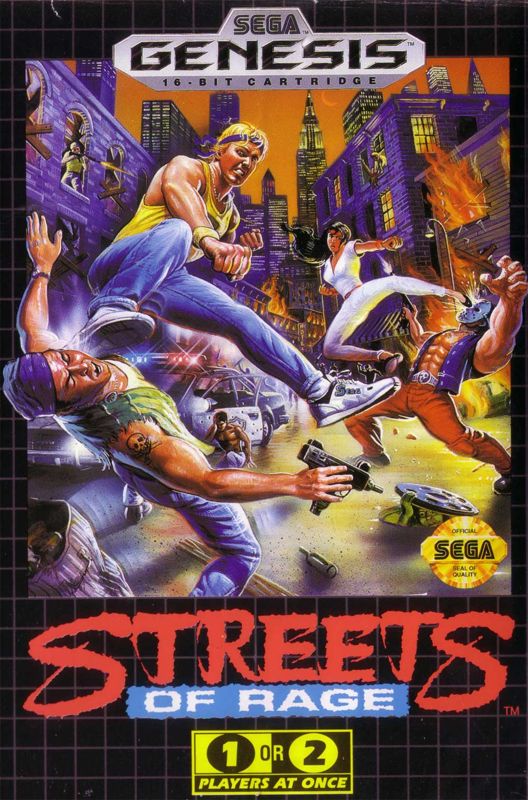
Streets of Rage remains a landmark in the beat ’em up genre thanks to its polished gameplay, memorable characters, and pulse-pounding soundtrack. Every element—controls, level design, sprite work, and co-op features—feels thoughtfully crafted to deliver maximum fun in short bursts or extended marathon sessions. Whether you’re a newcomer looking to explore retro gems or a veteran seeking nostalgia, this title offers immediate gratification and lasting appeal.
The soundtrack, composed by Yuzo Koshiro, deserves special mention for its blend of driving electronic beats and atmospheric tunes that match the city’s grimy vibe. Music transitions seamlessly between stages, ramping up tension during boss fights and loosening up in calmer interludes. It’s a masterclass in how audio can elevate action, making each punch feel more impactful and every enemy wave more urgent.
Replay value is high thanks to multiple difficulty settings, hidden attack routines, and the lure of perfecting your co-op synergy. Collecting in-game items and discovering secret bonus points encourages exploration, while the desire to outdo your previous high score adds a competitive edge. Ultimately, Streets of Rage delivers a timeless arcade experience that still stands tall among modern brawlers—proof that great design never goes out of style.


Reviews
There are no reviews yet.