 Retro Replay Retro Replay gaming reviews, news, emulation, geek stuff and more!




Retro Replay Review
Gameplay
The core gameplay of Tigershark revolves around piloting a revolutionary sub-hydrofoil prototype that seamlessly transitions between submerged ops and high-speed surface runs. Players must master dual control schemes: fine-tuned sonar evasion beneath the waves and agile hydrofoil thrust when skimming the ocean surface. This hybrid design injects constant variety into missions, ensuring you’re never stuck doing the same thing twice. Each mode feels distinct yet balanced, rewarding players comfortable with both underwater stealth and open-sea dogfights.
(HEY YOU!! We hope you enjoy! We try not to run ads. So basically, this is a very expensive hobby running this site. Please consider joining us for updates, forums, and more. Network w/ us to make some cash or friends while retro gaming, and you can win some free retro games for posting. Okay, carry on 👍)
Mission design strikes a solid balance between pure combat engagements and tactical objectives. You’ll be tasked with infiltrating heavily guarded thermal vents, escorting friendly subs through minefields, and engaging enemy patrols in vast, dynamic sea lanes. Escort missions in particular demand patience and situational awareness—protect your allies from depth charges and airstrikes while managing your own weapons systems. These scenarios reinforce the sense of being the only vessel capable of thwarting the Russian commander’s world-ending scheme.
Combat against enemy subs, hostile aircraft, and battle cruisers is both challenging and varied. Underwater, players rely on torpedoes, decoys, and silent running to overcome stealthy foes. Above water, the hydrofoil’s missile racks and rapid-fire guns come into play against fast jets and surface warships. The interplay between these modes adds a compelling layer of strategy: should you dive to evade an incoming missile, or stay topside and outgun your adversary? Such decisions keep the gameplay loop fresh from start to finish.
Progression feels rewarding thanks to incremental upgrades for the Tigershark. New hull plating, enhanced sonar arrays, and advanced torpedo types can be unlocked with mission success. This RPG-lite structure encourages replaying earlier assignments to bag additional resources, ensuring that by the time you reach the final missions, your subfoil is a truly formidable force. Overall, Tigershark’s gameplay shines in its ability to marry action, stealth, and tactical planning under one cohesive umbrella.
Graphics
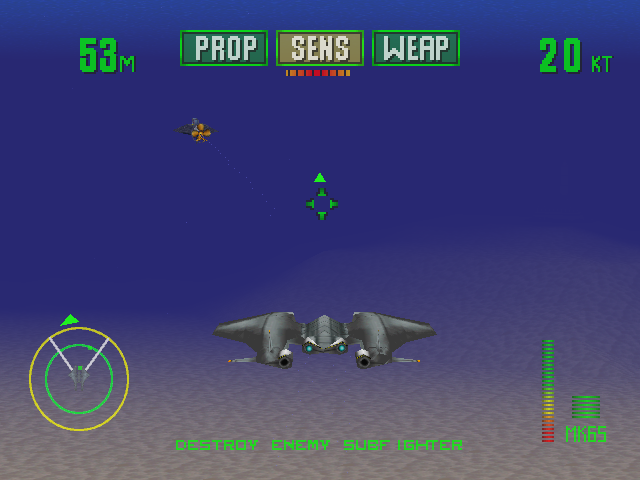
Tigershark sports impressively detailed environments that bring the ocean frontier of 2060 to life. Beneath the waves, you’ll appreciate the volumetric lighting and caustic water effects that dance over submarine hulls and undersea rock formations. Schools of fish and dynamic plant life add to the immersion, while pockets of geothermal steam venting from the ocean floor create visually striking battlegrounds for your underwater encounters.
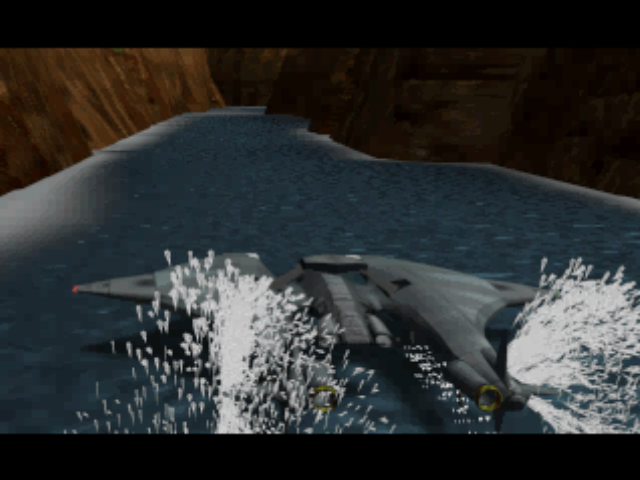
On the surface, the game excels with realistic water physics. Waves cascade against the hydrofoil’s hull, spray arcs into the air, and crashing seas can obscure your target if you’re not careful. The transition from submerged to surface mode is seamless, with water displacement and bubble trails rendered in real time. When the Tigershark bursts from the water at high speed, the sense of momentum and visual fidelity never falters.
Enemy units—ranging from Soviet subs to advanced fighter jets—feature sharp textures and convincing animations. Explosions are particularly satisfying, with dynamic debris, shockwave distortions, and fireballs that briefly illuminate the surrounding ocean. Even large battle cruisers showcase reflective metallic surfaces and complex rigging that remain crisp even during the most chaotic engagements. The visual variety across missions, from tropical archipelagos to frigid polar fronts, further underscores the game’s graphical ambition.
While the graphical performance is largely stable, occasional pop-ins can occur during rapid altitude changes or long-range views of enemy fleets. These minor hiccups don’t significantly detract from the experience but are worth noting for players on mid-range hardware. Overall, Tigershark’s visuals are a strong selling point that amplify the tension and scale of its high-stakes naval warfare.
Story
Set in the year 2060, Tigershark plunges players into a geopolitical crisis of apocalyptic proportions. A rogue Russian commander has devised a plan to sink the entire Pacific tectonic plate by installing massive underwater geothermal taps—threatening global seismic calamity. You, as the pilot of the Tigershark prototype, become humanity’s last line of defense against this doomsday gambit. The premise is direct and high-stakes, instantly conveying the urgency behind every mission.
The narrative unfolds through a series of briefings, in-game radio chatter, and cinematic cutscenes that tie each assignment back to the overarching threat. Characters are sketched in with enough personality to keep you invested: the wary commanding officer who believes you can end the crisis, the eccentric engineer who designed the Tigershark, and the shadowy Russian leader whose motives grow murkier as the story progresses. Though the dialogue occasionally veers into cliché, the brisk pacing ensures you’re never bogged down by exposition.
Mission variety also serves the story well, revealing new facets of the villain’s plan as you encounter data logs, encrypted transmissions, and environmental clues. You might stumble upon a decommissioned research station harboring proof of geothermal tampering, or intercept a high-priority target that sheds light on the commander’s next move. These discoveries deepen the plot without stalling the action, seamlessly integrating storytelling with gameplay.
While the overarching plot hits all the classic Cold War-meets-sci-fi beats, Tigershark distinguishes itself by maintaining serious stakes throughout. Your successes and failures have palpable consequences—for instance, botching an escort mission can lead to a critical intel loss that alters subsequent battle parameters. This branching impact injects genuine tension into what could have been a straightforward military thriller.
Overall Experience
Tigershark delivers a uniquely thrilling blend of submarine stealth, hydrofoil speed, and aerial combat that few games attempt—and even fewer execute this well. The seamless transitions between underwater and surface battles provide a constant sense of discovery, while the upgrade system offers meaningful progression. Whether you’re a veteran of naval simulators or a newcomer drawn in by its sci-fi premise, there’s plenty here to keep you engaged.
The technical presentation is strong, with stunning water effects, credible unit designs, and atmospheric audio that ranges from sonar pings to the roar of jet engines overhead. A rousing soundtrack and crisp voice acting further elevate the immersion, though minor performance dips on mid-tier rigs may require tweaking graphical settings. On high-end machines, however, Tigershark can look and sound spectacular.
From tense escort operations and large-scale fleet engagements to stealthy undersea incursions, the mission variety remains consistently high. The story stakes—global catastrophe averted only by your skillful piloting—provide ample motivation, and the characters you meet along the way add enough color to transform routine objectives into matters of personal investment.
In sum, Tigershark stands out as a daring hybrid combat sim that rewards both strategic thinking and split-second reflexes. If you’re seeking a fast-paced yet thoughtful naval action experience set against an epic sci-fi backdrop, this submarine-hydrofoil odyssey should be high on your purchase list.


Reviews
There are no reviews yet.