 Retro Replay Retro Gaming History, Reviews & Emulation
Retro Replay Review
Gameplay
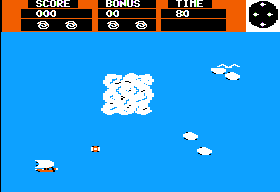
The first draw is simple and effective: you are steering the Dawn Treader into a voyage where the next hazard could be a storm, hurricane, or sea serpent. That trip-to-the-next-island structure gives the game a natural sense of forward motion. Even before the stranger land adventures begin, there is a pleasant tension in knowing that the sea itself can interfere with your progress.
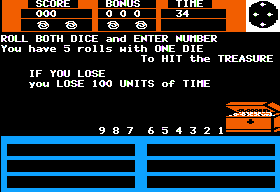
This is not a computer game that leaves the tabletop behind. The box included the novel, cards, and dice, and the sub-adventures use those physical pieces to determine whether you succeed. If you enjoy spreading a game’s components around the computer and treating a session like a small board-game night, that hybrid setup is the central novelty. The cards and dice make uncertainty tangible rather than merely hidden behind the machine.
That same reliance on chance can become frustrating if you want careful tactical control. You are navigating dangers and making your way through episodes, but success in the sub-adventures is tied to card-and-dice resolution. Go in wanting a light, luck-driven journey with Narnia flavor, not a deep naval strategy game or a richly simulated expedition.
Graphics
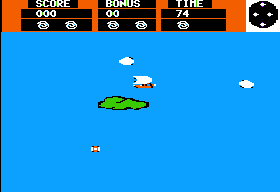
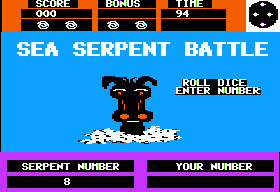
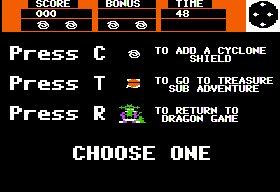
The game uses a top-down viewpoint, fitting its board-game approach and the idea of guiding a ship across the sea. Its Commodore 64 and Apple II origins place it firmly in the early home-computer era, where the physical cards, dice, and book are as much a part of the experience as the images on the monitor.
Story
Dawn Treader draws from C.S. Lewis’s third Narnia book and follows its voyage-shaped promise well: the sea carries you onward toward islands, hazards, odd encounters, and finally Aslan’s Country and the World’s End. It has a stronger destination than many board-game-style adventures, so each obstacle sits within a familiar larger pilgrimage.
The encounters are recognizably Narnian without needing a complicated plot apparatus. A dragon and invisible one-legged creatures are the sort of fantastical stops that make the route feel stranger as it continues. The game’s story works chiefly as a chain of adventure situations, rather than as a substitute for reading the novel.
Fans of The Voyage of the Dawn Treader will get the most from the license because they can supply the emotional weight of the journey themselves. For anyone new to the book, the voyage still gives the game a clear fantasy hook, but the episodic format matters more than character drama or detailed narrative development.
Overall Experience
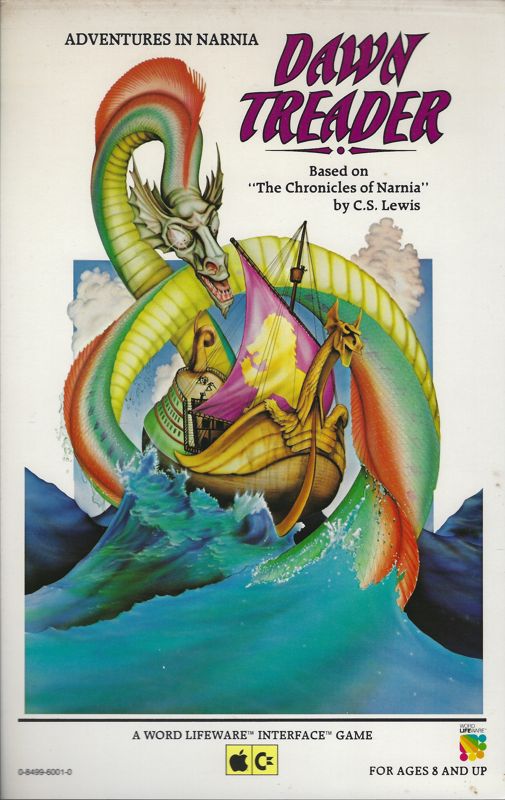
Adventures in Narnia: Dawn Treader is an unusual artifact from 1984: part computer game, part physical board game, and part companion to a fantasy novel. That combination is its reason to exist. The act of using dice and cards beside an Apple II or Commodore 64 is charmingly specific, and it gives the game a social, hands-on quality that many screen-only games lack.
The trade-off is that its strongest ideas are also limiting. The voyage offers danger and variety, yet the chance-based sub-adventures may leave you feeling more at the mercy of a roll than impressed by your own planning. That is fine for a short, relaxed session or a family-style game, but it lowers the replay pull for anyone craving mastery.
Give it a chance if you love early licensed curiosities, enjoy board games, or have affection for Lewis’s voyage story. Otherwise, its hybrid format and luck-heavy structure are likely to feel more interesting as a period experiment than as a game you will return to often.


Reviews
There are no reviews yet.