 Retro Replay Retro Replay gaming reviews, news, emulation, geek stuff and more!


Retro Replay Review
Gameplay
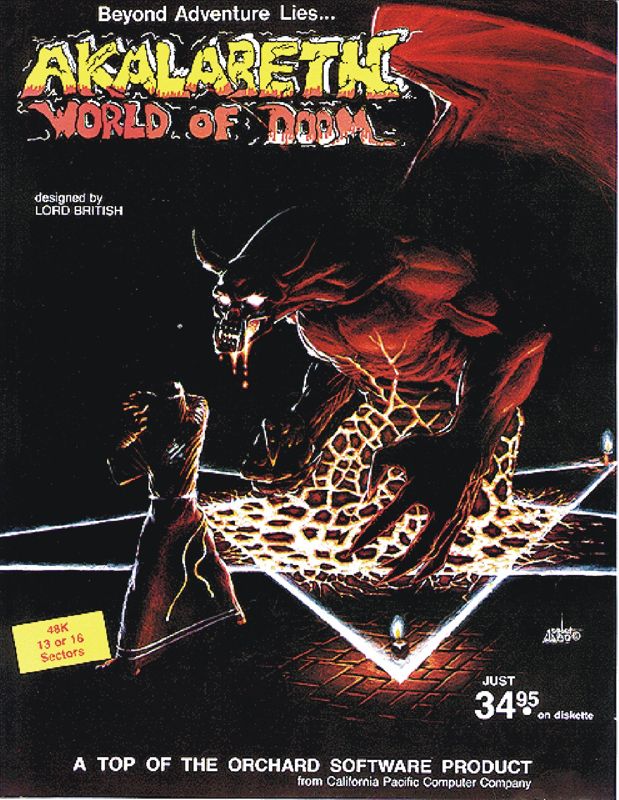
Akalabeth: World of Doom offers a deceptively simple yet addictive approach to dungeon crawling. On the overhead world map, you’ll traverse plains, forests, and towns in search of hidden dungeons and quests. Towns serve as vital hubs where your fighter or mage can purchase healing potions, better armor, and more powerful weapons—every coin you spend can mean the difference between life and death beneath the earth.
(HEY YOU!! We hope you enjoy! We try not to run ads. So basically, this is a very expensive hobby running this site. Please consider joining us for updates, forums, and more. Network w/ us to make some cash or friends while retro gaming, and you can win some free retro games for posting. Okay, carry on 👍)
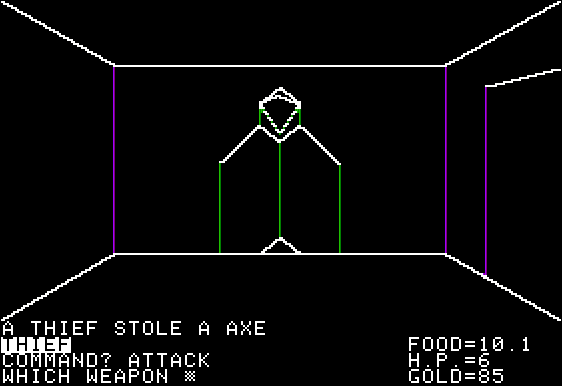
Once you venture into a dungeon, the perspective shifts to a first-person wireframe view, where every corridor branch might conceal treasure or a deadly monster. Combat is straightforward: you choose to swing a sword or cast a spell, then watch as your ASCII-rendered foe either crumbles or delivers a crushing blow. While there’s no real-time action, the turn-based feel keeps you pausing to plan each attack and monitor your health.
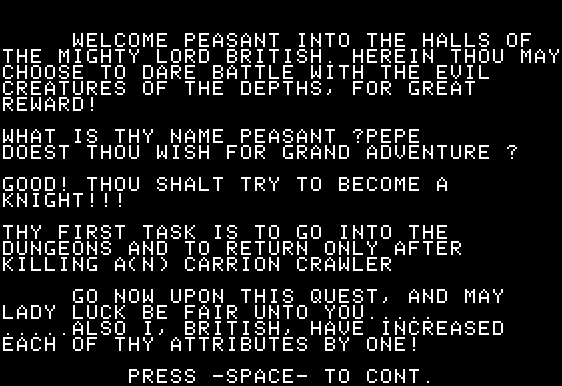
Quests are delivered by Lord British at the castle, tasking you with slaying particular creatures on progressively deeper levels. As you fulfill each quest, the difficulty ramps up. Goblins and skeletons give way to hobgoblins, gargoyles, and finally the likes of dragons. This structured progression brings a clear sense of purpose to what could otherwise be a mindless hack-and-slash loop.
Despite its age, Akalabeth’s gameplay loop remains compelling. The randomness of dungeon layouts and loot ensures no two playthroughs are identical. Character growth is incremental—you slowly amass better gear and experience, feeling each successful delve into darkness as a personal triumph.
Graphics
By modern standards, Akalabeth’s graphics are rudimentary, consisting largely of wireframe polygons and simple overhead symbols. In the dungeons, walls and doorways are rendered in stark lines, with creatures depicted as basic shapes or letters. Yet, this minimalist style has a certain charm; when a dragon’s silhouette appears in glowing wireframe, it still manages to inspire tension.
On the world map, towns look like square blocks, dungeons as jagged cave icons, and forests as clusters of tree symbols. Health, gold, and experience are tracked by numbers in the corners of the screen, giving the entire interface an old-school computer aesthetic that evokes the dawn of home PC gaming.
The monochrome palette (often displayed in green or amber on vintage monitors) reinforces the game’s retro appeal. While today’s gamers might find it crude, there’s something undeniably nostalgic about exploring those black corridors with only a sliver of wireframe light to guide you.
For a pioneering title released in 1980, Akalabeth’s graphics are historically significant. They lay the groundwork for the visual language of first-person RPGs, proving that even the simplest visuals can deliver engrossing, atmospheric adventures.
Story
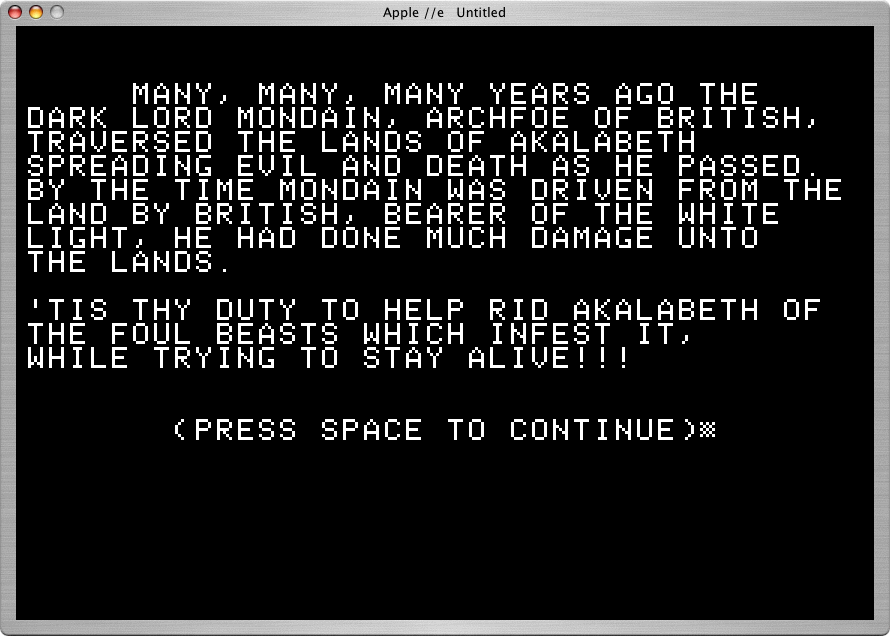
The narrative of Akalabeth: World of Doom is refreshingly straightforward. Long ago, the evil sorcerer Mondain unleashed hordes of monsters across the peaceful land of Akalabeth. Although the heroic Lord British drove Mondain away, the monsters remained, prowling in underground lairs and threatening innocent villagers.
As either a fighter or a mage, you inherit the legacy of Lord British’s triumph. From the castle’s throne room, you receive quests to destroy specific beasts—goblins, gargoyles, and beyond—rooted in the lore of Mondain’s dark experiments. There’s little in the way of complex plot twists; instead, the story provides a clear, driving motivation for each new dungeon descent.
This simplicity is part of Akalabeth’s enduring appeal. The barebones tale of good versus evil allows players to focus on exploration and combat without getting bogged down in convoluted backstories. Every monster you slay contributes to restoring peace, and each victory feels meaningful.
Though short on dramatic exposition, the world’s sense of peril is palpable. One can almost hear the creaking dungeon gates and the distant howls of unseen creatures. The game’s lore may be minimal, but it’s effective in setting the stage for countless hours of adventuring.
Overall Experience
Akalabeth: World of Doom stands as a landmark in RPG history. Its blend of overhead exploration, first-person dungeon crawling, and simple quest-based progression would influence an entire genre. Modern players may be surprised by its barebones presentation, but beneath the crude graphics lies a surprisingly deep and engaging system.
Replayability is high thanks to procedurally generated dungeons and the choice between fighter and mage, each offering distinct strategies. Though your journey might last only a few hours by contemporary standards, the rush of discovering a hidden treasure or narrowly escaping a beast remains thrilling.
This title is best suited for retro gaming enthusiasts and those curious about the roots of computer role-playing games. If you crave polished visuals and voice-acted cutscenes, Akalabeth will feel like a relic. However, if you appreciate historical significance and pure gameplay fundamentals, you’ll find it endlessly fascinating.
In the end, Akalabeth is more than a mere curiosity—it’s a testament to the imaginative power of game design. Even after four decades, its simple dungeons continue to cast a long shadow over the world of RPGs, inviting new generations to explore the original World of Doom.


Reviews
There are no reviews yet.