 Retro Replay Retro Replay gaming reviews, news, emulation, geek stuff and more!
Retro Replay Review
Gameplay
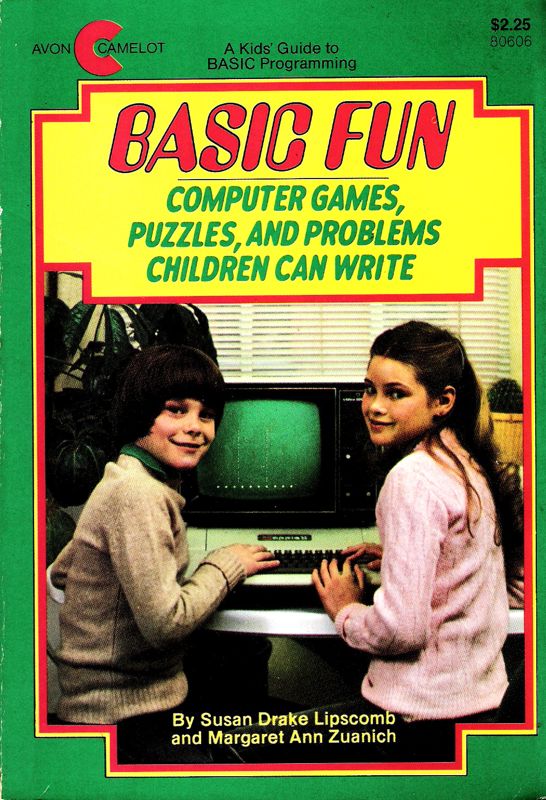
At its core, BASIC Fun: Computer Games, Puzzles, And Problems Children Can Write offers a hands-on introduction to programming by guiding young learners through a variety of simple, type-in BASIC games. Each listing walks the player–who is simultaneously the programmer–through entering code, running the program, and modifying it to see immediate effects. Rather than simply playing a precompiled game, users actively engage with the logic, learning fundamental programming concepts like loops, conditionals, and random number generation.
(HEY YOU!! We hope you enjoy! We try not to run ads. So basically, this is a very expensive hobby running this site. Please consider joining us for updates, forums, and more. Network w/ us to make some cash or friends while retro gaming, and you can win some free retro games for posting. Okay, carry on 👍)
The collection covers a surprisingly wide range of experiences, from word puzzles like Spelling—where you must figure out missing letters—to classic strategy titles like Sea Battle (aka Battleship). You’ll also find chance-driven games such as Dice Game, Number Guessing Game, and War, which demonstrate how to simulate randomness and keep score. More analytical challenges like Number Sequences and Math Quiz encourage pattern recognition and arithmetic skills, while quirky simulations (Shell Game, Lifeguard, Ring the Bell) illustrate how simple code can mimic real-world carnival and rescue scenarios.
Interactivity is powered by straightforward text prompts. You choose options, type in your guesses, or watch the computer make “moves” based on its built-in randomizers. Although there’s no real-time action like in arcade titles, these turn-based interactions help reinforce the connection between written code and program behavior. As a bonus, the book’s code is designed to run with minimal amendments on various BASIC implementations, including the HP-2000 and Osborne computers, so learners can experiment on old hardware or emulators without fuss.
Graphics
Given the era and the focus on teaching programming fundamentals, the graphics in BASIC Fun are entirely text-based. There are no bitmap sprites or vivid color palettes—everything appears in plain ASCII characters. For example, Pinball is represented by simple symbols and character maps, yet the clever use of text art conveys bumpers, flippers, and a moving ball, sparking the player’s imagination.
Other titles, like Tennis or Backpack, rely on minimal visual cues to set their scenes. Tennis might display a court with vertical bars and an “O” for the ball, while Backpack prints lists of items and numerical status bars for food and water. These abstractions avoid graphical complexity and instead emphasize how logic and data structures translate into game mechanics, making every visual element a lesson in how code can paint a picture.
While modern gamers accustomed to high-resolution graphics might find the visuals stark, this book’s charm lies in its simplicity. Learners are encouraged to experiment—adding new characters, redefining symbols, or creating rudimentary animations. This low-barrier approach to visual design fosters creativity and underscores that fun and function need not rely on advanced hardware capabilities.
Story
Long narratives are not the focus here, but BASIC Fun sprinkles bite-sized storytelling into its programs. The standout is You Are A Detective, a very short choose-your-own-adventure mystery that asks you to follow clues and make decisions. Though only a few screens long, it illustrates branching logic and the thrill of narrative-driven programming.
Two longer “career simulation” games—Ski Weekend and Backpack—blend strategy and story. In Ski Weekend, you must pick jobs, manage your earnings over six weeks, and plan a vacation, teaching resource management through a light economic plot. Backpack casts you as an outdoor adventurer racing across the country while juggling limited supplies of food and water, introducing risk-vs-reward decision making in a pseudo-text-RPG format.
Other games like How Warm Is Your Heart and Ring the Bell create playful premises (romantic temperature guesses or carnival strength tests) that infuse otherwise straightforward guessing into a narrative context. Though the storytelling is minimal, each program’s premise gives users a fun reason to step through the code, fostering engagement with both the plot hook and the programming technique.
Overall Experience
BASIC Fun: Computer Games, Puzzles, And Problems Children Can Write succeeds as a primer for novice programmers, especially children. By focusing on short, manageable programs, it builds confidence step by step. Each listing is clear and concise, with comments explaining key segments so learners can see why the code works. Typing in, debugging, and then tweaking these programs helps solidify core concepts far more effectively than simply reading about them.
Though the sensory experience is modest by today’s standards, the educational payoff is substantial. Users who complete the book will have a foundational grasp of programming logic, input/output handling, randomization, and basic game design. The cross-platform compatibility with HP-2000 and Osborne BASIC versions means experiments can continue on vintage machines or their emulators, preserving a sense of historical computing heritage.
For parents, teachers, or self-motivated learners, this book offers a delightful blend of play and pedagogy. While more advanced programmers may outgrow it quickly, beginners will find plenty of variety to stay engaged. The real magic happens when learners begin to customize the code—adding new questions to Math Quiz, changing win conditions in Sea Battle, or creating fresh puzzles in Spelling—transforming passive consumers into budding creators.
In sum, BASIC Fun is an entertaining, informative, and hands-on introduction to computer programming through games and puzzles. It never aims to compete with commercial titles in production value, but it more than delivers on its promise: to teach coding fundamentals in a playful, accessible way. For anyone looking to spark a lifelong interest in programming—and have a bit of fun along the way—this classic compendium remains a worthy choice.


Reviews
There are no reviews yet.