 Retro Replay Retro Replay gaming reviews, news, emulation, geek stuff and more!



Retro Replay Review
Gameplay
Computer Bismarck places you in command of a combined Allied task force on a mission to locate, pursue, and ultimately destroy the legendary German battleship Bismarck. The core loop revolves around strategic planning and real-time decision making: you issue patrol routes, adjust search patterns, and commit forces when you believe you’ve pinpointed the enemy’s location. The tension rises as you weigh the risk of splitting your fleet against the urgency of closing in on the elusive foe.
(HEY YOU!! We hope you enjoy! We try not to run ads. So basically, this is a very expensive hobby running this site. Please consider joining us for updates, forums, and more. Network w/ us to make some cash or friends while retro gaming, and you can win some free retro games for posting. Okay, carry on 👍)
One of the game’s most compelling features is its AI-driven opponent. The computer controls the Bismarck, maneuvering to evade detection and strike back if cornered. This dynamic cat-and-mouse gameplay means no two hunts feel the same. You must interpret intermittent sonar readings, intercepted radio chatter, and occasional visual contacts to narrow down the enemy’s position across the vast North Atlantic grid.
Resource management also adds depth. Fuel levels, ammunition stocks, and ship readiness all factor into your decisions. Do you press on at the risk of running low on supplies, or do you pull back to refuel, potentially allowing Bismarck to slip away? Balancing these considerations creates a constant undercurrent of strategic tension that keeps every turn meaningful.
Graphics
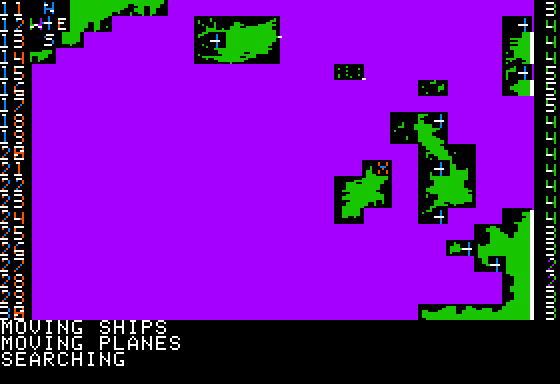
For an Apple II title of its era, Computer Bismarck’s visuals are surprisingly bold. The entire North Atlantic theater is rendered in garish HiRes color, transforming the screen into a patchwork of blues, greens, and reds that clearly delineate sea zones, search grids, and ship positions. While the palette can feel over-saturated by modern standards, it effectively communicates key information at a glance.
Ships and icons are represented as simple glyphs, yet they feel instantly recognizable. Enemy vessels blink in warning hues when spotted, while your own task force markers stand out in cooler tones. This minimalist approach ensures clarity during fast-paced search operations and catapults you into the heart of naval warfare without visual clutter.
Despite the limitations of the Apple II hardware, animations such as ship movements, flares, and depth-charge bursts inject life into the map. These small touches create an atmosphere of high stakes and constant motion. The graphical presentation may not rival later consoles, but it achieves a remarkable sense of place given its programming constraints.
Story
Though Computer Bismarck lacks a scripted narrative, the historical backdrop supplies all the drama you need. You are thrust into the urgent chase following the sinking of HMS Hood, tasked with avenging the Royal Navy’s greatest loss. The game’s emergent storytelling unfolds through your own tactics and the computer’s cunning maneuvers.
Moments of high tension—such as a near-miss radar ping or a sudden storm that hampers pursuit—become personal achievements or frustrating setbacks. These unscripted events create a narrative collage that mirrors real naval engagements. Every successful interception feels like a hard-earned victory, while every escape by the Bismarck instills a keen sense of frustration and determination to try again.
By the time you finally corner the Bismarck, the hours of search and evasion have woven a bespoke tale of strategy, luck, and persistence. The story you experience is uniquely yours, born from the interplay of your decisions and the game’s adaptive AI, making each campaign memorable.
Overall Experience
Computer Bismarck delivers a focused, intellectually stimulating wargaming experience that holds up surprisingly well decades after its release. Its blend of strategic puzzle-solving and tactical execution challenges both seasoned naval buffs and newcomers interested in historical simulations. The learning curve is gentle enough to ease you in, yet deep enough to reward careful planning and creative tactics.
The game’s presentation may appear primitive by contemporary standards, but its emphasis on core gameplay mechanics ensures that graphics and sound never overshadow substance. The HiRes color grid, simple yet effective icons, and responsive controls keep you engaged in the hunt without unnecessary distractions.
Ultimately, Computer Bismarck stands as a testament to the depth possible on early home computers. Its replayability is high, fueled by the unpredictability of the AI and the open-ended search mechanics. For anyone fascinated by naval history or strategy gaming, this title remains a compelling journey into the hunt that captivated the world more than seventy years ago.


Reviews
There are no reviews yet.