 Retro Replay Retro Replay gaming reviews, news, emulation, geek stuff and more!
Retro Replay Review
Gameplay
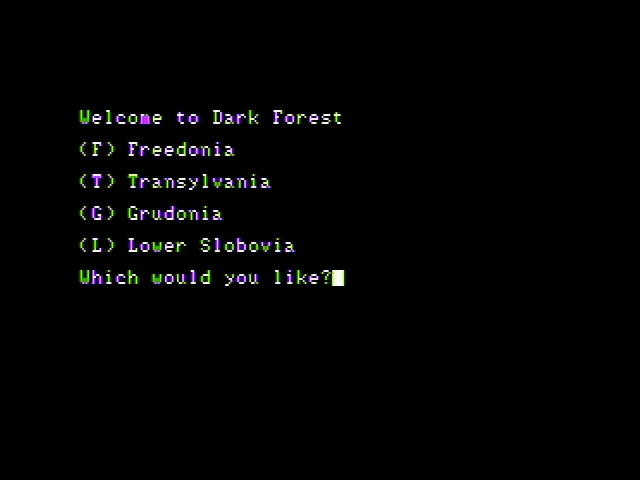
Dark Forest delivers a streamlined yet deep turn-based strategy experience that centers on territorial conquest and resource management. Each player begins by selecting one of four distinct territories, each with its own strategic advantages—some are rich in reinforcements, others boast defensible choke points. At the start of every turn, you receive a fresh batch of troops, forcing you to make critical decisions about where to allocate those resources: bolster an existing front, shore up a vulnerable border, or launch an offensive into enemy lands.
(HEY YOU!! We hope you enjoy! We try not to run ads. So basically, this is a very expensive hobby running this site. Please consider joining us for updates, forums, and more. Network w/ us to make some cash or friends while retro gaming, and you can win some free retro games for posting. Okay, carry on 👍)
The core loop of moving men from territory to territory and resolving battles is deceptively simple, but it quickly gives rise to intricate strategic dilemmas. Do you concentrate your forces for a decisive push, or spread them thin to slow multiple foes at once? How much territory can you realistically hold against both human opponents and the ever-present Grud AI? These questions keep each match tense from the first turn to the last, with momentum constantly shifting as players outmaneuver one another on the overhead map.
Multiplayer in Dark Forest supports up to six players, making for chaotic and emergent gameplay sessions. Whether you’re teaming up with friends in alliances or going head-to-head in free-for-all skirmishes, the pace remains engaging: turns are quick to execute but rich in consequence. For those who prefer solo play, the Gruds fill empty seats intelligently, adapting their tactics based on your playstyle and providing a challenging AI that refuses to sit idly by.
Graphics
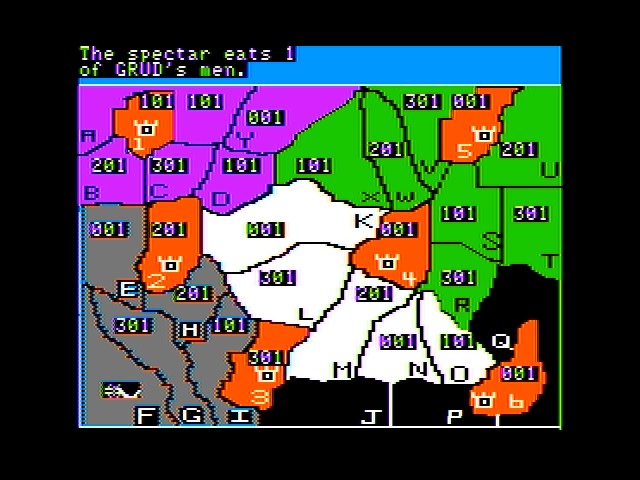
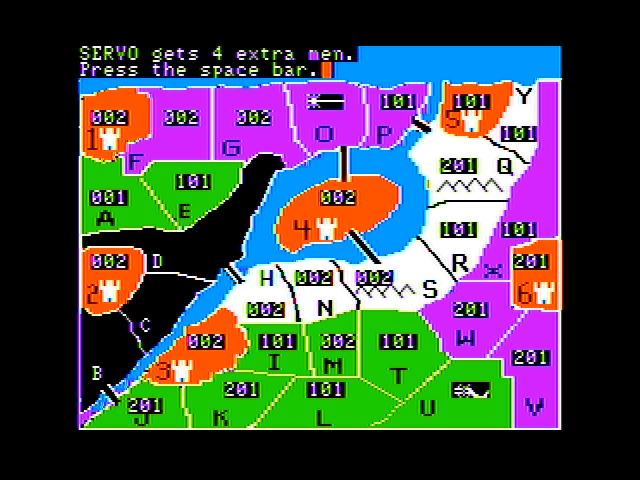
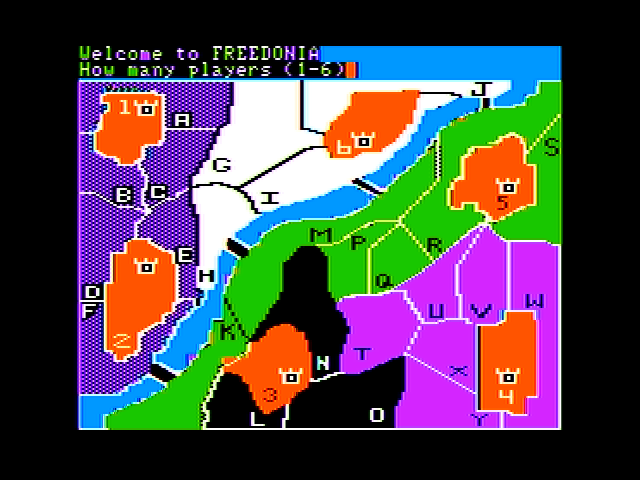
Visually, Dark Forest opts for clarity over flash, presenting a clean overhead map where each territory is color-coded by owner. The palette is carefully chosen—muted earth tones for neutral lands, bold hues for player nations—so you can instantly assess the balance of power at a glance. Borders are crisp, troop icons are easily distinguishable, and victory animations give just enough flair without slowing down the tempo.
The user interface complements the visual design by keeping menus and tooltips straightforward. Reinforcement counts, attack odds, and supply lines are all displayed in easily digestible formats, minimizing guesswork and letting you focus on strategy rather than deciphering complex dialog boxes. Movement arrows and battle previews appear as you drag your units, offering transparency into combat resolutions so you can refine your tactics game after game.
While Dark Forest doesn’t strive for high-definition 3D vistas or intricate unit animations, its minimalist aesthetic serves the gameplay perfectly. The map’s subtle textures—forest canopies, rolling hills, and fortified walls—lend a sense of place without obscuring tactical details. In short, the graphics do exactly what they need to: keep you immersed in the strategic challenge without distraction.
Story
At its heart, Dark Forest is less about linear storytelling and more about emergent narratives created by the interplay of opposing armies. The backdrop is a war-torn realm once divided among four great nations, now threatened by the savage Gruds—barbarian hordes that lurk beyond the northern woods. Each campaign unfolds differently based on your choices, whether you forge uneasy truces with rivals or press an all-out war for total dominion.
Despite the absence of cutscenes or character-driven plotlines, the game’s setting feels alive through its strategic stakes. Every decision—sacrificing a border province to buy time, launching a surprise attack from the mountains—writes its own story, often culminating in dramatic comebacks or devastating slip-ups. You’ll remember the time a small band of troops held off a larger force just long enough for reinforcements to arrive, or when a double-crossed ally seized a kingdom while you were preoccupied elsewhere.
For players craving a deeper lore, Dark Forest includes an optional codex that details each territory’s history, notable battles, and cultural quirks. While these entries don’t affect gameplay mechanically, they enrich the world and encourage you to experiment with different starting factions. In this way, the narrative emerges not from scripted dialogue but from the strategic tapestry woven by you and your opponents.
Overall Experience
Dark Forest strikes an impressive balance between approachability and strategic depth, making it accessible to newcomers while offering enough complexity to satisfy seasoned war-game veterans. The quick-play turns and clear rule set mean you can jump into a match with minimal preparation, yet the myriad paths to victory keep every session fresh and unpredictable. It’s easy to learn, hard to master—a hallmark of great strategy titles.
Replayability is a standout feature here. With four unique factions, adjustable player counts up to six, and the unpredictable Grud AI lurking in the background, no two games feel the same. House rules can be introduced to spice things up, such as limiting reinforcements or banning alliances, giving you full control over the level of chaos and cooperation on the battlefield.
In summary, Dark Forest is a compelling purchase for anyone who enjoys cerebral, territory-based warfare. Its intuitive interface, minimalist yet effective graphical style, and emergent storylines create a satisfying, replayable experience that shines in both solo and multiplayer modes. If you’re seeking a strategy title that rewards thoughtful planning and adapts to your playstyle, Dark Forest is well worth exploring.


Reviews
There are no reviews yet.