 Retro Replay Retro Replay gaming reviews, news, emulation, geek stuff and more!
Retro Replay Review
Gameplay
The first decision in Dinosaur Discovery is a good one: standing in a shed and deciding which tools deserve space before you set off. It immediately asks you to think ahead, and the ability to return and exchange equipment keeps that choice from becoming a punishing trap. For a school game, that is a sensible balance between consequence and accessibility.
(HEY! We try not to run ads. So this is a very expensive hobby. Please consider signing up for updates, visiting our forums, or just commenting on something you think is cool.👍)
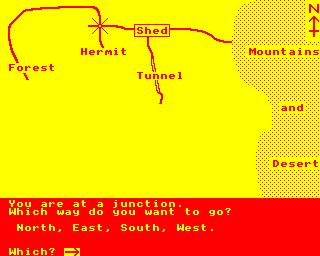
From there, exploration is intertwined with basic learning tasks. Word puzzles, compass reading, telling the time, and understanding map scale are not presented as disconnected drills; they are situations you encounter while moving through the game world. When this structure clicks, the lessons feel like obstacles with a reason to exist rather than exercises dropped into your lap.
The limitation is obvious, too. If you come in wanting a brisk adventure or a dinosaur-focused thrill ride, the measured, instructional rhythm may test your patience. Success depends on being willing to slow down, read clues, and accept that the point is to practise fundamentals. It works best when you approach it as an adventure-shaped lesson, not a lesson-free adventure.
Graphics
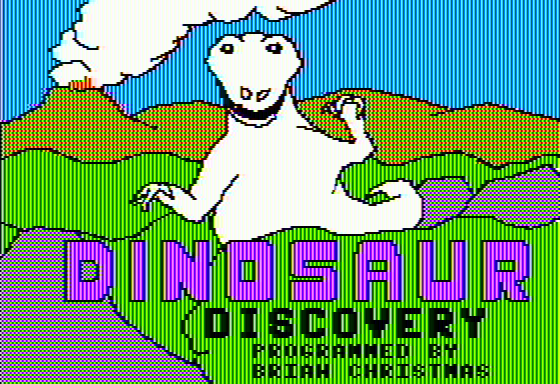
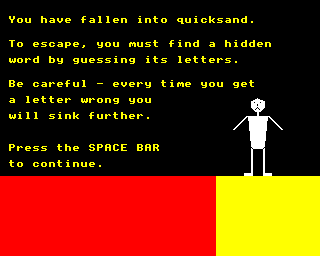
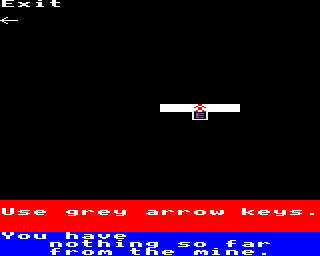
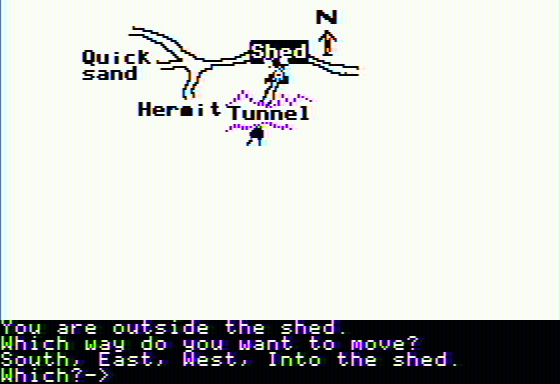
The available record places Dinosaur Discovery on Apple II and BBC Micro, two platforms where imagination and clear communication mattered more than spectacle. That context is important: this is not a game to judge by modern expectations of prehistoric grandeur. Its visual role is to support navigation, locations, and the educational problems placed in front of you.
What matters more than visual flourish is whether the environments give the game enough sense of place for its clues and exploration to hang together. The journey moves through several environments, with a museum and an isolated island forming part of the larger frame, so there is at least a clear attempt to make the curriculum feel embedded in a world rather than confined to a single screen of questions.
You should expect utility before atmosphere. The art-related subject matter in the associated course does not automatically make this a showcase for art, and there is no reason to oversell it as one. Still, for its educational aims, a readable world that helps students connect maps, objects, and clues is more valuable than ornamental detail.
Story
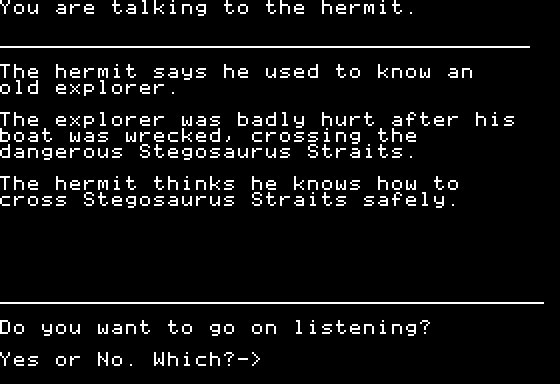
The story has more weight than the title initially suggests. Clues from a museum and an old hermit point toward an explorer who tried to hatch dinosaurs on a remote island. That premise gives the game a thread of mystery, which is exactly what this kind of cross-curricular material needs to avoid feeling like a set of unrelated school exercises.
The explorer’s journal is the key piece. Reading it fills in the professor’s travels and his meeting with the hermit, allowing the backstory to unfold alongside the exploration. It is a straightforward device, but a useful one: it gives students a reason to pay attention to writing and context rather than treating every textual clue as disposable.
There is also a surprisingly dark turn in the final journal entry, written by the hermit after the professor has died and been buried in the desert. That is not a subtle implication, and it lends the game an edge of melancholy rare in educational material aimed at school use. The payoff is modest but memorable, especially because it makes the journal feel like more than supplementary reading.
Overall Experience
Dinosaur Discovery is a focused educational adventure, not a forgotten blockbuster hiding beneath school-software packaging. Its strengths come from joining several subjects to a shared journey: reading, language tasks, mathematical ideas, geographic skills, science, drama, and art all have a place in the wider teaching plan. That integrated ambition is more interesting than any individual puzzle category.
The classroom materials are central to the experience, since teachers can build activities around the situations and backstory encountered in play. Taken alone, the game may feel slight or slow to a modern player. Used as intended, it becomes a springboard for discussion, written work, and practical tasks beyond the computer.
Give it a chance if you enjoy the history of educational games or want to see how a 1985 school title tried to make lessons feel exploratory. Go elsewhere if you chiefly want lively dinosaur action or deep standalone adventure design. Its dated structure is inseparable from its purpose, but the combination of tool selection, navigational learning, and an unexpectedly somber journal gives it a distinct identity.



Reviews
There are no reviews yet.