 Retro Replay Retro Gaming History, Reviews & Emulation
Retro Replay Review
Gameplay
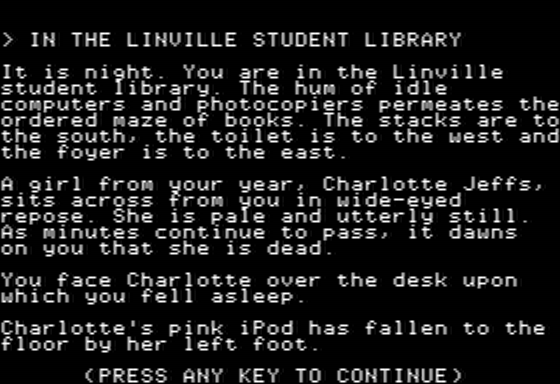
Leadlight gets its hooks into you by making a familiar school feel immediately hostile. You wake as Belinda Nettle after dozing in the library, then step into grounds transformed into a dark, lethal maze of mangled classmates, frightened survivors, and violent shadows of people she knew. That contrast does a lot of work. A school ought to be routine; here, it becomes a place where each new location carries the threat of something awful waiting there.
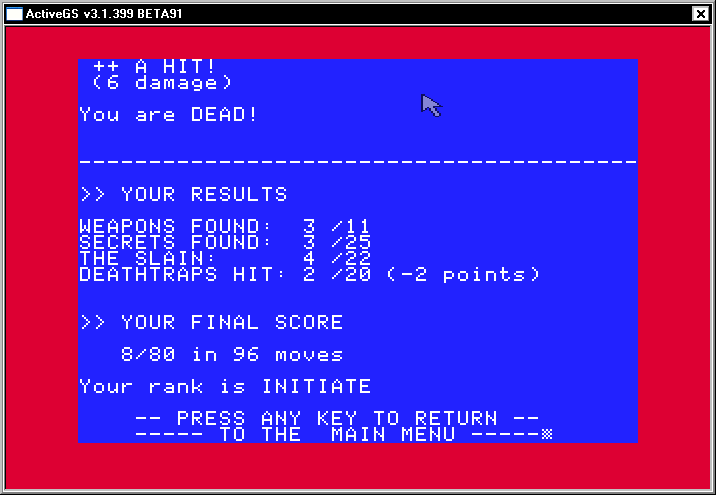
The strongest survival-horror idea is its treatment of danger. Foreboding locations can kill Belinda outright unless she hides in the right way, and a death can be reversed at the cost of score. That is a smart compromise for an interactive fiction game: you are allowed to make a bad call and continue, but the game refuses to treat failure as free. It encourages caution without turning one wrong move into the end of the whole experience.
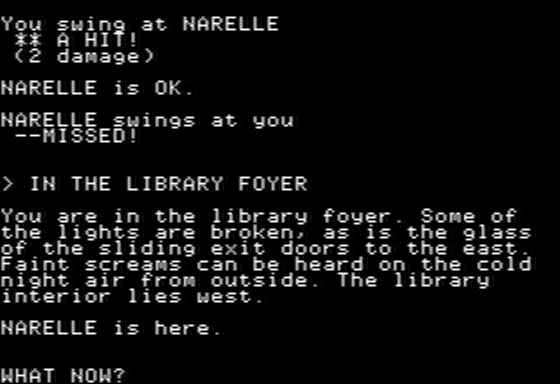
Combat is where the old machinery will divide you. Eamon’s RPG system sits underneath the adventure, and randomized outcomes mean a confrontation is not always something you can solve through perfect planning. If you enjoy the uncertainty and faintly archaic friction of early computer RPGs, it adds a nervy edge. If you come primarily for tightly controlled modern IF, it can be frustrating to have chance intrude on a horror scenario that otherwise invites careful thought.
Still, Leadlight uses that antique framework more effectively than its age suggests. The design understands that survival horror needs consequences, vulnerability, and a steady suspicion that escape may require compromise. You should go in ready to tolerate a little old-school unpredictability, not expecting a frictionless interactive-fiction experience.
Graphics
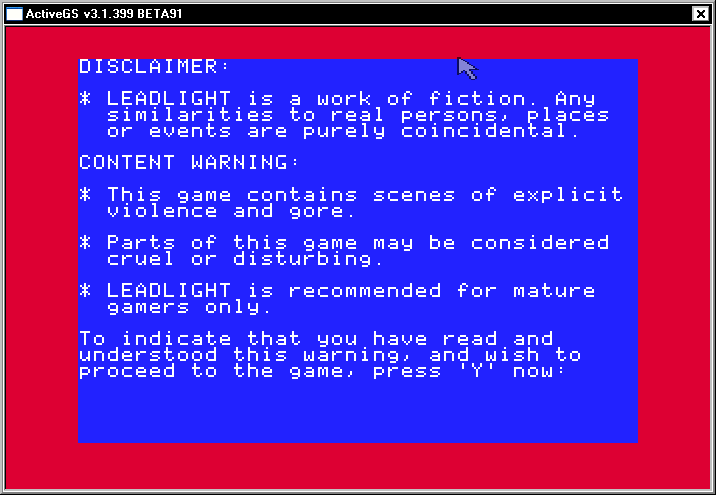
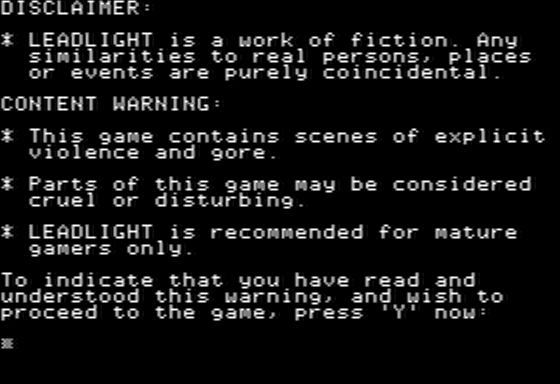
Leadlight is interactive fiction running through Apple II emulation, so the most disturbing images are the ones the writing puts in your head: a dark, hazy school campus, ruined bodies, cowering students, and familiar faces turned into murderous shadows. The limited old-machine frame fits the game’s anachronistic feel, even as the horror ideas themselves are far more modern.
Story
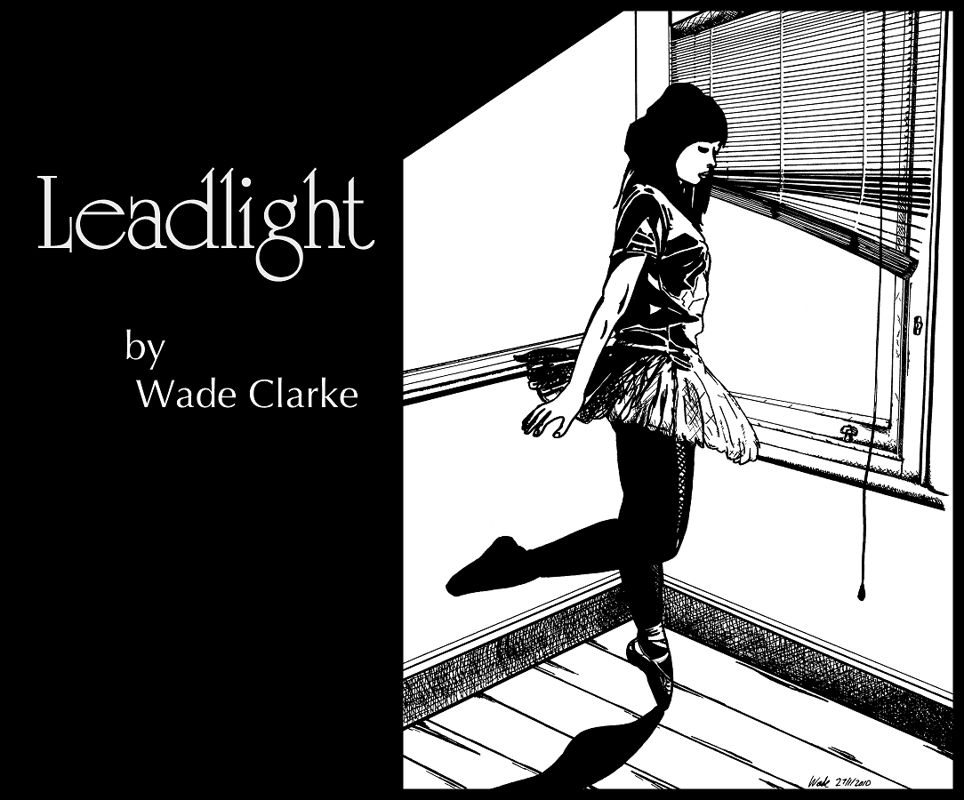
Belinda is a promising protagonist because she is not simply dropped into a monster story as a blank survivor. She is a troubled 15-year-old dancer, and the nightmare is tied to a personal setting and personal history from the start. Linville Girls High is not just a convenient haunted building; it is her school, filled with classmates whose altered fates make the horror more pointed.
The mystery has two clear threads: what happened to the school, and what Belinda has yet to learn about herself. That structure gives exploration a stronger pull than simple endurance. You are not only trying to avoid the next lethal site or hostile figure; you are moving toward an explanation for why this familiar world has become so cruelly distorted.
The premise is especially effective because it turns adolescence into horror material without needing to leave the school grounds behind. The shadow versions of Belinda’s peers are a nasty image, while the mixture of victims, corpses, and aggressors keeps the place emotionally unsettled. It is a grim setup, but one with enough personal intrigue to justify digging deeper.
Overall Experience
Leadlight is an unusual collision of eras: a 2010 survival-horror interactive fiction game built on technology associated with much older computer adventures. That combination is not always smooth, and the randomized combat will be a genuine sticking point for some gamers. Yet its roughness is paired with a clear sense of how to create dread through risk, place, and irreversible-looking consequences.
The first hour’s pull comes from exploring a school that has become unrecognizable, then learning that danger is not merely decorative. As the hiding rules and the threat of score-penalized death begin to click, the game asks you to treat each move with more care. The payoff is the gradual uncovering of the school’s secrets alongside Belinda’s own hidden history.
Give Leadlight a chance if you can appreciate old adventure-game DNA in service of a focused horror premise. It is not the game to pick when you want polished modern systems or combat you can fully control. It is, however, a memorable oddity for anyone curious about survival horror expressed through text, consequence, and a deeply unpleasant walk home through the halls of a school that no longer recognizes its students.


Reviews
There are no reviews yet.