 Retro Replay Retro Replay gaming reviews, news, emulation, geek stuff and more!
Retro Replay Review
Gameplay
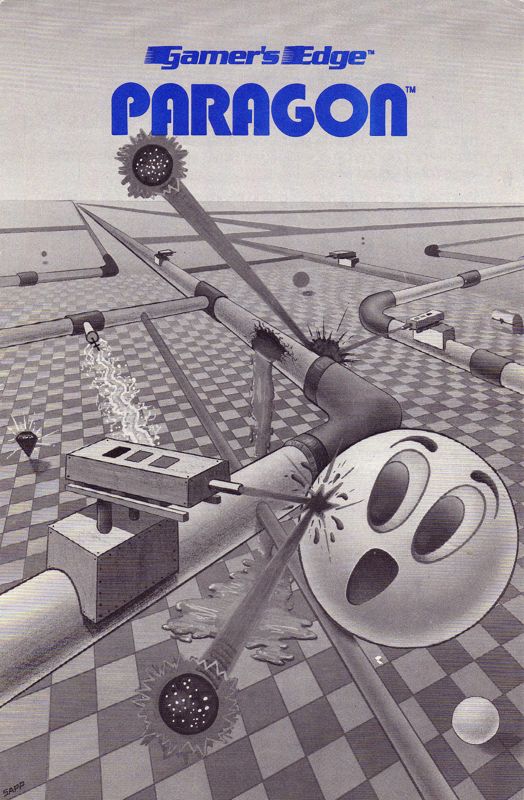
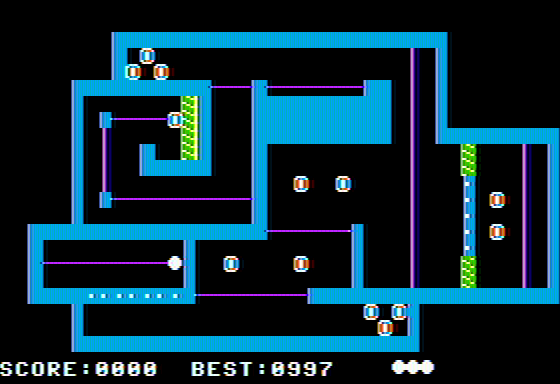
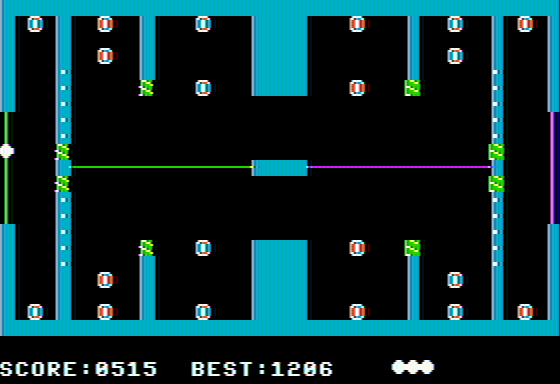
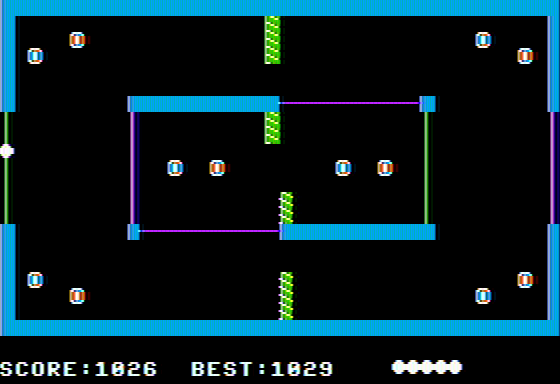
Paragon introduces a deceptively simple core loop: guide a bouncing ball through intricately designed mazes, collecting treasures while evading hazards. Your ball travels along taut wires, oscillating back and forth until you choose the perfect moment to release it. The timing mechanic transforms each level into a delicate dance between precision and risk, as you must let your ball fly at just the right moment to hit targets without careening into obstacles.
(HEY YOU!! We hope you enjoy! We try not to run ads. So basically, this is a very expensive hobby running this site. Please consider joining us for updates, forums, and more. Network w/ us to make some cash or friends while retro gaming, and you can win some free retro games for posting. Okay, carry on 👍)
Once airborne, the ball ricochets off walls and surfaces until it makes contact with another wire or barrier, at which point control returns to you. This constant alternation between passive waiting and active decision‐making injects each stage with a pulse-quickening rhythm. The limited “hit points” system raises the stakes further: stray into a laser cannon’s beam or collide repeatedly with the menacing black “zombie” balls, and you’ll lose precious health, forcing you to restart or replay sections.
Progression isn’t purely linear—each of the 20 mazes requires you to gather a specific set of treasures before the exit portal appears. From shifting gem clusters to elusive golden orbs, the variety of collectibles keeps your strategy evolving. You’ll quickly learn that some treasures demand bold, high-speed trajectories, while others require a cautious, multi-bounce approach to avoid lurking dangers. This balance of reward and peril ensures every new maze feels both fresh and challenging.
Graphics
Paragon embraces a vibrant neon palette that makes its wireframe mazes pop against darker backgrounds. The gleaming wires, polished orbs, and luminous treasures create a modern retro aesthetic that’s easy on the eyes and crisply defined on both small handheld screens and larger monitors. Subtle particle effects accompany bounces and collisions, giving each interaction satisfying visual feedback.
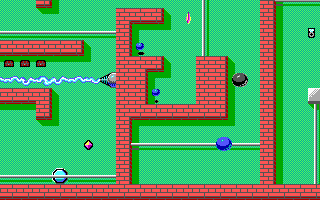
Laser cannons emit sharp, angular beams that slice across corridors, complete with dynamic glow and lens-flare accents. These hazards look and feel dangerous, heightening the tension when you inch your ball past them. Meanwhile, the black “zombie” balls sport a glossy finish with pulsating red cores, providing a stark contrast that makes them stand out even in dimly lit corners of the maze.
The level design itself feels thoughtfully illuminated: key paths are often highlighted with faint glows, subtly guiding your eye without resorting to intrusive markers. Background elements—such as distant machinery gears or softly rotating platforms—add depth without distracting from the core puzzle. Overall, the visual presentation strikes a fine balance between style and clarity.
Story
While Paragon’s narrative is minimal, it offers just enough context to drive you forward: you are an intrepid explorer in a vast labyrinth of ancient machinery, seeking long-lost treasures. Each collected gem and artifact nudges you closer to unlocking the secrets of this enigmatic domain. The emphasis, however, remains squarely on gameplay, with story beats revealed sparingly through brief on-screen messages between levels.
This pared-down approach works in the game’s favor, as it lets the mechanics shine without bogging you down in exposition. Instead of lengthy cutscenes, Paragon teases its lore through environmental details—rusted gears clanking in the background, distant mechanical hums, and cryptic symbols etched into walls. These touches hint at a deeper backstory without disrupting pacing or player focus.
For players craving a more robust narrative, Paragon encourages you to imagine your own adventure. Are you a daring treasure hunter, a scientific researcher probing long-forgotten labs, or perhaps a mysterious traveler testing your skills? The game’s light storytelling framework invites personal interpretation, making each playthrough feel uniquely yours.
Overall Experience
Paragon stands out as a polished arcade-puzzle hybrid that rewards both quick reflexes and careful planning. Its 20 mazes offer a steady escalation in difficulty, with new traps and treasure configurations introduced just as you feel you’ve mastered the previous challenges. The hit-point system adds meaningful tension, ensuring each gamble feels consequential.
The game’s intuitive controls and responsive physics engine make learning its mechanics a breeze, but true mastery demands precision and patience. Whether you’re a casual puzzle fan or a hardcore speedrunner, Paragon supplies ample content and replay value—time trials, treasure-hunt modes, and hidden bonus rooms await those who dig deeper.
Overall, Paragon delivers an engaging, visually appealing puzzle experience that will keep you coming back for “just one more run.” Its blend of timing-based mechanics, varied collectibles, and subtle atmospheric storytelling makes it a standout choice for anyone seeking a challenging yet accessible arcade adventure.


Reviews
There are no reviews yet.