 Retro Replay Retro Replay gaming reviews, news, emulation, geek stuff and more!




Retro Replay Review
Gameplay
Space invites players into a sprawling science-fiction sandbox, faithfully echoing the career-driven progression of its pen-and-paper ancestor. You begin your journey by enlisting in one of five services—Navy, Army, Scouts, Merchant Marines, or Other Services—and spend four-year terms building core attributes and specialized skills. Each enlistment tests your survival, promotion prospects, and personal ambitions, forcing you to weigh the benefits of further military training against the lure of civilian opportunity.
(HEY YOU!! We hope you enjoy! We try not to run ads. So basically, this is a very expensive hobby running this site. Please consider joining us for updates, forums, and more. Network w/ us to make some cash or friends while retro gaming, and you can win some free retro games for posting. Okay, carry on 👍)
Upon completing a term, you face a pivotal choice: reenlist for another tour or transition into one of six distinct scenarios. Whether you elect to defend a besieged colony from an alien onslaught, dabble in the galactic stock market, prospect uncharted planets for precious resources, ferry vital cargo as an interstellar merchant, or engage in a lethal duel for spoils, each path presents unique challenges. Your character’s background—attributes earned, commissions secured, and injuries sustained—shapes their effectiveness in these scenarios.
The gameplay loop in Space balances strategic planning with role-playing unpredictability. You’ll allocate skill points, manage aging effects, and navigate random events ranging from routine promotions to near-fatal accidents. The scenario modules feel like mini-campaigns, offering branching objectives and emergent narratives that reward both methodical preparation and on-the-fly improvisation. This depth, combined with a clear decision-tree interface, makes for a rich, replayable experience that stands out in the RPG genre.
Graphics
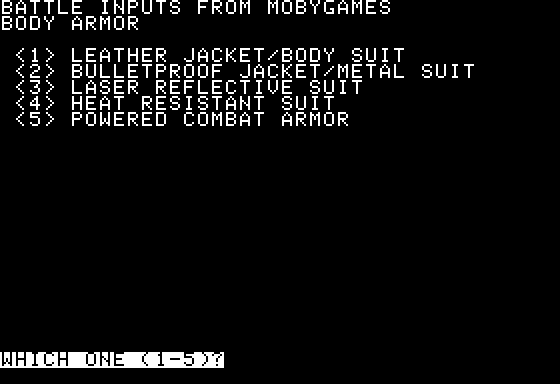
Graphically, Space embraces a retro-futuristic aesthetic reminiscent of classic PC titles, blending crisp vector star maps with detailed 2D ship and character portraits. The UI is clean and functional: skill charts, service records, and scenario briefings render with clarity, ensuring that players can focus on strategy rather than struggle with confusing layouts. Colour palettes shift appropriately between the cold blues of deep space, the muted grit of military barracks, and the vibrant hues of alien worlds.
While animation sequences are modest—primarily static images punctuated by simple motion effects—the minimalist approach suits the game’s tabletop inspiration. Transitions and event pop-ups are sharp and instantaneous, maintaining a steady gameplay rhythm. Character likenesses and spacecraft designs are evocative without being over-polished, striking a balance between nostalgia and readability.
Environmental backdrops and interface elements reinforce immersion, with each scenario featuring unique visual accents. In “Defend,” you’ll see sketched panoramas of besieged colonies; “Explore” showcases asteroid fields and barren landscapes; “High Finance” presents slick trading boards. Though not a showcase for cutting-edge graphics, Space’s art direction focuses attention on decision-making, ensuring that every pixel serves the player’s sense of agency and context.
Story
Space forgoes a single, linear narrative in favor of emergent storytelling driven by your choices and character history. From the moment you sign up for service, random event tables and outcome rolls weave a personalized saga of triumphs and mishaps. Each enlistment term feels like a chapter in your interstellar career, replete with promotions, friendships forged, and the ever-present specter of injury or hardship.
When you transition to a scenario, a concise premise sets the stage: repel an alien invasion, master high-stakes finance, or carve out a fortune as a trader. Within these frameworks, mission events, resource constraints, and adversary encounters sculpt a mini-plotline that reflects both your strategic decisions and the dice-roll whims of fate. The absence of a rigid storyline can be refreshing, allowing memorable moments—like narrowly escaping a pirate ambush or making a risky commodity short sale—to stand out.
Despite its emphasis on emergent narrative, Space occasionally feels light on dramatic flavor text outside core events. Players seeking richly detailed cutscenes or elaborate lore dumps may find the game’s sparse descriptive style somewhat austere. Yet for those who relish creating their own spacefaring legend, the malleable story engine and scenario variety deliver countless hours of personalized drama.
Overall Experience
Space shines as a deep, methodical RPG that bridges tabletop sensibilities with digital convenience. Its character-building mechanics reward long-term planning, while scenario modules inject focused challenges and fresh goals. The learning curve is steeper than in many action-oriented titles, but mastery brings immense satisfaction as you watch your recruit evolve into a seasoned veteran, then into a galactic magnate or war-hero.
The game’s strengths lie in its freedom and depth, though some may be deterred by its utilitarian presentation and limited narrative flair outside the core event text. Technical polish and user-friendly menus make navigation straightforward, but those hoping for cinematic spectacle may feel underwhelmed. Fans of simulation, strategic RPGs, or the original Traveller pen-and-paper series will find the experience particularly rewarding.
Ultimately, Space delivers a uniquely engaging blend of strategic career management, scenario-driven challenge, and emergent narrative. It caters to players who appreciate decision-heavy gameplay and personal storytelling over flashy visuals and linear quests. If you’ve ever dreamed of forging your own path among the stars—whether as a decorated admiral, daring explorer, or shrewd tycoon—Space offers an expansive playground where your choices truly matter.


Reviews
There are no reviews yet.