 Retro Replay Retro Replay gaming reviews, news, emulation, geek stuff and more!

Retro Replay Review
Gameplay
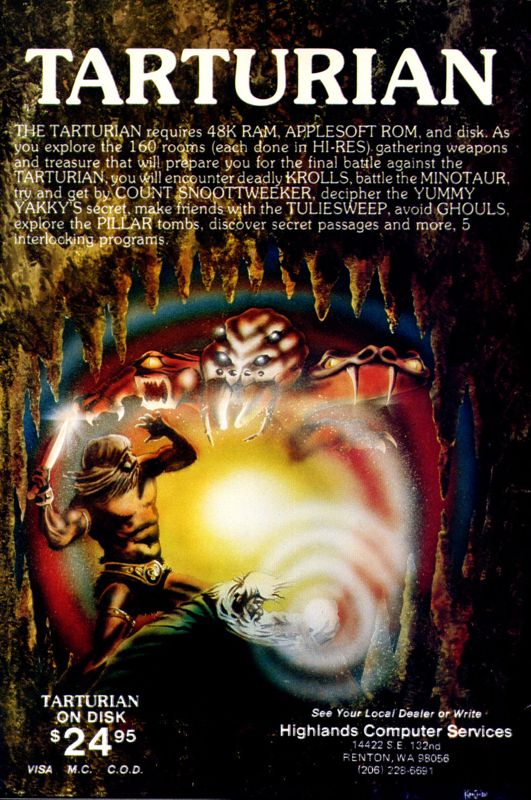
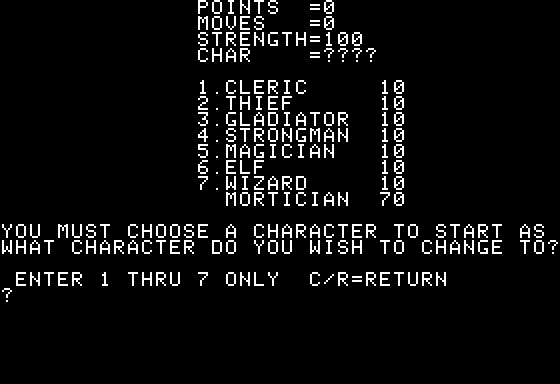
The Tarturian builds upon the foundational mechanics introduced in Highlands Computer Service’s debut title, Oldorf’s Revenge, by weaving text-based commands together with vector graphics in a seamless adventure. Players begin by choosing from a roster of unique characters—Wizard, Thief, Strongman, Elf, and more—each of which brings a distinct set of text parser commands to the table. This design choice not only adds depth but also encourages experimentation, as certain puzzles will only yield to the specialized abilities of a specific class.
(HEY YOU!! We hope you enjoy! We try not to run ads. So basically, this is a very expensive hobby running this site. Please consider joining us for updates, forums, and more. Network w/ us to make some cash or friends while retro gaming, and you can win some free retro games for posting. Okay, carry on 👍)
Crucially, The Tarturian limits the number of times you can switch into each character, transforming what might have been a simple class selection into an exercise in resource management. Do you save your limited Thief switches for critical lockpicking moments, or risk them early to retrieve essential items? This level of strategic planning was virtually unheard of in 1980-era adventures, making each decision feel weighty and consequential.
Another innovative twist is the inclusion of randomized monster encounters that can instantly defeat your current character. Failed encounters force you to pivot on the fly, selecting another hero from your dwindling roster to continue the quest. This mechanic not only raises the tension but also reinforces the importance of your character-switching budget, ensuring that every move carries risk and reward.
Perhaps the most engaging aspect of The Tarturian’s gameplay is the multiple-solution design philosophy. Early puzzles, such as the initial locked door, can be tackled in different ways: have your Thief unlock it, or unleash a Wizard’s spell to blast it off its hinges. Unlike contemporaries like Mystery House, which often offered a single rigid solution, The Tarturian invites creativity and replayability, allowing you to chart your own path through its challenges.
Graphics
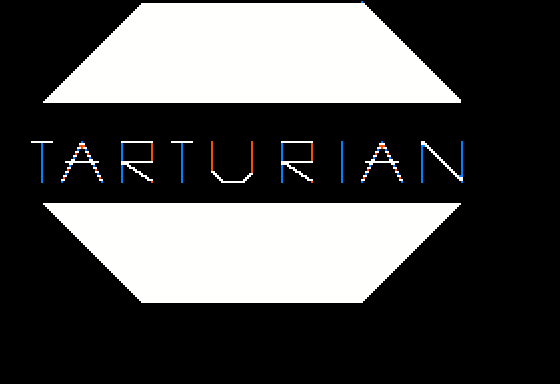
For a game released in 1980, The Tarturian’s high-resolution vector graphics are remarkably crisp and evocative. The monochrome line art captures the cold, angular interior of Tarturian’s labyrinthine fortress, lending the game an austere atmosphere that complements the text-driven narrative. Each room flashes to life with precise lines and contrasts, drawing you into the claustrophobic corridors and forbidding chambers that await exploration.
While the environments share a similar aesthetic to Mystery House, The Tarturian pushes the visual envelope by integrating graphical feedback directly into gameplay. Animated sequences—most notably during boss confrontations—add a dynamic flair that was rare among its peers. Watching your chosen hero clash with the game’s climactic monster, rendered in fluid vector motion, creates a memorable payoff that transcends simple ASCII or static visuals.
The minimalist color scheme may seem sparse by modern standards, but it puts the focus squarely on interactivity and imagination. Sparse shading and sharp geometric shapes encourage you to fill in the blanks, turning each line into a mental portrait of peril or promise. This design echoes the best of early adventure titles while hinting at the immersive potential of graphical storytelling.
Story
Set deep within the doomed fortress of Tarturian, the game’s plot is straightforward yet rich with exploratory intrigue. You, the reluctant adventurer, have been tasked with retrieving a powerful relic rumored to rest in the castle’s darkest depths. The narrative unfolds through text descriptions that are concise but vivid, painting a picture of echoing hallways, trap-laden passageways, and lurking horrors.
Character choice influences more than just mechanics—it colors your perspective on the unfolding tale. As a Wizard, you’ll ponder arcane runes and hidden spells; as a Thief, every locked chest and creaky door hints at potential treasure. These shifting viewpoints breathe life into what might otherwise read as a linear dungeon crawl, providing layers of context and motivation that reward repeat playthroughs.
The inclusion of one of gaming’s earliest boss monsters elevates the storyline to a cinematic crescendo. Defeating this final guardian isn’t merely a matter of having the right item or command—it’s about weaving together everything you’ve learned, from resource allocation to specialized spells. The animated finale, unique for its era, delivers a satisfying narrative closure that underscores your journey’s trials and triumphs.
Overall Experience
The Tarturian stands as a testament to innovation in the early days of adventure gaming. Its blend of strategic resource management, multiple-solution puzzles, and pioneering vector graphics marks it as a title ahead of its time. While the reliance on the original instruction manual may feel archaic, it also harkens back to an era when players embraced supplementary materials as integral parts of the gaming experience.
Modern gamers drawn to retro revivals will appreciate The Tarturian’s depth and replay value. Each playthrough feels fresh, thanks to randomized monster encounters and the freedom to tackle obstacles in different ways. The game’s relatively compact size belies its complexity, offering hours of thoughtful puzzle-solving and tense decision-making.
For anyone curious about the roots of graphical text adventures, The Tarturian is an essential piece of gaming history. Its compelling mechanics and crisp vector visuals paved the way for later hybrids of text and graphics, influencing design philosophies that still resonate today. Whether you’re a collector of vintage titles or a newcomer seeking a challenging, unconventional quest, The Tarturian promises a rewarding adventure deep within the heart of its haunted fortress.
Reviews
There are no reviews yet.