 Retro Replay Retro Replay gaming reviews, news, emulation, geek stuff and more!
Retro Replay Review
Gameplay
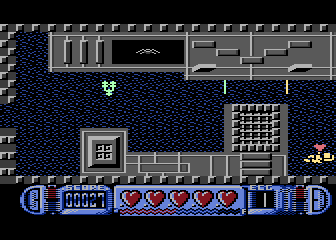
When you first fire up Heartache, you might be puzzled as to why your space-suited avatar seems to phase through enemies, walls and hazards without consequence. Rest assured, this isn’t a bug in Atari-era collision detection—it’s a core part of the experience. The real challenge comes not from the runner character dodging obstacles, but from using your gas cannon to shepherd the floating heart (a clearance pod) safely across the screen. Every movement you make has two purposes: navigating yourself and nudging the heart in just the right direction.
(HEY YOU!! We hope you enjoy! We try not to run ads. So basically, this is a very expensive hobby running this site. Please consider joining us for updates, forums, and more. Network w/ us to make some cash or friends while retro gaming, and you can win some free retro games for posting. Okay, carry on 👍)
The rotational control scheme—where pulling the joystick left or right rotates your avatar and pushing forward propels you in that bearing—takes a bit of acclimation. Yet once you get the hang of it, you’ll discover a fluid, almost dance-like interplay between positioning yourself and firing precise bursts of gas. Timing is everything: a split-second delay or an overly forceful shot can send the heart careening into a wall or an enemy, costing you one of your precious five lives.
Levels are designed around increasingly complex patterns of obstacles, moving enemies and narrow passages. As the timer ticks down, the pressure mounts: allow the heart to drift off-screen or let the countdown hit zero, and you’re back to the start of that stage. This tight pacing ensures each successful run feels hard-won, and the balance between risk and reward keeps you hooked. While Heartache’s simplicity is deceptive, its challenge curve is finely tuned for both short play sessions and marathon retry runs.
Graphics
Heartache embraces a vintage aesthetic, reminiscent of classic arcade titles. The pixel art style is clean and uncluttered, allowing hazards, enemies and the heart to stand out sharply against the dark, star-speckled background. Each sprite is distinct: the heart’s warm red glow contrasts effectively with the cool blues and grays of your suit and the metallic obstacles.
Animation frames are minimal but purposeful. The rotational spin of your character, the burst of the gas cannon, and the heart’s gentle bobbing are all rendered smoothly, giving the impression of seamless physics. Even on modern displays, the retro charm is preserved, and you can almost feel the nostalgic rumble of an old CRT cabinet as you guide your pod through each gauntlet.
Environmental variety is introduced sparingly but effectively. From tight corridors with moving walls to wider arenas filled with floating mines, every new hazard is visually distinct, ensuring you never confuse an enemy ship for a harmless sprite. The HUD is minimalist, displaying your remaining lives and the timer without detracting from the action. Overall, Heartache’s graphics serve the gameplay perfectly, balancing clarity with classic style.
Story
At first glance, Heartache may appear to be a pure arcade challenge without much narrative depth. However, the premise of your floating heart as a clearance pod carries a surprisingly touching undertone: you’re not just dodging obstacles, you’re shepherding something precious to safety. The lack of verbose cutscenes or dialogue enhances the feeling of isolation and urgency in deep space.
Subtle environmental cues hint at a larger backstory. Flickering warning lights, distant starfields and occasional debris of broken vessels suggest your clearance pod mission is part of a broader rescue or evacuation operation. Though the game never spells out exactly what happened, this minimalist approach lets players project their own imaginations onto the scenario, adding emotional weight to each successful crossing.
Freed from lengthy exposition, you focus entirely on the visceral thrill of guiding the pod home. This pared-down storytelling style works hand in hand with the gameplay, making every close call feel personal. If you’re hoping for an involved narrative with branching arcs, Heartache won’t satisfy that craving—but for those who appreciate emotional subtext and a lean, evocative premise, its story hits all the right notes.
Overall Experience
Heartache delivers a tight, focused package that excels in quick bursts and extended play alike. The core mechanic—maneuvering your character to nudge a floating pod—never grows stale, thanks to well-paced difficulty spikes and varied hazard layouts. Even after dozens of attempts, refining your technique to shave seconds off the timer feels rewarding.
While its retro visuals and minimalist story might not appeal to players seeking modern graphical fidelity or deep narrative layers, Heartache’s charm lies precisely in its simplicity. It captures the essence of arcade-era design: immediate pick-up-and-play appeal, intuitive yet challenging controls, and instant feedback through lives lost or won. The sense of accomplishment from guiding that heart across the screen never gets old.
For fans of skill-based puzzle-action hybrids, Heartache is a standout. It offers just enough variety to keep you engaged, while maintaining a coherent theme and aesthetic throughout. Whether you’re chasing high scores, perfecting each run or simply enjoying a nostalgic arcade vibe, this game proves that strong design and polished mechanics can outshine flashy extras. Heartache is a compact gem worth adding to your collection.


Reviews
There are no reviews yet.