 Retro Replay Retro Gaming History, Reviews & Emulation
Retro Replay Review
Gameplay
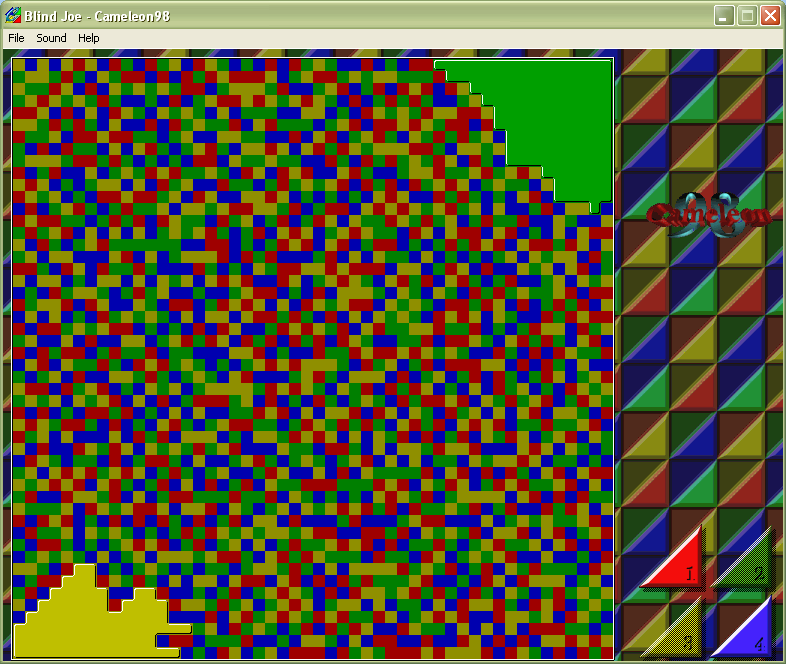
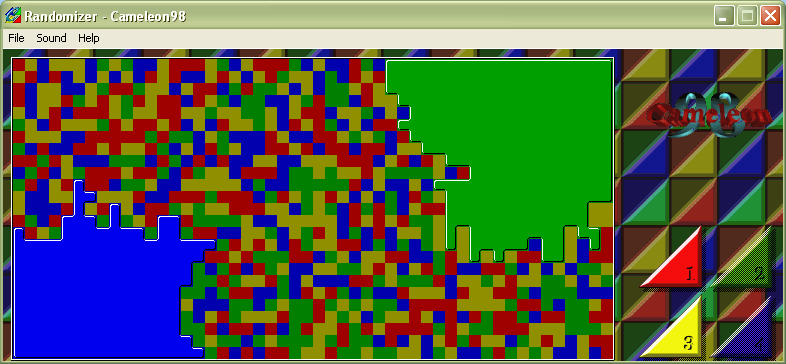
Your first few turns in Cameleon98 feel almost too simple. You pick one of four colors, your claimed area changes to that color, and any matching tiles connected to its edge join your territory. Then the board starts to close up, and every pick becomes less about grabbing the largest immediate patch than denying the computer a devastating response.
That four-color reduction is the remake’s strongest call. With fewer choices than 7 Colors, you spend less time parsing possibilities and more time feeling the consequences of each turn. It makes the game faster, more casual, and pleasantly sharp: a poor pick can hand over a crucial route, while a patient choice can cut off a large section of the grid for later.
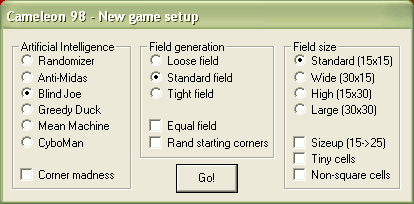
The computer opponent is not locked into one routine. You can select from six AI strategies, alter how random the generated field is, and choose among four board sizes. That flexibility matters because this kind of abstract territory game lives or dies on rematches. If one setup starts feeling solved or too chaotic, changing the board or opponent behavior gives you a reason to take another run at it.
The main frustration is also obvious: Cameleon98 only supports solo play against the computer. The rules practically invite two people to lean over the same board and second-guess one another, so its absence limits the game’s long-term social pull. Still, the focused computer matches work well when you want a quick tactical puzzle without a long learning curve.
Graphics
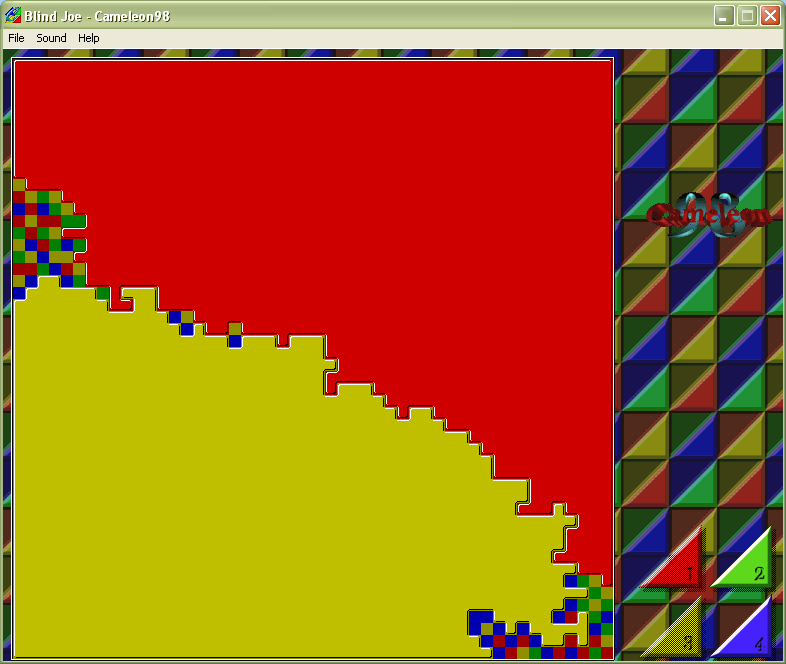
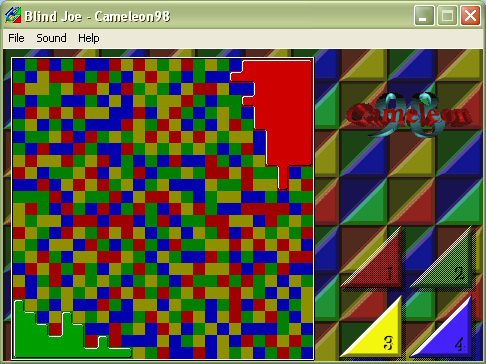
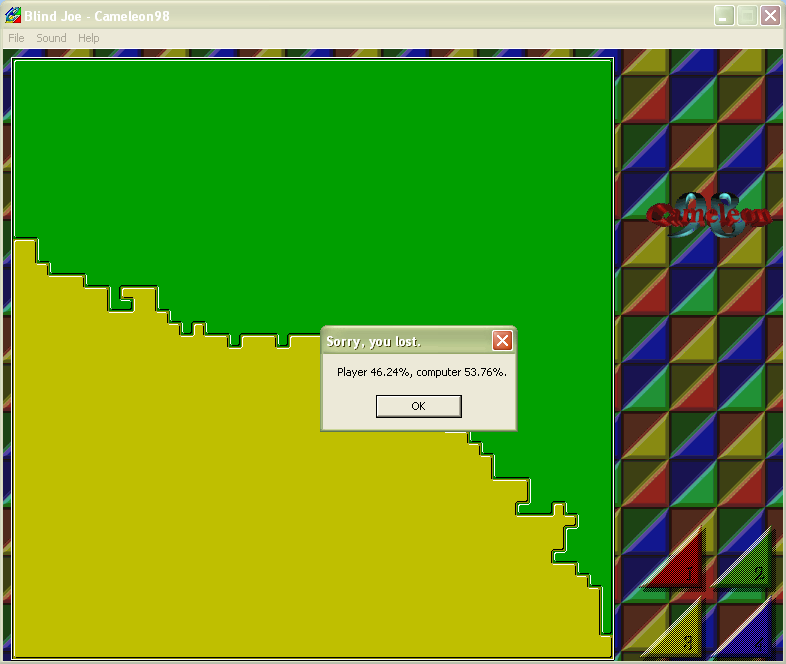
You spend the game looking at a multi-colored tile grid and the expanding areas claimed by each side. That stripped-down view suits the action: the important thing is seeing which same-colored squares touch your perimeter and how a new choice changes the board.
Story
Cameleon98 does not wrap its tile battles in a story. You are here for the shifting board, not characters or a campaign pushing you from match to match.
That bare approach fits the game’s quick, abstract nature. A round can stand on its own as a compact contest of territory and timing.
If you need narrative momentum to keep playing, this will feel dry fast. If you are happy making your own stakes out of a close board and a dangerous final few choices, it does not need anything else.
Overall Experience
Cameleon98 is a lean remake that understands why its core idea works: territory expansion becomes interesting the moment both sides compete for the same borders. The four-color format gives it a snappier rhythm than its inspiration’s seven-color setup, and the result is easy to learn without becoming mindless.
Its options do more than pad out a tiny package. Board size, field randomness, and six AI approaches let you decide whether you want a controlled tactical duel or a messier board that forces adaptation. That is the right kind of replay value for a game with such a narrow premise.
Give it a chance if you like abstract strategy games that reveal their depth after a handful of turns, especially when you want something shorter and cleaner than a full-scale tactics game. Skip it only if solo-only play is a deal-breaker or you need more than a color-grid contest to stay engaged. For everyone else, its compact design earns the time it asks for.



Reviews
There are no reviews yet.