 Retro Replay Retro Replay gaming reviews, news, emulation, geek stuff and more!



Retro Replay Review
Gameplay
Coil greets you with nothing more than a blank screen and your mouse cursor. From the very first click, you’re plunged into an exercise in trial and error, discovering how every drag, every subtle movement, and each left-click warps the world around you. There are no tutorials, no floating tooltips—just the fragile promise that experimentation will reveal the next step. This design choice makes every small revelation feel earned, as though you’re deciphering a secret language written in light and motion.
(HEY YOU!! We hope you enjoy! We try not to run ads. So basically, this is a very expensive hobby running this site. Please consider joining us for updates, forums, and more. Network w/ us to make some cash or friends while retro gaming, and you can win some free retro games for posting. Okay, carry on 👍)
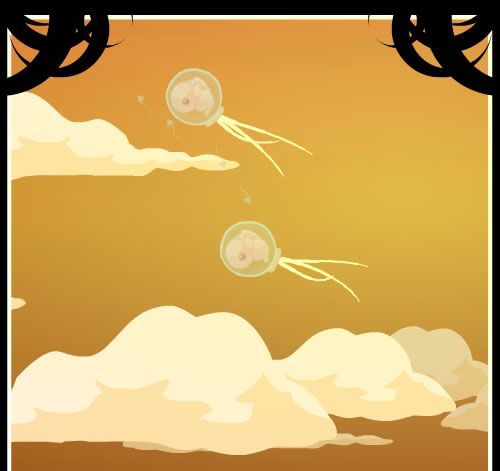
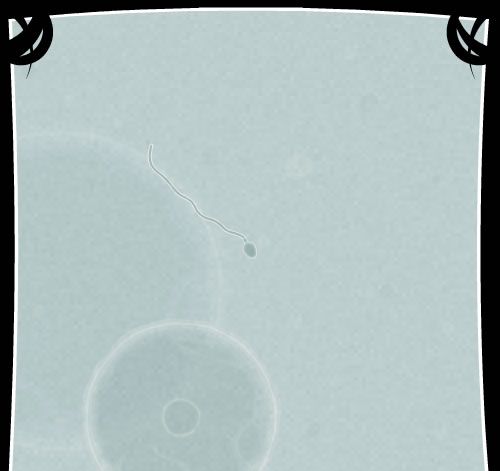
The experience unfolds across seven distinct sequences, each one a mysterious vignette that gradually unspools the game’s central themes of birth, growth, and decay. Early on, you guide a lone spermatozoon through a chaotic sea of shapes and obstacles, feeling the tension of that primordial struggle for survival. Later sections introduce new mechanics—expanding loops, oscillating lines, and blossoming forms—that build on what you’ve learned, always keeping you on the edge of discovery.
While Coil’s minimalism is its greatest strength, it can also be a source of frustration. A single mis-click might mean replaying a sequence until you grasp the precise timing or spatial relationship required to advance. That said, once you crack a puzzle’s code, the sense of accomplishment is profound. It’s a gameplay loop built around curiosity and patience rather than twitch reflexes or high scores, rewarding those who are willing to explore and reflect on their failures.
Graphics
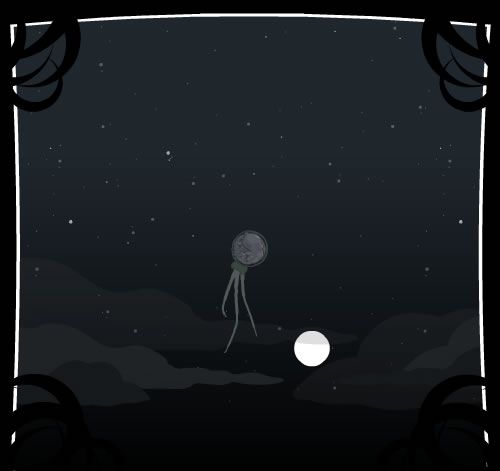
Graphically, Coil is a study in austerity and elegance. The game employs a stark color palette—primarily blacks and dark grays laced with bursts of neon white and cobalt blue—to evoke a dreamlike void. Shapes morph organically, sometimes forming delicate filaments that remind you of embryonic structures, other times shattering into chaotic constellations. Each visual motif feels symbolic, as if you’re peering into the very code of existence.
The transitions between sequences are particularly striking. A cascade of particles might swirl into a solid object, or a simple sine wave could stretch into a complex three-dimensional spiral. These animations run smoothly even on modest hardware, thanks to Coil’s minimalist art style and efficient coding. There’s no lag, no distracting frame drops—just an uninterrupted flow of mesmerizing visuals.
Despite its simplicity, Coil’s aesthetic packs an emotional punch. The graphics rarely strive for realism; instead, they evoke feelings of wonder, tension, and sometimes unease. This abstract approach allows each player to project their own interpretations onto the shapes and motions, making the visual experience deeply personal. It’s less about flashy polygons and more about stirring the imagination.
Story
Coil eschews traditional storytelling in favor of a visual poem about life and death. The narrative isn’t presented through cutscenes or dialogue, but rather through the evolving shapes you manipulate and the sparse text that appears once you complete each segment. These brief textual interludes serve as poetic signposts, guiding you through the game’s meditation on existence without spelling everything out.
The journey begins with the chaotic dance of a spermatozoon, a visceral metaphor for the fight to be born. As you progress, the game explores stages of fetal development, the fragile emergence of consciousness, and ultimately hints at the inevitability of decay. Each stage is cloaked in darkness, both literally and thematically, challenging you to confront the shadowy margins of life’s story.
What makes Coil’s story so compelling is its openness to personal interpretation. The lack of explicit narrative detail lets you fill in the blanks with your own experiences and emotions. Some players will read it as an allegory for human growth, others as a reflection on mortality, and still others as an abstract exploration of form and self. In every case, the game’s poetic resonance lingers long after you close the browser tab.
Overall Experience
Playing Coil feels less like completing levels and more like entering a constantly shifting dreamscape. The absence of conventional objectives or on-screen instructions forces you to become an active participant in the unfolding mystery. This can be both liberating and challenging: you might hit a wall, but eventually you’ll break through, rewarded by subtle narrative beats and the beauty of the game’s moving art.
Coil is a brief experience—most players will finish it within an hour—but its impact can be surprisingly lasting. It’s best approached with a calm mind and an open heart, free from the usual expectations of power-ups, boss fights, or leaderboards. Instead, you’ll find moments of quiet wonder, philosophical musing, and, at times, genuine unease as the game reminds you of life’s fragile beginnings and inevitable end.
For buyers seeking something truly different—an interactive work of digital poetry rather than a traditional game—Coil is a must-play. It won’t satisfy those looking for fast-paced action or complex narrative arcs, but for anyone curious about the boundaries of game design and storytelling, it offers a hauntingly beautiful journey through the cycle of life. Prepare to click, discover, and reflect—you won’t soon forget the silence that follows each completed sequence.


Reviews
There are no reviews yet.