 Retro Replay Retro Replay gaming reviews, news, emulation, geek stuff and more!


Retro Replay Review
Gameplay
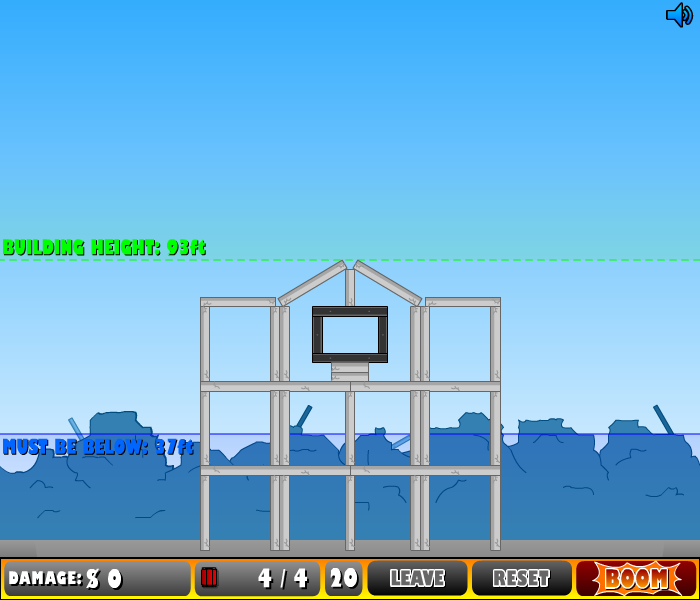
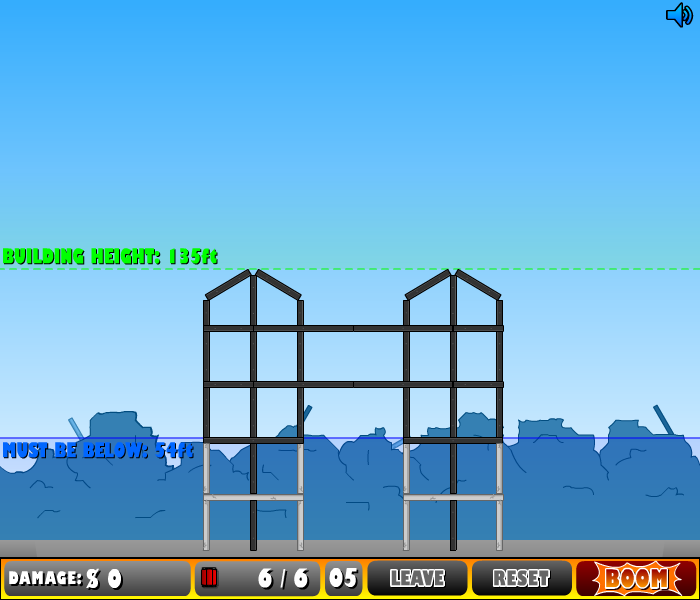
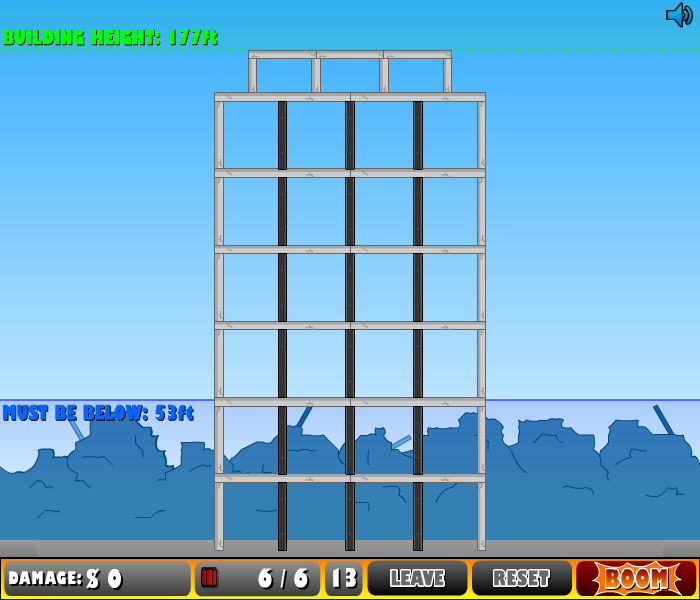
Demolition City delivers a deceptively simple premise: place a limited number of explosives on a structure, trigger the blast, and watch gravity take over as debris cascades toward a blue line at the bottom of the screen. While dropping buildings sounds straightforward, the nuance emerges when higher levels introduce steel girders that refuse to yield, precarious pieces of debris that must avoid a destruction zone on the right, and complex architectural shapes that force you to plan each charge with precision. The mouse-driven interface is intuitive, letting you drag charges onto façade segments, rotate placement icons, and fine-tune positions before hitting the big red “BOOM” button.
(HEY YOU!! We hope you enjoy! We try not to run ads. So basically, this is a very expensive hobby running this site. Please consider joining us for updates, forums, and more. Network w/ us to make some cash or friends while retro gaming, and you can win some free retro games for posting. Okay, carry on 👍)
As you advance, building layouts grow progressively sophisticated: from modest two- to three-story blocks to towering skyscrapers that twist, arch, and shelter hidden steel frameworks. Every level becomes a mini puzzle in physics, demanding strategic thinking akin to chess rather than the button-mashing of a standard action game. You’ll find yourself pausing between detonations, cycling through possible blast patterns, and mentally simulating how each section might buckle under pressure. The satisfaction of a near-perfect collapse—where each fragment shatters into fine rubble below the blue threshold—is genuinely rewarding.
Scoring hinges on three core factors: the percentage of structural mass eliminated, the fineness of remaining rubble, and the efficiency of your explosive usage. Clearing a building with fewer charges yields bonus points, encouraging players to revisit earlier stages for higher rankings. This scoring system injects replay value, as even “completed” levels beckon you to shave off an extra explosion or two. Additionally, visual feedback—colored outlines of fallen bricks and lingering dust clouds—helps you analyze weak points, refine your approach, and chase that elusive perfect clearance.
Graphics
Visually, Demolition City opts for a crisp, schematic art style that balances clarity with charm. Buildings appear as wireframe or brightly shaded blocks against a clean backdrop, making it easy to identify destructible materials versus indestructible steel beams. This minimalist presentation keeps the focus firmly on planning and outcomes, rather than distracting you with photorealism or ornate details.
True to its strategic spirit, the game’s destruction animations are its visual centerpiece. Explosives erupt with a satisfying flash, sending shockwaves through window panes and sheer walls. You’ll appreciate the subtle debris physics: bricks tumble realistically, beams bend without snapping, and the subsequent dust clouds blur the boundaries of the frame for a moment before settling into clear, countable piles. Developers have struck a smart balance between spectacle and performance, ensuring smooth play even on modest systems.
While background elements remain understated—plain skies or simple city silhouettes—the occasional level-specific backdrops add variety. A sunset skyline peek, industrial cranes in the distance, or distant water towers remind you that each structure sits within a bustling metropolis. Though not groundbreaking in ambition, the overall graphical package feels polished, purposeful, and free of visual clutter.
Story
Demolition City doesn’t deliver a sprawling narrative or deep character arcs; instead, it frames you as the city’s premier demolition expert aboard a mobile control platform. Between levels, brief text blurbs nod to your growing reputation and the escalating stakes of each assignment—from clearing condemned warehouses to deconstructing shaky high-rises before redevelopment crews move in. This light context provides enough motivation without dragging you into needless cutscenes.
Level progression feels like a career ladder, with occasional milestones unlocking new explosive types—shaped charges, cluster bombs, or remote-detonation devices—that expand tactical possibilities. These minor upgrades serve as both gameplay diversifiers and story beats, hinting at technological advances your fictional demolition firm has secured. The result is a subtle sense of growth: you’re not just blowing up more buildings, you’re mastering new gear and techniques.
For players seeking narrative depth, the storyline may feel skeletal. However, the minimalist approach allows the central demolition puzzle to shine without competing for attention. If you imagine each level as a contract in a larger urban redevelopment saga, the storyline becomes a backdrop rather than a distraction—an effective design choice for puzzle-centric gameplay.
Overall Experience
Demolition City achieves its goal of turning destruction into a cerebral exercise. The blend of accessible controls, realistic physics, and layered complexity makes it ideal for short bursts of play or longer, more focused strategy sessions. Whether you’re chasing high scores or simply enjoying the catharsis of a perfectly executed collapse, the game delivers a steady stream of satisfying “BOOM!” moments.
The learning curve is gentle enough for newcomers to pick up immediately, yet challenging enough for veterans to refine their explosive artistry. Sound effects—ranging from muffled detonations to cracking steel—couple nicely with understated music, heightening the thrill without overwhelming your concentration. The absence of intrusive menus or filler content means you’re straight into the action, emphasizing quality over quantity.
Perhaps the only downside is a degree of repetition once you’ve mastered every structural type, though leaderboard incentives and the pursuit of flawless clearances help maintain engagement. In conclusion, Demolition City offers a compelling, physics-based twist on puzzle strategy. Its approachable design, combined with ever-increasing strategic demands, ensures it stands out in a crowded field of casual demolition titles. For fans of planning, precision, and playful destruction, this game is well worth exploring.


Reviews
There are no reviews yet.