 Retro Replay Retro Gaming History, Reviews & Emulation
Retro Replay Review
Gameplay
This is Infinity delivers an unconventional approach to puzzle and exploration mechanics, blending first‐person movement with abstract interactions that constantly keep you on your toes. Using standard FPS controls (WASD for motion and the mouse to look around), the game feels immediately familiar, yet its unusual world design quickly upends expectations. Instead of weapons or health bars, your primary “tools” here are simply your eyes and your curiosity—how you choose to engage with each object defines the experience.
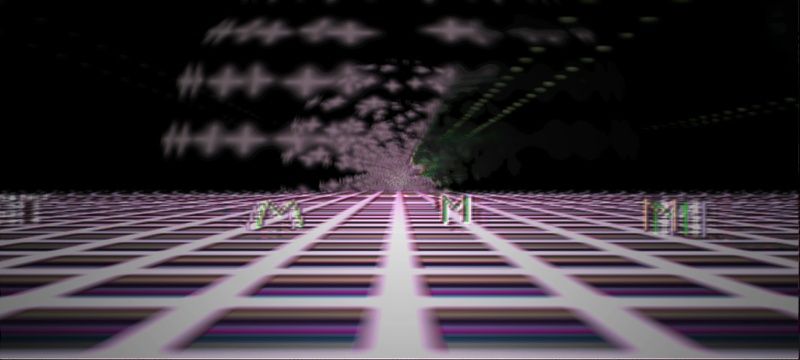
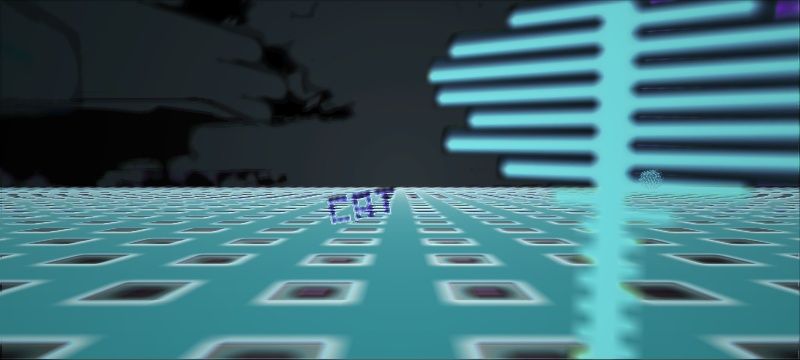
Early on, you’ll encounter scattered letters—most notably the ubiquitous ‘M’—and simple 3D blocks spelling out “CAT.” Rather than simply being decorations, these elements respond to collision: the Ms flutter into the sky like startled birds, and the CAT block can be kicked about like a virtual soccer ball. These interactions are playful and serendipitous, encouraging experimentation. Each new object you stumble upon offers a hint of the next puzzle, yet reveals nothing outright, maintaining a constant sense of discovery.
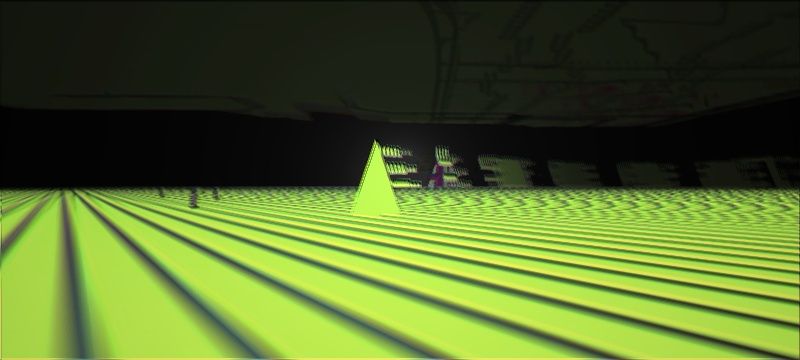
Progression is tied to geometric shapes. Touch a sphere or cone, and the game cues a musical shift while whisking you away to a fresh field of color and challenge. Each of these levels presents its own cryptic goal—nothing is labeled, nothing is explained. The onus is entirely on you to parse the bizarre visuals and deduce the puzzle’s mechanics. The result is a gameplay loop that’s as rewarding as it is confounding, making every “aha” moment feel hard‐earned.
Graphics
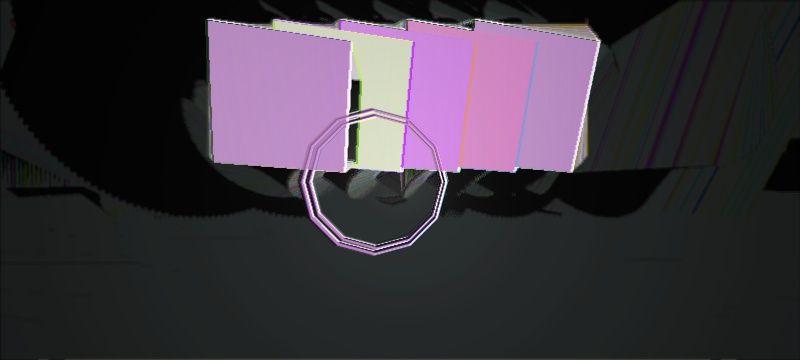
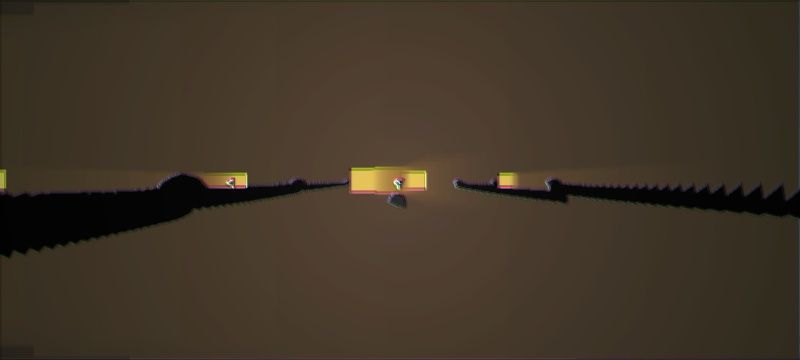
Graphically, This is Infinity favors abstraction over realism. The world is a riot of color flashes, shape distortions, and motion trails that overload the senses. Every time you move, your surroundings smear into long after‐images, and bursts of neon hues dance across the screen. It can be disorienting at first, but this visual language perfectly complements the title’s theme of infinite variation.
The graphical style is born from necessity and creativity: a game jam creation with just 36 hours of development time. That constraint has shaped a bold aesthetic choice rather than a limitation. Instead of crisp textures or detailed models, you get simple geometry augmented by shader effects. The palette shifts unpredictably, so what begins as a muted desert field can instantly transform into swirling purples and electric greens without warning.
These visual distortions are not mere eye candy—they’re integral to the puzzles. In later levels, the screen writhes and warps so dramatically that even walking in a straight line becomes an accomplishment. Players must learn to interpret these graphical anomalies as clues, rather than glitches. It’s a risk, as motion sickness is a real possibility, but for those willing to adapt, the results are hypnotically beautiful.
Story
At first glance, This is Infinity appears to lack any conventional story. There are no cutscenes, voiced characters, or text logs to guide you. Instead, narrative emerges through environmental storytelling and the very act of puzzle‐solving. Thematically, the game suggests a journey through abstract realms of thought—a meditation on perception and endless possibility.
Each level feels like a distinct “chapter” in this unspoken tale. The initial flat field, dotted with letters and shapes, serves as an introduction to your powers of observation. Subsequent puzzle arenas, each accessed via a different geometric icon, deepen the mystery: why are you here, and what is the ultimate goal? The author hints at a fully solvable design, with one level deemed “extremely hard,” implying some hidden cohesion between these disparate environments.
Rather than delivering a linear storyline, This is Infinity trusts you to weave your own meaning from the experience. Some players might see a commentary on sensory overload, others might view it as a representation of the creative process. Regardless, the absence of a hand‐fed narrative is an intentional design choice, turning every player into both protagonist and interpreter.
Overall Experience
This is Infinity stands out as a testament to what can be achieved in a tight development window. Its lack of instructions and blatant abstraction can be frustrating—but to persevere is to unlock one of the most singular puzzle‐exploration experiences you’re likely to find. There’s a raw, experimental charm here that larger studios rarely dare to embrace.
Expect moments of genuine bewilderment and exhilaration. The game’s sensory onslaught can provoke disorientation, but also sparks curiosity. Every discovered interaction—whether it’s launching an ‘M’ into the sky or deciphering the purpose of a floating dodecahedron—feels like a secret glimpse into the mind of its creator.
For puzzle aficionados and fans of avant‐garde indie titles, This is Infinity is an absolute must‐play. It may not cater to those who prefer structured storytelling or finely polished visuals, but for anyone willing to dive headfirst into a world of shifting color and mystery, the payoff is vast. This game doesn’t just present puzzles—it invites you to redefine what a puzzle game can be.


Reviews
There are no reviews yet.