 Retro Replay Retro Replay gaming reviews, news, emulation, geek stuff and more!
Retro Replay Review
Gameplay
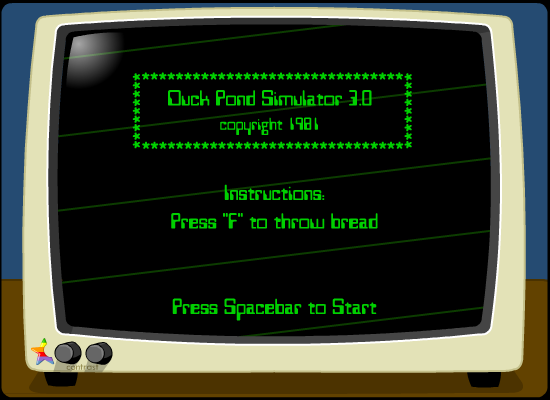
Duck Pond delivers a surprisingly engaging experience despite its minimal premise. In the original Tandy 400 build, you guide two pixelated ducks across a stark black screen and press “F” to toss bread morsels. Hold down the button to launch up to three pieces in quick succession, and watch as the ducks eagerly snap them up. The simple “feed ten times and you win” loop is easy to grasp, making it perfect for a quick, relaxing session.
(HEY YOU!! We hope you enjoy! We try not to run ads. So basically, this is a very expensive hobby running this site. Please consider joining us for updates, forums, and more. Network w/ us to make some cash or friends while retro gaming, and you can win some free retro games for posting. Okay, carry on 👍)
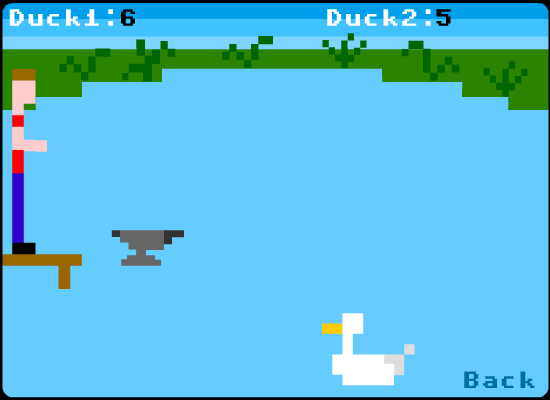
The Atari 2600 version expands on this straightforward formula with a handful of playful mechanics. Beyond bread, you can hurl anvils to mix things up—much to the chagrin of any virtual waterfowl. You also have the power to drain the pond and adjust the brown duck’s size at will, adding a layer of slapstick creativity. Although these gimmicks don’t fundamentally alter the core feeding experience, they introduce a fun sense of cause and effect that keeps each session fresh.
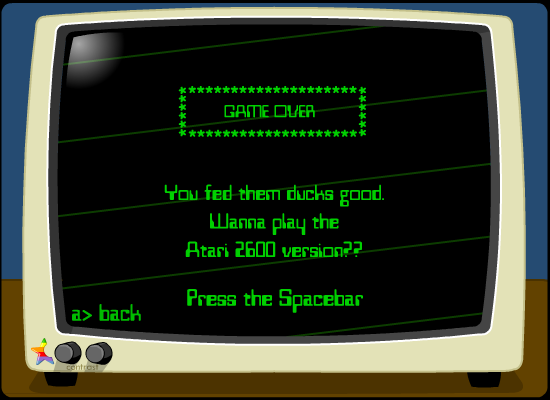
One of Duck Pond’s strongest points is its pick-up-and-play design. There are no lengthy tutorials or convoluted objectives—just ducks, bread, and a friendly challenge to out-feed your own high score. While the Tandy 400 version unlocks the Atari build upon completion, most players today will encounter only a brief demo in Strong Bad’s email sequence. Thankfully, the full, playable Atari version remains accessible via the Homestar Runner wiki, ensuring that serious feeders can still dive deeper into the pond.
Graphics
By modern standards, Duck Pond’s visuals are barebones; the Tandy 400 edition displays two alternating green ducks against a pitch-black background, relying on stark contrast rather than artistry. Yet this stripped-down aesthetic carries a surprising charm. The ducks wobble and flip-flop with just enough animation frames to convey playful movement, and each bread toss is signaled with a crisp flash, making hits feel satisfying.
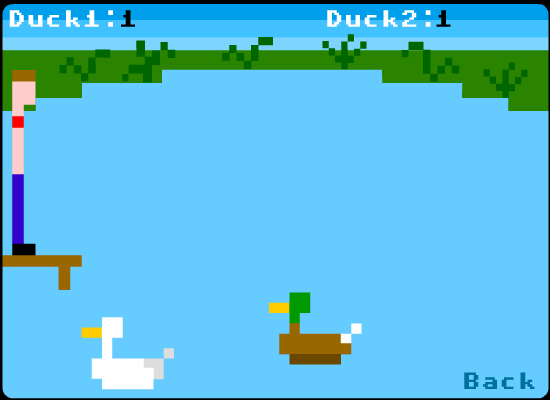
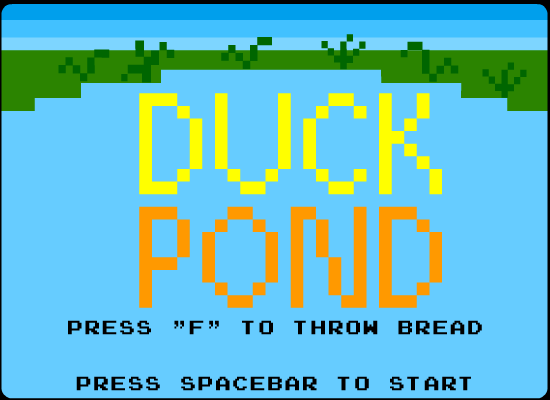
The Atari 2600 update brings richer color variety, trading monochrome for a brown-and-white duo gliding across a simple but colorful blue pond. The ducks now have slightly larger sprites and the pond gains a subtle ripple effect when they dive. These modest upgrades highlight the Atari’s greater graphical horsepower without losing the game’s intimate simplicity.
Sound design is equally minimalist, consisting of soft bleeps for bread collisions and a muted splash when an anvil hits water. Though not audiophile-grade, the bleeps serve as instant feedback that reinforces the game’s laid-back mood. If you’re looking for dazzling visuals or orchestral soundtracks, Duck Pond won’t deliver—but for fans of retro minimalism, its pure, unadorned style is part of the appeal.
Story
Strictly speaking, Duck Pond doesn’t feature a traditional narrative. There are no plot twists, character arcs, or dialogue trees—just a tranquil pond and its hungry inhabitants. Instead, the game’s “story” is woven into its meta-presence within the Homestar Runner universe. In Strong Bad’s email, he laments the lack of nearby wildlife but praises his “pretty sweet” duck pond simulator, lending an ironic backstory to the software.
The only sense of progression comes from unlocking the Atari 2600 version after mastering the Tandy 400 build, creating a light sense of achievement for players willing to feed ducks diligently. Although today most players experience only a demo, the original Homestar Runner context still colors the game with fan-service nostalgia. Collectors and series enthusiasts may appreciate these retro Easter eggs more than casual players.
Ultimately, Duck Pond’s narrative lies in its simplicity: it invites players to suspend the need for story and simply enjoy feeding ducks. In an era of sprawling open worlds and branching storylines, that quiet premise can feel like a breath of fresh air—especially for those who simply want a stress-free diversion.
Overall Experience
Duck Pond excels as a minimalist time-killer and retro novelty. Its core feeding mechanic is effortless to learn yet oddly addictive, and the expanded Atari 2600 features add just enough whimsy to keep you coming back. Sessions are short by design, making it perfect for brief gaming breaks or background amusement while you multitask.
If you grew up in the early days of home computing or have a soft spot for Homestar Runner lore, Duck Pond offers a charming slice of digital nostalgia. The graphics and sound are intentionally muted, reminding us of an era when gameplay trumps spectacle. It’s less about flashy effects and more about the simple joy of coaxing two little ducks to chow down.
While modern audiences might find the game’s brevity and lack of depth limiting, Duck Pond still holds value as a quirky retro experience and a tribute to the laid-back pleasures of feeding ducks by a pond. Whether you dip into the Tandy 400 version on emulators or seek out the full Atari build via the Homestar Runner wiki, you’re in for a soothing, unpretentious diversion—no real pond required.
Reviews
There are no reviews yet.