 Retro Replay Retro Replay gaming reviews, news, emulation, geek stuff and more!




Retro Replay Review
Gameplay
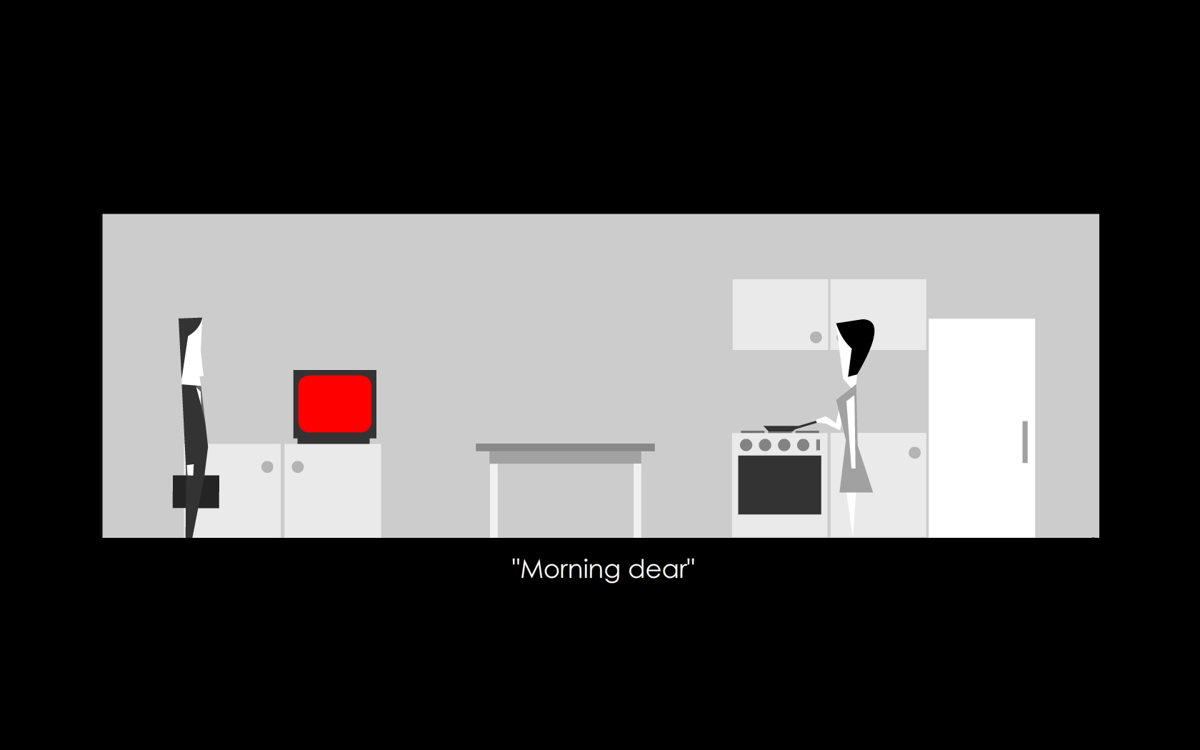
Every Day the Same Dream presents a deceptively simple control scheme: you guide your office worker through a looping workday using only the keyboard’s movement keys and a single interaction key. This minimalist design strips away complex mechanics and focuses the player’s attention squarely on choices and environmental curiosities. Early loops establish a rigid routine—getting dressed, greeting your wife, riding into traffic and settling into your cubicle—before inviting you to deviate.
(HEY YOU!! We hope you enjoy! We try not to run ads. So basically, this is a very expensive hobby running this site. Please consider joining us for updates, forums, and more. Network w/ us to make some cash or friends while retro gaming, and you can win some free retro games for posting. Okay, carry on 👍)
Disrupting the cycle becomes the core of the experience. As you experiment with paths less traveled—skipping the house, jumping off the train or following the dog into a back alley—you unearth small anomalies. Each alteration carries a subtle pay-off, whether it’s a change in dialogue, an extra object to examine or a fleeting glimpse of something odd. These deviations gradually reveal the hidden structure of the game’s world.
The true depth emerges only after multiple playthroughs. A hint system helps you track progress toward unlocking the final day, rewarding persistence without resorting to heavy-handed tutorials. The game encourages you to treat the office building as a playground of curiosity, where every door, elevator button and oddball co-worker might hold a clue. It’s a patient, exploration-driven loop that redefines repetitive mechanics as a form of introspection.
Graphics
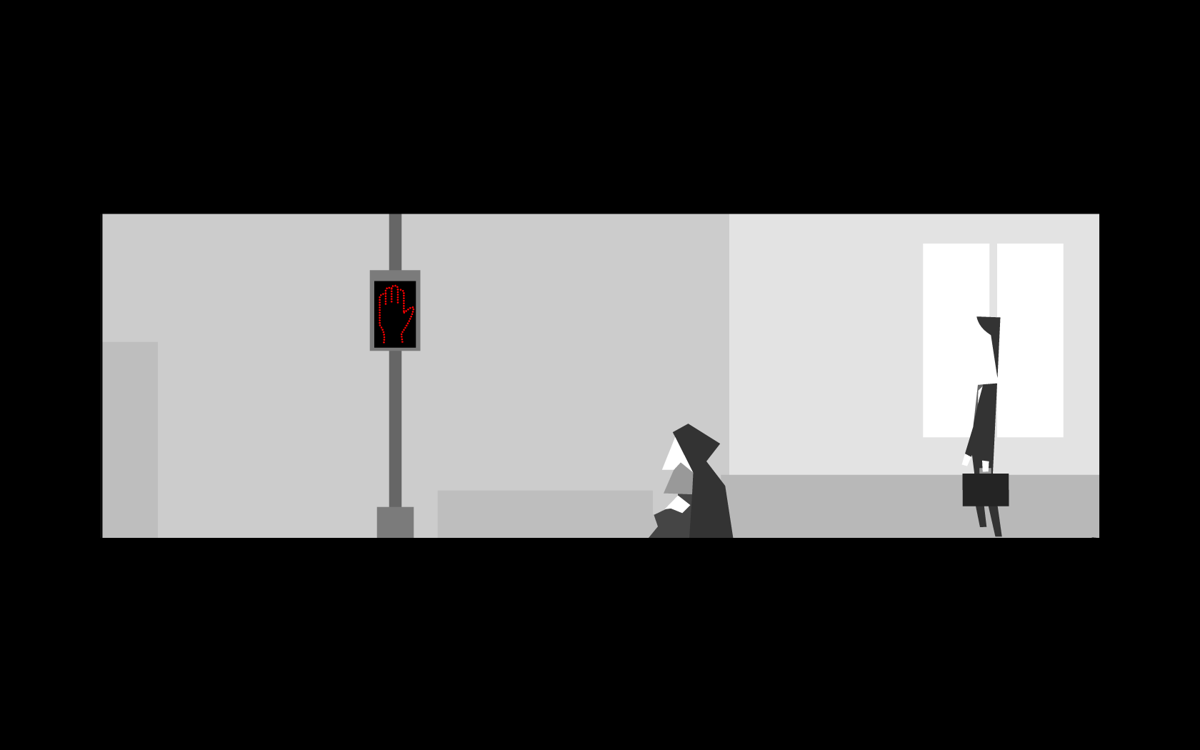
Visually, Every Day the Same Dream adopts a stark monochrome palette, rendering characters and environments in shades of gray. The result is an oppressive, dreamlike atmosphere that mirrors the protagonist’s sense of monotony. Textures are minimal, with objects presented as blocky silhouettes or softly detailed forms, emphasizing mood over fidelity.
The game’s use of light and shadow is particularly striking. Fluorescent office corridors glow eerily as you pass, while the exteriors—traffic jams under an overcast sky—feel almost oppressive in their uniformity. Small touches, like the flicker of a monitor or the rotating ceiling fan in the cubicle farm, lend authenticity without cluttering the screen.
Character animations are deliberately mechanical, reinforcing the hypnotic, routine-driven existence of the office workers. When you break free—running across rooftops or dancing in a deserted corridor—the awkwardness of your movement underscores how far removed these actions are from ordinary life. Overall, the minimalist aesthetic works hand in hand with the game’s themes of alienation and escapism.
Story
At its core, Every Day the Same Dream is a commentary on the drudgery of modern office work and the small rebellions we enact to reclaim a sense of agency. You play as an unnamed salaryman trapped in a cycle of alarms, briefcases and blinking screens, with no memory of day-to-day variance. His existence feels stripped of meaning, defined by rote motion rather than aspiration.
Story unfolds largely through player-driven discovery. There’s no traditional dialogue tree or cutscene barrage—instead, narrative emerges from the environment and the subtle changes you provoke. Perhaps you’ll find a cat skulking in the break room, or you’ll sneak into a colleague’s cubicle and stumble upon a hidden keepsake. Each found object or event whispers of untold lives behind the gray suits.
Multiple endings serve as a payoff for curiosity. Some loops lead you back to the start with only a faint shift in routine, while others break the cycle entirely, revealing the true extent of your character’s longing. This branching structure gives the story a sense of agency and mystery: you are not just an observer of despair, but an active participant seeking transcendence.
Overall Experience
Every Day the Same Dream is not a traditional “game” in the sense of grand quests or sweeping narratives—it’s an art piece disguised as interactive fiction. What it lacks in length (playthroughs often last under ten minutes each) it more than makes up for in thematic resonance. The emotional impact of small deviations eventually builds into a profound statement on routine, purpose and personal freedom.
For players seeking high-octane action or deep RPG systems, this title may feel insubstantial. However, if you’re open to reflective, minimalist experiences that challenge the notion of what a game can be, this is a must-play. The journey from monotonous repetition to startling revelation is as cathartic as any cinematic climax.
In the end, Every Day the Same Dream offers a glimpse of hope amid gray conformity. It’s a concise, thought-provoking exploration that rewards patience and curiosity. If you’ve ever felt trapped in your own daily grind, this short but impactful experience will resonate long after you’ve achieved the final ending.


Reviews
There are no reviews yet.