 Retro Replay Retro Replay gaming reviews, news, emulation, geek stuff and more!
Retro Replay Review
Gameplay
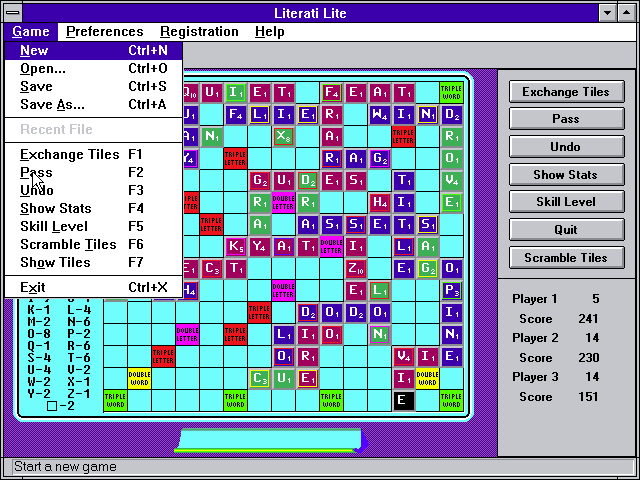
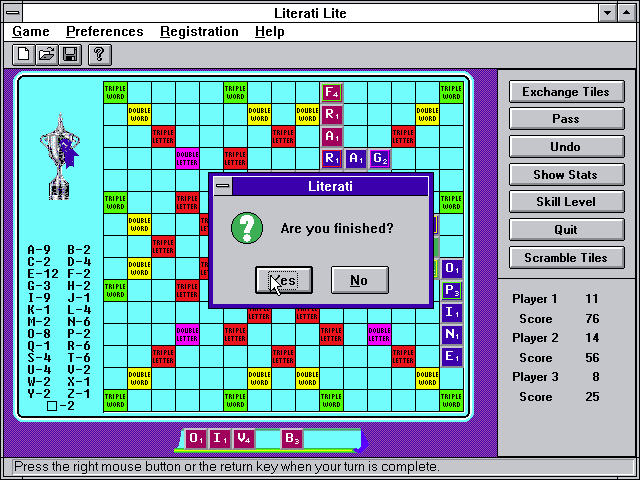
Literati captures the timeless charm of tabletop word games by faithfully translating Scrabble-style mechanics into a digital arena. Players draw seven tiles at random, each bearing a letter valued between 1 and 5 points, plus the ever-flexible blank tile, and form words on a 15×15 grid. Words must connect to existing tiles or touch them in a way that all resulting letter combinations remain valid. This core loop—forming words, leveraging premium squares, and managing your rack—remains as satisfying today as it was in the 1990 DOS shareware original.
(HEY YOU!! We hope you enjoy! We try not to run ads. So basically, this is a very expensive hobby running this site. Please consider joining us for updates, forums, and more. Network w/ us to make some cash or friends while retro gaming, and you can win some free retro games for posting. Okay, carry on 👍)
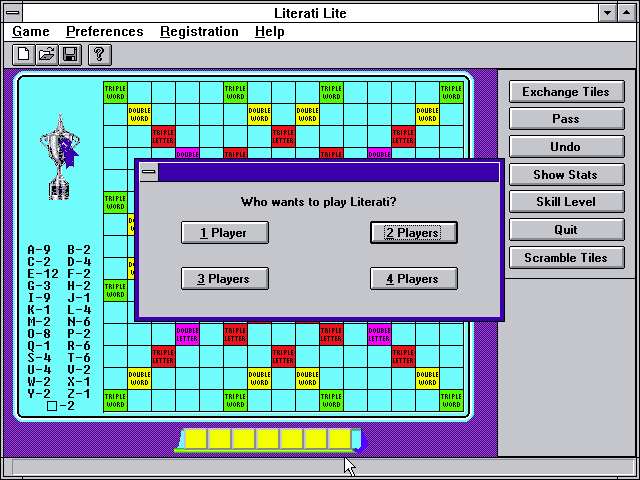
One of Literati’s stand-out features is its robust set of options. The host can set the number of players, designate a time limit per move, and choose between rated and unrated matches, making it suitable for casual sessions or serious competition. Challenge mode adds a competitive edge: whenever a word’s legality is in doubt, an opponent can blow the whistle. Incorrect challenges incur a penalty in turns, so the tension keeps each play-through razor-sharp, rewarding both strategic tile placement and a deep vocabulary.
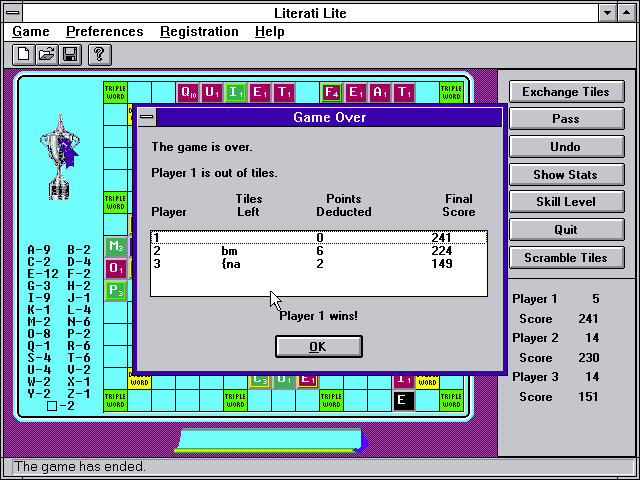
Trading tiles, passing when you’re stuck, and aiming for the high-value board multipliers adds layers of strategy. Landing all seven tiles at once grants a 35-point bonus, driving bold play. Once the bag is empty and no one can move, the final scoring subtracts leftover tile values and rewards any player who empties their rack with captured points from opponents’ hands. This elegant scoring system ensures that every decision—from the earliest word to the last tile—carries weight.
Graphics
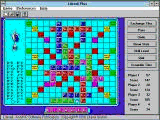
Originally a 1990 DOS title, the 1994 Windows upgrade enhanced Literati’s visual presentation with OS-native menus and crisp iconography. The board is rendered in clear, high-contrast colors: premium letter and word squares stand out, while tile letters remain legible even at modest resolutions. Java-based Yahoo Games brings these graphics seamlessly into the browser, with responsive resizing and smooth mouse controls that make tile dragging intuitive.
Though modern AAA titles boast advanced 3D engines, Literati’s minimalist 2D aesthetic is part of its enduring appeal. Subtle shading on tiles gives a tactile feel, and the animated score tallies offer just enough feedback without distracting from gameplay. On lower-spec machines or older browsers, performance remains rock-solid, so you can focus on word hunting rather than battling frame-rate drops.
Customization options let you tweak board themes and tile styles, breathing fresh life into the vintage interface. Whether you prefer a classic wooden table motif or a high-contrast arcade palette, these graphical modes prevent visual fatigue during marathon sessions, and the overall UI design stays remarkably user-friendly more than three decades after its first release.
Story
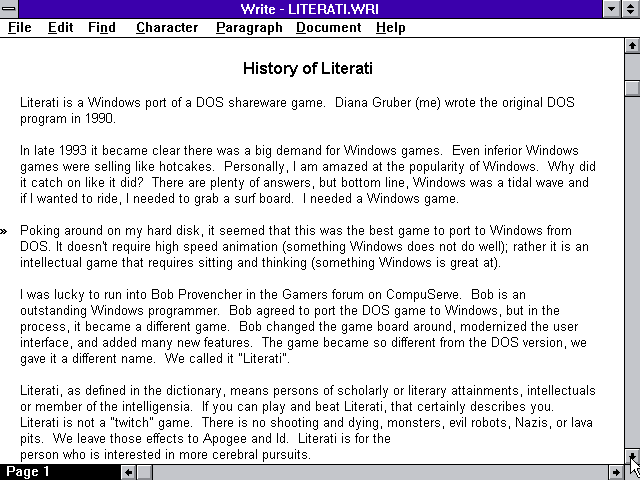
Literati doesn’t spin a narrative like a role-playing game; instead, its “story” unfolds through the game’s own evolution. Born as shareware on DOS in 1990, it was brought to Windows by MVP Software in 1994 with enhanced features and a friend-versus-friend focus. Every match you play continues the line of development that made it a popular staple for word-game enthusiasts in the early ’90s.
In 2000, Literati leapt from desktop to web portal, joining the Yahoo Games lineup as a Java-powered browser title. This transition rewrote its history, allowing global tournaments and casual drop-in play without installing a thing. The community that grew around Literati—from small living-room gatherings to international rated ladders—adds a social narrative layer that persists in the game’s current incarnations.
Rather than a scripted storyline, Literati’s history is one of continuous refinement and community engagement. Its journey from floppy disk shareware to a browser-based classic mirrors the broader story of gaming itself: moving from local setups to instant, online connections. Every time you launch a match, you become part of that legacy.
Overall Experience
Literati delivers a polished, engaging word-game experience that rewards both strategic thinking and linguistic flair. The blend of classic Scrabble-style mechanics with digital conveniences—time limits, rated matches, challenge mode, and an active online community—keeps every session fresh. Whether you’re a nostalgic fan of early ’90s shareware or a newcomer discovering its charms via Yahoo Games, Literati stands up as a highly replayable title.
While the graphics won’t rival modern 3D productions, the clean interface and customizable themes ensure clarity and comfort during extended play. The straightforward, browser-based Java implementation also means you can enjoy competitive matches on a wide range of devices without compatibility headaches.
Ultimately, Literati shines as a digital word-game classic. Its depth of options and community-driven evolution make it a worthy pick for anyone seeking a mentally stimulating multiplayer pastime. If you appreciate word puzzles, strategic tile play, and the thrill of outscoring your opponent with a clever triple-word move, Literati remains a must-try experience.


Reviews
There are no reviews yet.