 Retro Replay Retro Replay gaming reviews, news, emulation, geek stuff and more!


Retro Replay Review
Gameplay
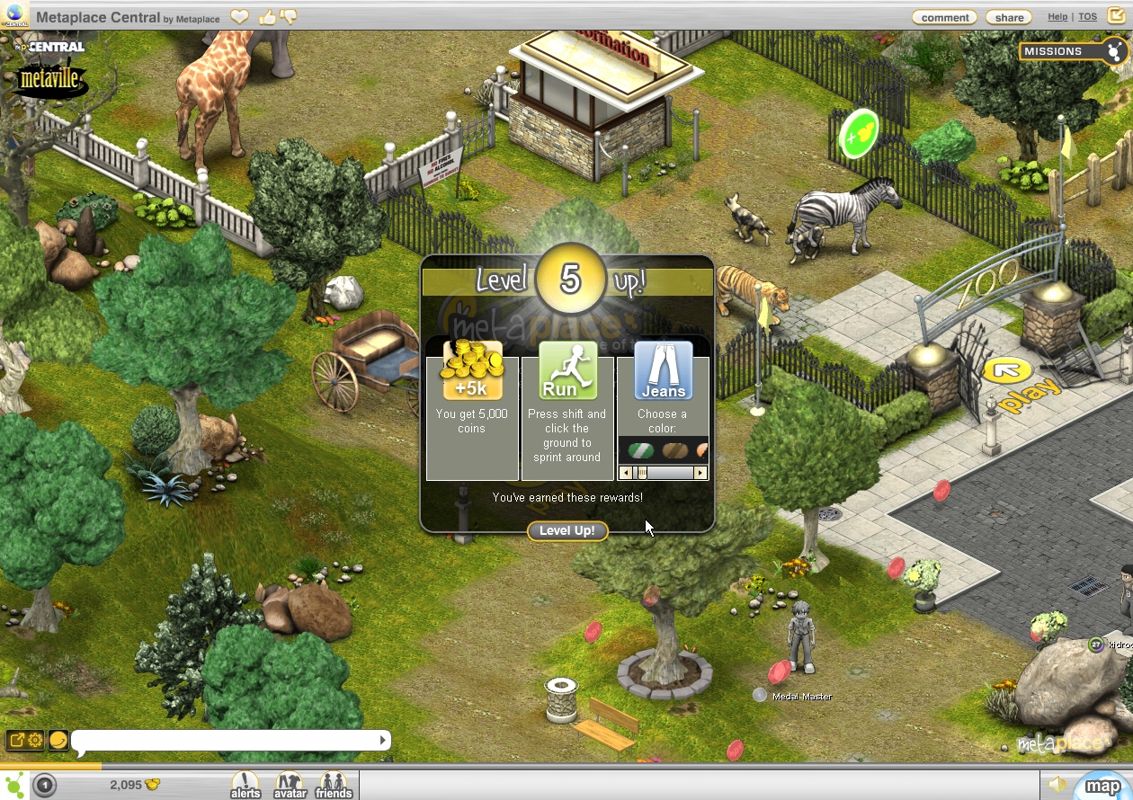
Metaplace’s core appeal lies in its versatility as both a creative sandbox and a social MMO. Right from character creation, players earn experience points and virtual currency through a variety of activities—building, exploring, and interacting with others. This multipronged progression system keeps the pace fresh: one moment you’re sculpting mountains and planting flora, the next you’re throwing snowballs in a friend’s plaza or tackling a custom obstacle course.
(HEY YOU!! We hope you enjoy! We try not to run ads. So basically, this is a very expensive hobby running this site. Please consider joining us for updates, forums, and more. Network w/ us to make some cash or friends while retro gaming, and you can win some free retro games for posting. Okay, carry on 👍)
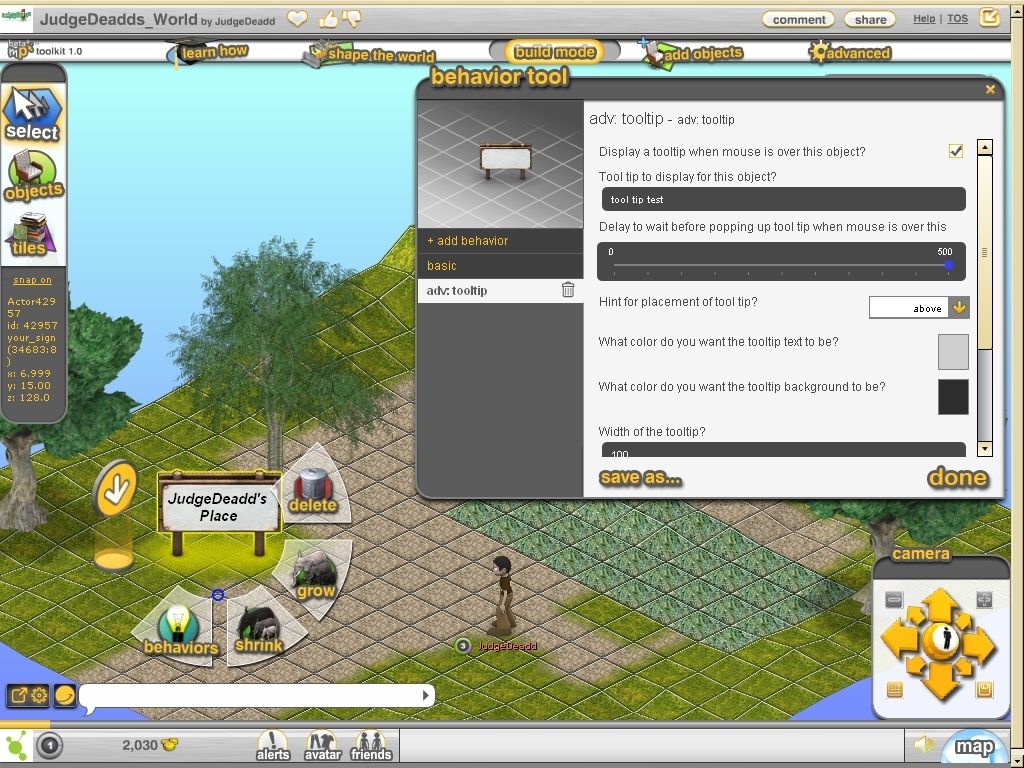
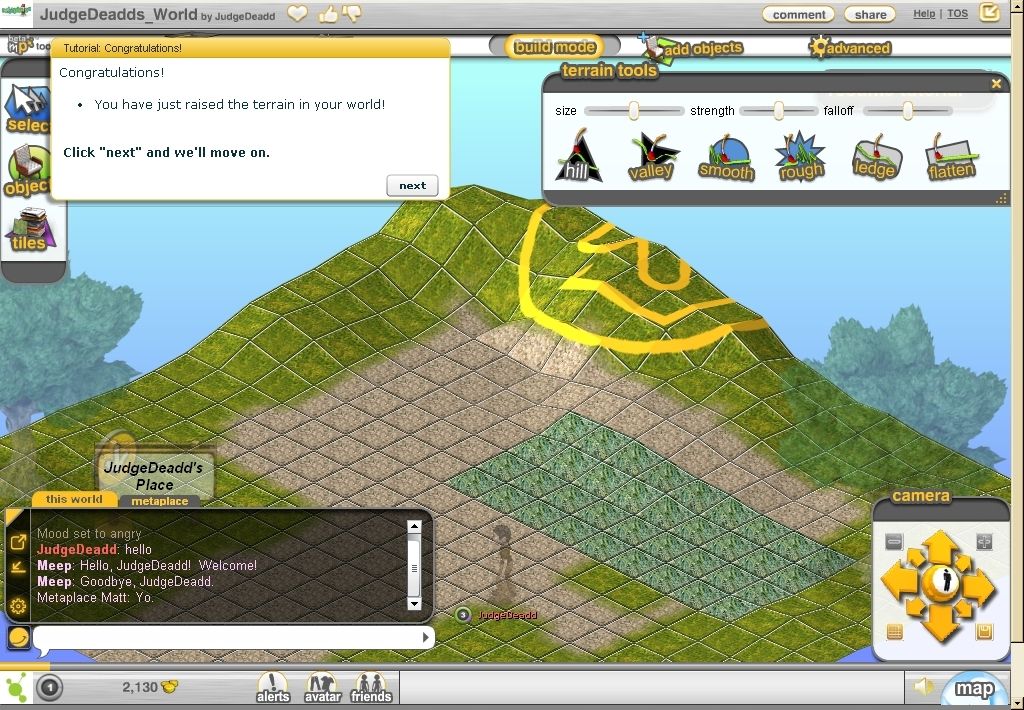
The building tool, powered by Flash, is surprisingly deep for a browser-based experience. Terrain can be raised or lowered, tiled with an extensive library of textures, and populated with everything from alien fauna to medieval architecture. You can even import your own graphics and sound files to give your world a truly unique flavor. Advanced triggers allow objects to play audio, launch dialogue trees, or even spawn enemies, transforming a static room into an interactive mini‐game.
Exploration and social features are seamlessly intertwined. Portals link player-created worlds, encouraging a network of mutually reinforcing visits and ratings. As you hop between your friends’ creations, you earn experience for simply traversing their maps or leaving thoughtful comments on their design choices. The result is a self‐sustaining loop: you build, they explore, they rate, and everyone gains rewards for participation.
Monetization integrates smoothly into the gameplay loop. Virtual currency can be purchased with real money or earned through in‐game actions, then spent on premium avatar gear or exclusive world assets. A VIP membership offers a steady currency drip and access to special items, catering to both casual creators and dedicated hobbyists looking to stand out in the community.
Though it closed on January 1, 2010, Metaplace set a strong precedent for user-generated worlds in an MMO setting. It championed a “play, build, share” ethos long before similar platforms gained traction, demonstrating that creativity and socializing could drive sustained engagement.
Graphics
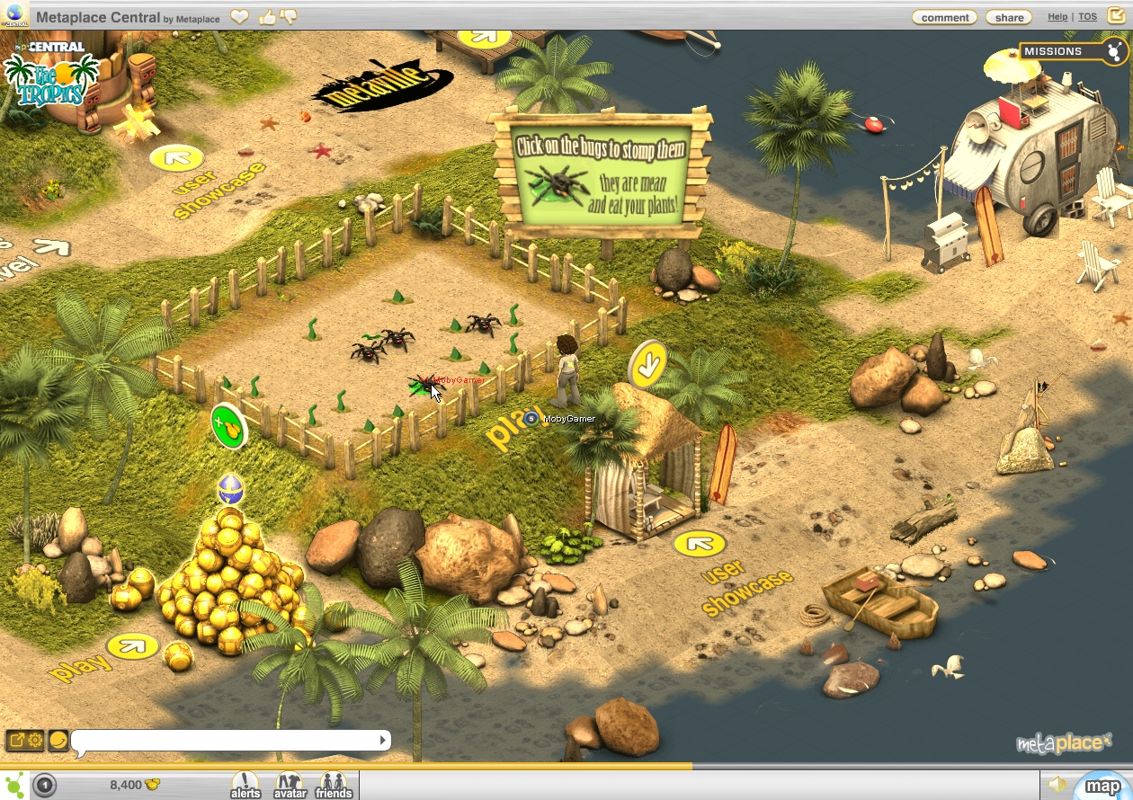
Metaplace’s visuals are charmingly retro, employing a 2D isometric perspective rendered in Flash. While it might lack the high-definition polish of modern 3D MMOs, its art style has a nostalgic appeal that suits the game’s emphasis on creativity. Tile sets range from tropical jungles and futuristic cityscapes to haunted mansions, providing a broad palette for imagination.
The world-building tool offers an extensive object library that can be scaled, rotated, and customized in color. Sprite animations—be they birds flapping through a glade or robots patrolling steel corridors—add life to player worlds. Advanced builders can even import external assets, giving rise to visually unique domains that break free of the default aesthetic.
Performance is generally smooth for a browser-based Flash application, though heavily populated worlds with multiple animated objects can introduce occasional stutter. Careful optimization—limiting particle effects, streamlining imported media, and consolidating interactive triggers—can preserve frame rates while still delivering vibrant scenes.
Avatar customization deserves special mention. From whimsical hats and flowing capes to futuristic visors, the gear not only changes your character’s appearance but also signals status and creativity to the community. Watching a gathering of uniquely styled avatars underlines the game’s social fabric and visual diversity.
Story
Metaplace does not follow a linear narrative; instead, its story emerges through player interactions and world creation. Each player’s domain tells its own tale—a pirate cove bristling with cannon fire, a moon base scattered with alien artifacts, or a serene Zen garden complete with ambient soundscapes. This player-driven approach places authorship squarely in the hands of the community.
Developer‐crafted “hub” worlds serve as narrative anchors, demonstrating advanced features of the builder and offering casual lore tidbits that set the tone for exploration. These spaces act as social meeting points, minigame arenas, and tutorial grounds, weaving a loose framework that supports user content without smothering creativity.
Because every object can be scripted to present text, sound, or dialogue trees, creators can embed quest-like experiences in their maps. Visitors might follow cryptic verse to unlock a hidden chamber or solve a puzzle to earn bonus experience. Over time, players could embark on multi-world story arcs, hopping through portals to complete chapters crafted by different authors.
Though there is no single epic storyline, the emergent narratives woven by designers and explorers feel surprisingly cohesive. The sense of discovery—of stumbling into someone else’s tale—provides the story beats that keep players returning, eager to see what fresh adventure awaits.
Overall Experience
Metaplace excels at bridging creativity and community. Its sandbox building features cater to both casual decorators and hardcore modders. Meanwhile, its social systems—chat channels, friend lists, ratings, and cooperative mini-games—ensure that you’re never alone in your virtual domains. The frictionless travel between worlds fosters a bustling network of micro-communities.
For newcomers, the learning curve can feel steep at first. The world editor is powerful, but mastering advanced triggers and optimizing performance takes time and experimentation. Luckily, the community is supportive, frequently sharing tutorials, templates, and design tips. You’ll soon go from placing basic tiles to scripting interactive exhibits.
Monetization steers clear of pay-to-win territory. Purchasing virtual currency accelerates cosmetic upgrades and unlocks new building assets, but all content remains accessible through in-game effort. The VIP membership is a worthy investment for avid creators, granting a reliable resource stream that fuels ambitious projects.
Although Metaplace shut down in early 2010, its legacy endures. It anticipated many aspects of today’s user-generated MMO offerings by blending robust creation tools with an engaging social framework. For anyone interested in collaborative world-building or simply looking for a playful social hub, Metaplace remains a shining example of what Flash-era ingenuity could achieve.


Reviews
There are no reviews yet.