 Retro Replay Retro Replay gaming reviews, news, emulation, geek stuff and more!
Retro Replay Review
Gameplay
Space Spy presents itself as an adventure-puzzle hybrid, challenging players to navigate six distinct chapters, each with its own mechanics and objectives. From the outset, the game offers direct access to any chapter via codes provided by the developer or unlocked by completing previous segments. This non-linear approach gives seasoned players freedom to revisit favorite scenarios, while newcomers can jump right into the surreal environments without mandatory progression.
(HEY YOU!! We hope you enjoy! We try not to run ads. So basically, this is a very expensive hobby running this site. Please consider joining us for updates, forums, and more. Network w/ us to make some cash or friends while retro gaming, and you can win some free retro games for posting. Okay, carry on 👍)
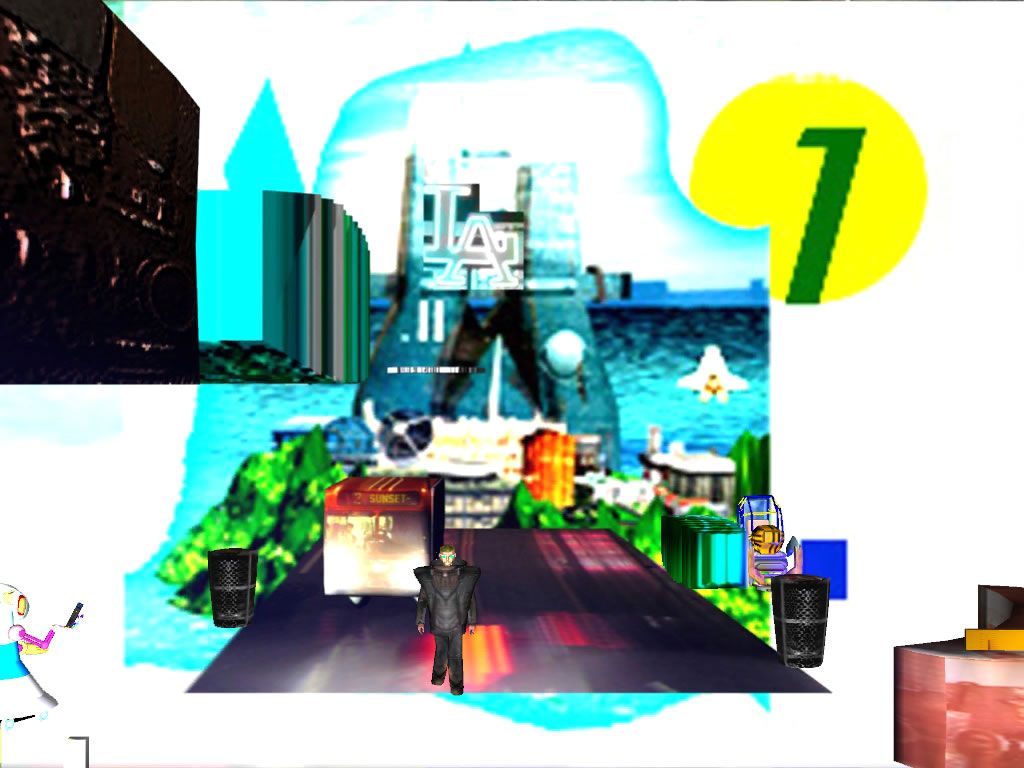
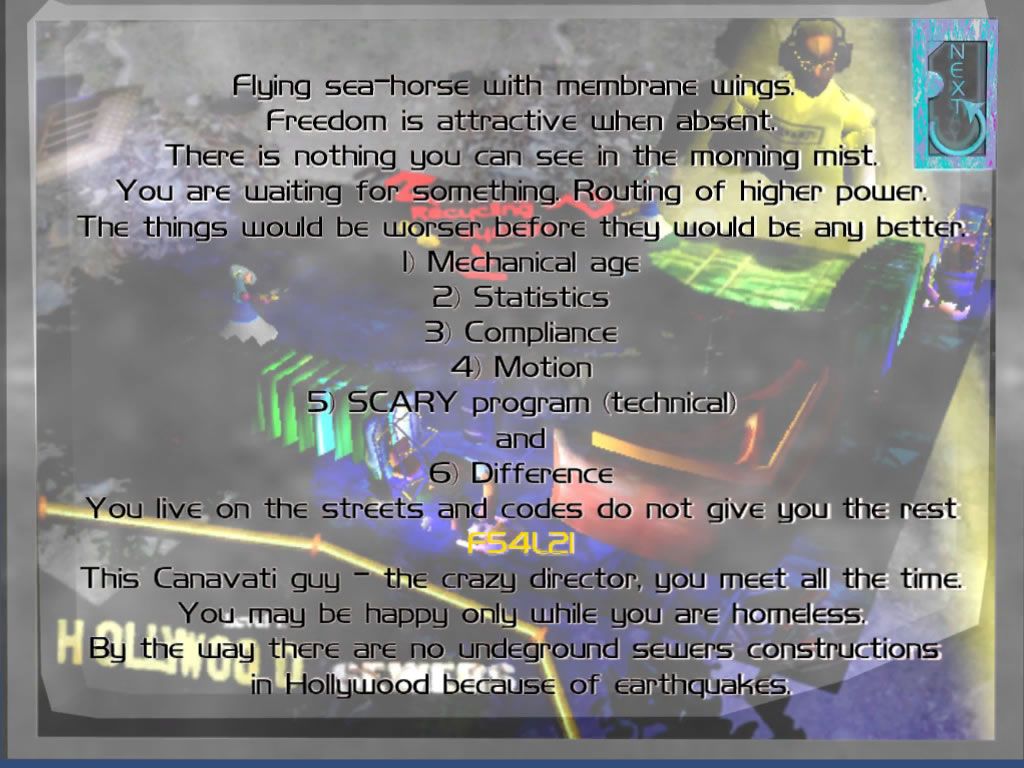
Most levels adopt a fixed, single-screen, third-person perspective, placing emphasis on careful observation and environmental interaction. Whether steering the protagonist through the Hollywood sewers in Chapter 1 or piloting an airplane above the cityscape in Chapter 5, the controls remain straightforward: walk, interact, and solve. However, puzzles often rely on cryptic setups with few visual clues, forcing players to lean heavily on the textual solutions presented at the start of each segment.
A notable quirk of the gameplay is the frequent respawning mechanic. Dying or otherwise failing can immediately respawn the character, and in some puzzles, death itself is a path to progression. While this design choice underscores the game’s experimental nature, it can also lead to frustration when a single misstep irrevocably blocks forward movement—such as pushing an item into an immovable corner, necessitating a chapter restart.
Graphics
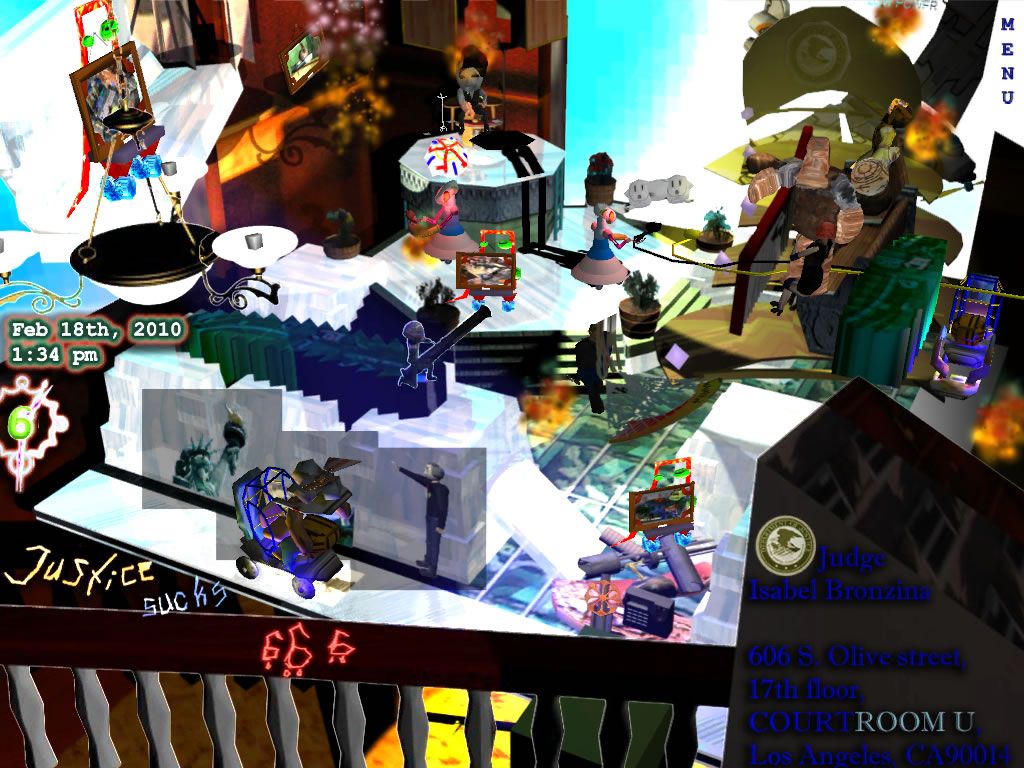
Graphically, Space Spy opts for a minimalist, stage-like aesthetic that mirrors its overarching narrative concept of being “watched over” by a director. Environments are rendered in basic 3D, often with stark lighting and simple textures that evoke a theatrical set rather than a realistic world. This choice reinforces the game’s surreal atmosphere, though it may feel underwhelming to players expecting high-fidelity visuals.
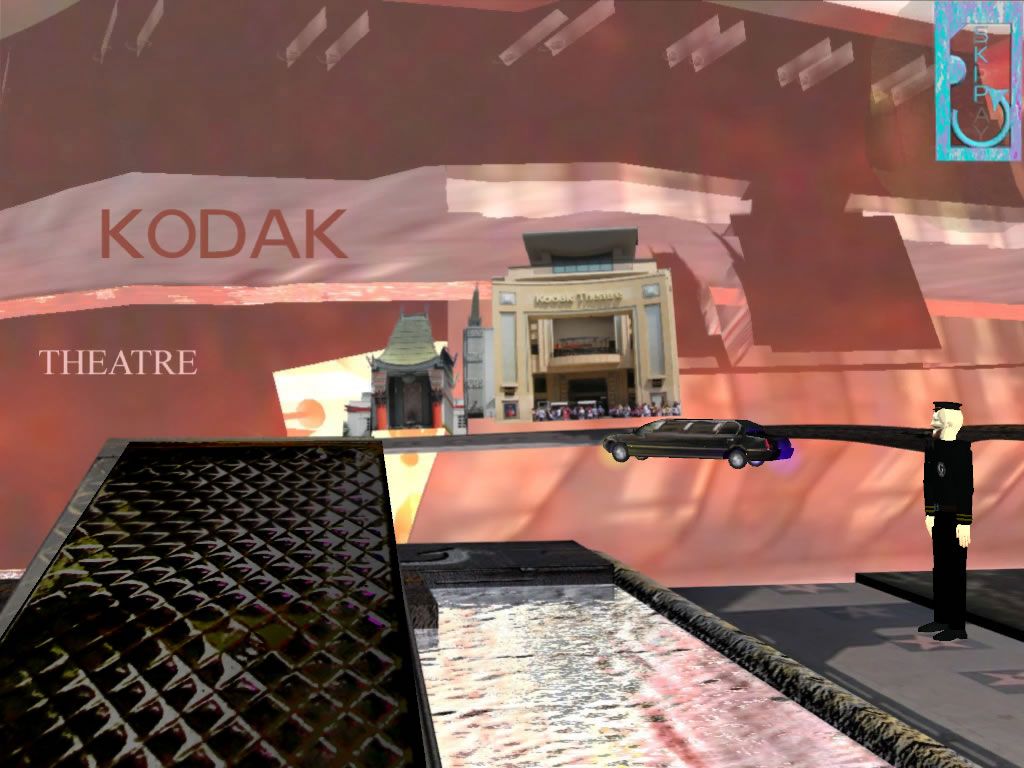
Each chapter’s setting introduces new visual themes: the grimy, dimly lit sewer of Chapter 1 contrasts sharply with the glitzy auditorium of Chapter 2’s Oscar ceremony and the sterile halls of the Merry Breakers Psychiatric Hospital in Chapter 4. While character models are rudimentary and animations can be stiff, the shifting palettes and distinctive props—in particular the looming presence of director Canavati in a corner of every screen—keep the eye engaged.
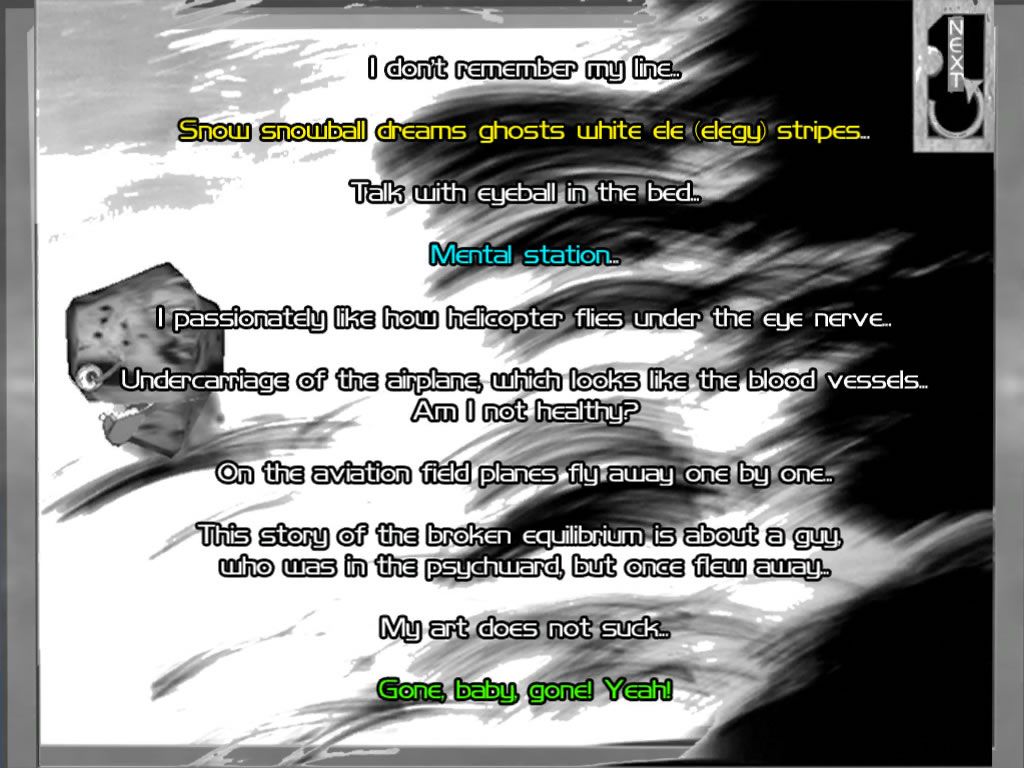
Intermissions and non-interactive cutscenes are sparse but effectively break up the puzzle-heavy gameplay. These moments briefly showcase more expressive artwork, giving a glimpse of what the game could achieve if it leaned more heavily into cinematic presentation. For a shareware title that began with a single level, the addition of sound in the Windows release further elevates the mood, lending weight to otherwise simple graphic assets.
Story
Space Spy weaves an unconventional narrative deeply rooted in the real-life experiences of developer Vasily Zotov: homelessness, psychiatric hospitalization, a rejected U.S. immigration petition, stint in America, acting ambitions, and even chemical castration. Each of the six chapters serves as an allegorical reflection of these phases, transforming personal trauma into a sequence of surreal puzzles.
From the desperate scavenging for keys amid sewer robots in Chapter 1 to the morally ambiguous courtroom manipulations in Chapter 6, the story unfolds as a series of vignettes. The recurring appearance of a red-haired actress and the omnipresent director figure Canavati frames the protagonist’s journey as both performance and reality, blurring lines between stagecraft and genuine emotion.
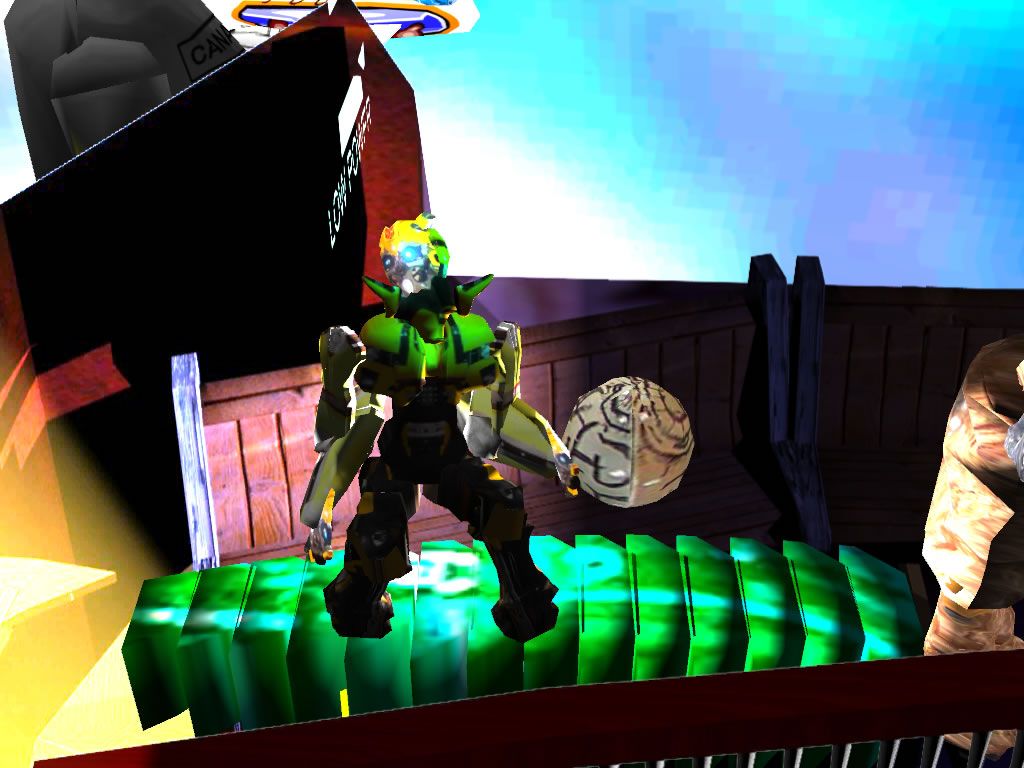
Symbolism runs deep throughout the game: deportation fears manifest as ball-launching robots and the lethal “Hideman” creature in Chapter 3, while the hospital setting of Chapter 4 confronts mental health head-on with a rolling eyeball and vanishing patients. The final bathtub vision evokes a bitter commentary on the American Dream, seen through the eyes of an alienated immigrant. The narrative may feel disjointed at times, but its raw honesty and surreal imagery leave a lasting impression.
Overall Experience
Space Spy is not for everyone. Its unorthodox storytelling, static screens, and occasional design pitfalls can alienate players accustomed to more forgiving adventure-puzzle titles. Yet for those willing to embrace its experimental spirit and cryptic challenge, the game offers a unique window into a developer’s personal odyssey.
The ability to jump between chapters, combined with immediate respawns, keeps the pace brisk, though it occasionally undermines the sense of consequence. Graphic simplicity and minimal animation may disappoint visually driven gamers, but the strong thematic consistency and thought-provoking scenarios compensate for technical shortcomings.
Ultimately, Space Spy stands out as a labor of passion and personal expression. Its six-chapter structure provides varied gameplay experiences—from stealthy key retrieval to tank-interference flight segments—while its surreal narrative invites deeper reflection on issues of identity, exile, and mental health. Potential buyers seeking an offbeat, puzzle-focused adventure with a distinctly personal touch will find Space Spy an unforgettable, if sometimes maddening, journey.


Reviews
There are no reviews yet.