 Retro Replay Retro Gaming History, Reviews & Emulation
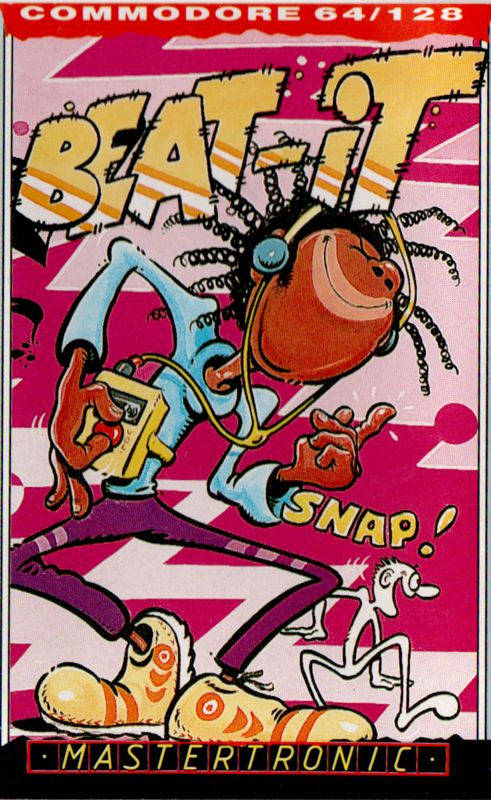
Retro Replay Review
Gameplay
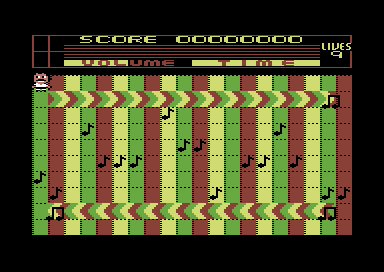
The first few screens of Beat-it make you think the job is simple: pick a character, gather the notes, finish the composition. Then the coloured alley layout starts dictating your movements. You cannot just step sideways into the next colour; you must use one of the crossings at the very top or bottom of the screen. That one rule turns each level into a compact route-planning exercise, and it gives the game a more deliberate feel than a typical run-and-grab arcade chase.
Its best moments come when you stop reacting and start plotting. You look at the notes ahead, decide which end of the level to aim for, and try to avoid wasting a long trip across a walkway. With 60 non-scrolling levels, Beat-it has plenty of chances to make that basic structure click. The fixed screens suit repeat attempts well because you can gradually learn where danger tends to spoil the cleanest route.
Enemies do not merely get in your way; they interfere with the run in distinct, often nasty ways. Distorted notes steal notes you have already earned, joysticks reverse your controls, and shrinks split your character up. Other threats can kill a life or turn off the lights. That variety keeps contact from feeling routine, though the reversed controls and lost progress can be particularly irritating when you were already committed to a careful route.
Collectibles add a little more texture. Cigarettes slow your walking speed, so they are trouble when the screen is already asking for a precise trip to one of its crossings. Flowers can be delivered to the character you did not choose for bonus points. These touches fit the game’s score-chasing arcade mindset, but the central pleasure remains navigating the three-colour lanes efficiently while holding onto the notes you have collected.
Graphics
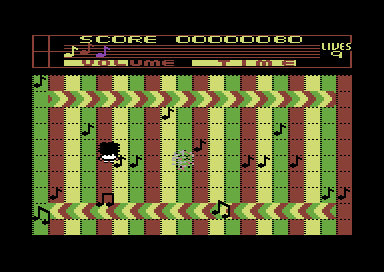
Beat-it is built around single-screen, vertically arranged alleys in three colours, with crossings placed at the top and bottom. That clear layout makes the crucial movement rule easy to read at a glance: you can see the lanes, see where a crossing waits, and understand why a note may require a long detour.
Rockin’ Rodney and Rachel give the game a simple musician-led frame, while the enemy types are communicated through their different forms and effects. The lighting-disruption hazards stand out because they directly change what you can see during play, making an already restrictive screen harder to navigate.
Story
The story is modest but functional: Rockin’ Rodney, or Rachel if you choose her, is collecting notes needed to complete a new composition. It is exactly the sort of light arcade excuse that gets you from one screen to the next without slowing the game down.
Choosing Rodney or Rachel gives the setup a small personal wrinkle, especially since flowers can be taken to the character left out of play for extra points. That is a neat thematic use of the two-character premise rather than a separate narrative branch.
Do not come to Beat-it for drama. Its musical goal matters because every note you lose to a distorted-note enemy feels like a direct setback, not because the game builds a larger tale around the composition. The stakes are simple, and they suit a fast restart-and-improve kind of arcade game.
Overall Experience
Beat-it earns its name as a focused, slightly mean-spirited arcade challenge. The coloured-lane restriction is strong enough to make note collecting feel like navigation rather than busywork, and the 60 screens give that idea room to develop. When you successfully weave through a level, use the right crossing, and avoid an enemy effect that would have undone your progress, the payoff is tangible.
The rough edge is that its punishments can feel harsher than its small screens initially suggest. Reversed controls, darkness, split characters, life loss, and stolen notes all demand quick recovery, and a mistake can erase a good stretch of work. If you enjoy old arcade games that make mastery out of repetition and route memory, that pressure is part of the draw. If you want a relaxed collectathon, it will wear thin quickly.
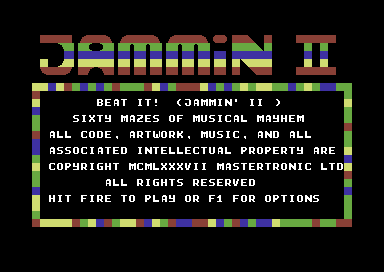
Give Beat-it a chance if you like compact Commodore 64 games with a clear rule, escalating interference, and a score-minded reason to replay. It does not need a complicated premise to hold attention; the satisfying part is gradually turning those awkward top-and-bottom crossings into instinct. The sequel status to Jammin’ matters less than whether this particular lane puzzle gets under your skin, and for patient arcade fans, it can.


Reviews
There are no reviews yet.