 Retro Replay Retro Replay gaming reviews, news, emulation, geek stuff and more!


Retro Replay Review
Gameplay
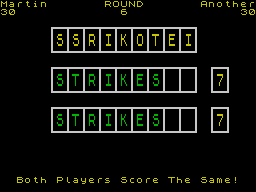
Countdown’s gameplay is a meticulous digital recreation of the cherished Channel 4 format, splitting each match into six letters rounds, two numbers rounds, and a final nine-letter conundrum. The pacing mirrors that of the TV show, granting players 30 seconds per round, which keeps the pressure high and the action brisk. Each letters round invites competitors to alternate choosing vowels and consonants until nine tiles are on the board, then scramble to find the longest valid word. The numbers rounds maintain their classic appeal, letting players pick their mix of large and small numbers before tackling a randomly generated three-digit target.
(HEY YOU!! We hope you enjoy! We try not to run ads. So basically, this is a very expensive hobby running this site. Please consider joining us for updates, forums, and more. Network w/ us to make some cash or friends while retro gaming, and you can win some free retro games for posting. Okay, carry on 👍)
One of the most notable gameplay mechanics is the on-the-fly dictionary validation. Similar to Computer Scrabble, Countdown doesn’t preload every conceivable word. If you submit something outside its limited word list, the game politely prompts you to confirm your entry. While this feature preserves authenticity, it can be jarring when uncommon but legitimate words are flagged and require manual confirmation. It also underscores the developers’ effort to balance performance constraints with faithful adherence to the show’s spirit.
Although Countdown faithfully replicates the core rules, it lacks a single-player AI opponent, limiting play to two human participants. This design decision preserves the head-to-head tension, but it can frustrate players seeking solo practice or quick warm-up sessions. On the upside, local pass-and-play is smooth, and the user interface clearly highlights each player’s current score, remaining time, and puzzle state. The buzzer for the conundrum round delivers satisfying feedback when you nail that final anagram under the wire.
Graphics
Visually, Countdown opts for a clean, studio-inspired look rather than flashy graphics or immersive 3D environments. The main game board, timers, and score displays are rendered in crisp 2D, with color schemes and typography pulled directly from the TV broadcast. Fans of the original show will appreciate seeing the familiar blue backdrop, sleek letter and number tiles, and the classic countdown clock ticking away at the top of the screen.
Animation is used sparingly but effectively: letter tiles flip into view, numbers slide in from the sides, and the conundrum letters rearrange with a satisfying shuffle. These subtle effects lend dynamism without distracting from the intellectual challenge. However, the lack of more ambitious visual flourishes may leave expectations unfulfilled for players accustomed to higher-budget console or PC titles with elaborate graphical production values.
On modern displays, the UI scales well, and text remains legible even on 4K monitors. Sound effects—such as the ticking timer and correct/incorrect chimes—are faithful to the show’s audio cues, reinforcing immersion. While there are no flashy cutscenes or host animations (nor any alternate camera angles), the straightforward presentation ensures that all attention stays on the puzzles, which is exactly where Countdown’s charm lies.
Story
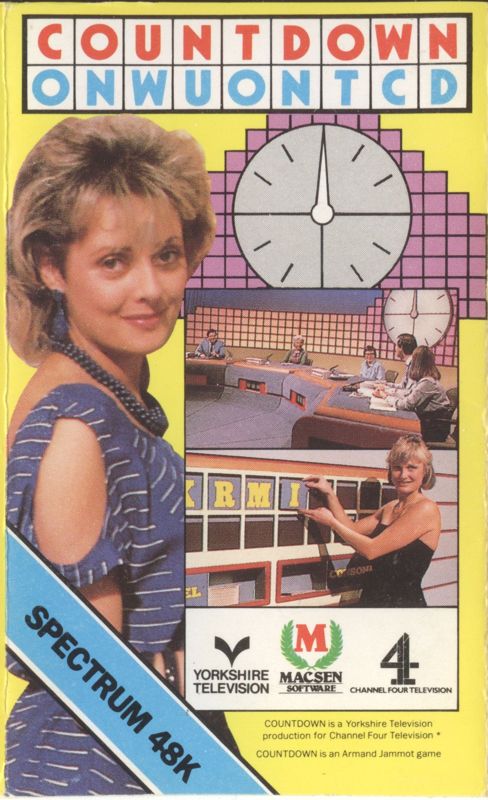
As a game show adaptation, Countdown doesn’t offer a traditional narrative arc or character development. Instead, its “story” is woven through the legacy of Channel 4’s longest-running program and the enduring appeal of Richard Whiteley’s wit. Though Whiteley himself passed away in 2005, his spirit lingers in the game’s faithful replication of show rules and ambiance, evoking nostalgia for longtime viewers.
The game doesn’t introduce new characters or side plots; there’s no fictional backstory or campaign mode to unlock. Instead, the progression of each match tells its own mini-story, moving from the anticipation of letter selection to the mental gymnastics of the numbers round, and finally culminating in the conundrum’s dramatic reveal. This structure mirrors the episodic storytelling style of the television show—self-contained yet consistently engaging.
Players seeking a deeper narrative experience may be left wanting, but Countdown’s focus on pure gameplay ensures the “story” remains the puzzle itself. The personal triumph of finding a nine-letter word or hitting the target exactly in a numbers round provides its own sense of achievement. In this way, each game session crafts a unique narrative of intellectual competition and quick thinking.
Overall Experience
Countdown delivers a straightforward, engaging experience for fans of cerebral game shows and word puzzles. Its faithful reproduction of the TV format, complete with authentic visuals and sound cues, will resonate with longtime viewers while also serving as a robust competition for newcomers. The lack of a computer opponent and the limited dictionary may frustrate solo players, but the head-to-head focus enhances the social aspect of puzzle-solving.
Replayability is high if you have a regular opponent, as the randomization of letters, numbers, and conundrums ensures each match feels fresh. The game’s minimalist presentation may not satisfy those seeking flashy production, but it underlines the core appeal: using words and arithmetic to outwit your rival. Whether played locally or streamed over video chat, Countdown captures the thrill of beating the clock under pressure.
For buyers looking for a digital rendition of a classic British game show, Countdown checks all the right boxes. Its simple but effective interface, adherence to established rules, and nostalgic value make it a solid purchase. Just be sure you have a willing opponent at hand—because in Countdown, as on TV, it takes two to tangle with those tantalizing letters and numbers.


Reviews
There are no reviews yet.