 Retro Replay Retro Replay gaming reviews, news, emulation, geek stuff and more!




Retro Replay Review
Gameplay
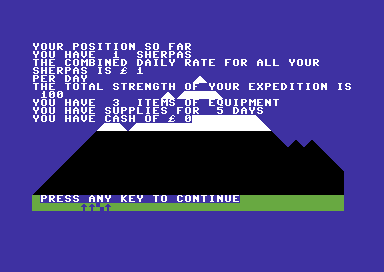
Everest Ascent places you in the role of expedition leader, challenging you to balance limited resources against the unforgiving conditions of the world’s highest peak. Starting with a modest £1000 fund, you must allocate money wisely to hire sherpas, purchase essential equipment like tents, ropes, and planks, and stock up on rations to keep your team healthy. Each decision carries weight: overspend on supplies and you may struggle to hire enough experienced guides; undersupply and you risk frostbite, altitude sickness, or worse.
(HEY YOU!! We hope you enjoy! We try not to run ads. So basically, this is a very expensive hobby running this site. Please consider joining us for updates, forums, and more. Network w/ us to make some cash or friends while retro gaming, and you can win some free retro games for posting. Okay, carry on 👍)
The core loop revolves around establishing successive base camps on your ascent. You’ll plan routes, weigh the risks of high passes versus safer detours, and decide when to push onward or retreat for supplies. Investing in a radio unlocks the ability to solicit donations from philanthropists and mountaineering enthusiasts, adding a dynamic layer of funding. However, retrieving donations, additional equipment, or new sherpas always means a time-consuming return to the village, forcing you to consider opportunity cost in every step.
Weather and random events further enliven the strategy, introducing sudden storms, avalanches, or health emergencies that can derail your expedition. These unpredictable elements demand on-the-fly adjustments: ration redistribution, redispatching sherpas, or postponing summit bids. The tension between pushing for the summit and safeguarding your team’s well-being creates a compelling tug-of-war, rewarding foresight and punishing overconfidence.
Beyond pure numbers and resources, Everest Ascent layers in morale mechanics. Performing small gestures—sending supplies back to the village, sharing stories around the campfire—can boost your party’s spirit, improving performance and reducing accident rates. This human element adds heart to the strategic spine, ensuring you don’t just chase statistics but genuinely care about each member’s survival and success.
Graphics
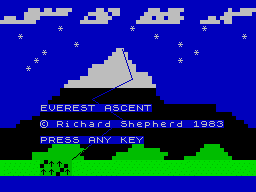
Everest Ascent employs a stylized yet realistic visual design that captures both the grandeur and peril of high-altitude climbing. Panoramic vistas of snowy ridges, jagged cliffs, and swirling storm clouds draw you into the environment, while minimalist interface panels keep critical data—remaining funds, team health, weather forecasts—clearly visible without cluttering the screen.
Dynamic weather effects are a standout feature. Snow flurries drift gently across the screen in calm conditions, while blinding blizzards erupt in full force during storms, obscuring visibility and heightening the sense of risk. Subtle animations—icicles forming on tents, breath fogging in the air—add to the immersion, making each base camp feel alive and vulnerable to the elements.
The game’s clean iconography and color-coded resource bars make management tasks intuitive. Equipment items glow when they’re in high demand, and warning icons flash red to signal critical health issues. These visual cues help you make snap decisions under pressure, ensuring that even complex supply chains remain accessible to players new to the genre.
Story
While Everest Ascent doesn’t follow a traditional linear narrative, it weaves an emergent story through your decisions and the people you meet. Each sherpa you hire brings a backstory: former climbers, local villagers, or young adventurers seeking fame. Their personal traits—resilience, speed, altitude tolerance—shape your expedition’s character and the friendships you forge.
The game’s donation mechanic introduces another narrative layer. As you broadcast calls for help, you’ll receive letters and messages from donors around the globe. Some offer large sums with strict conditions, while others send small parcels of gear and heartfelt encouragement. Reading these notes fosters a sense of global community rallying behind your ascent.
Between camps, optional dialogue sequences let you interact with team members, learning about their motivations and fears. Deciding whether to comfort an ailing porter or push forward in hopes of a quicker summit can influence loyalty and morale. These moments of interpersonal drama elevate Everest Ascent from a pure management sim into a poignant human tale of ambition, sacrifice, and teamwork.
Overall Experience
Everest Ascent delivers a deeply satisfying mix of resource management, strategic planning, and emergent storytelling. The tension between ambitious summit bids and the safety of your team keeps every decision meaningful, while the dynamic weather and morale systems ensure no two expeditions play out the same. Fans of strategy games will appreciate the depth of the mechanics, and newcomers will find the intuitive interface a friendly gateway into complex simulation.
The game’s pacing strikes a fine balance: early stages let you familiarize yourself with hiring and supply purchasing, while later camps bring high-stakes choices that can make or break your climb. Replayability is high, thanks to varied donor events, random weather patterns, and multiple path options up the mountain. Achieving the summit feels hard-earned and deeply rewarding.
On the downside, Everest Ascent can present a steep learning curve for players unused to micromanagement or emergent difficulty spikes. A few more in-game tutorials or difficulty presets might help ease newcomers into the peak challenges more smoothly. Still, once mastered, the game offers an engrossing, emotionally resonant climb that few other sims can match.
In summary, Everest Ascent stands out as a captivating strategy resource management title that captures the spirit of high-altitude adventure. Its blend of challenging gameplay, evocative visuals, and human-focused storytelling makes it a must-play for anyone looking to lead a team to the roof of the world—or simply test their strategic mettle against nature’s harshest frontier.


Reviews
There are no reviews yet.