 Retro Replay Retro Replay gaming reviews, news, emulation, geek stuff and more!
Retro Replay Review
Gameplay
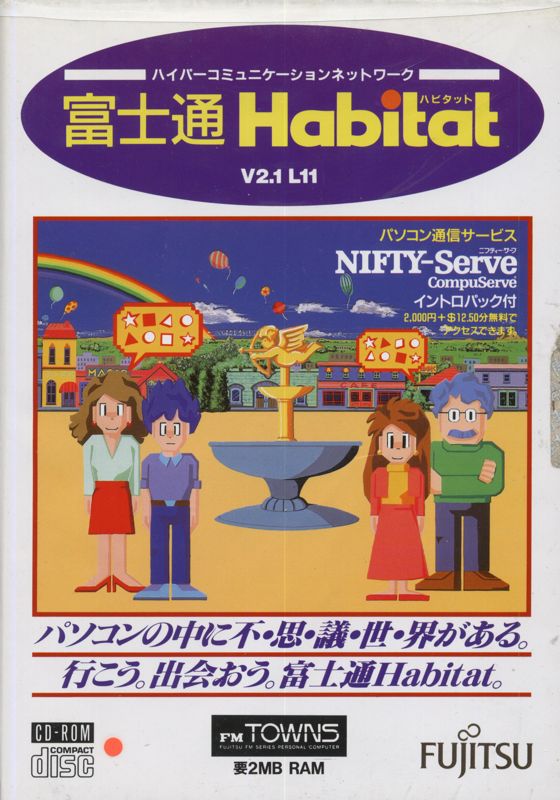
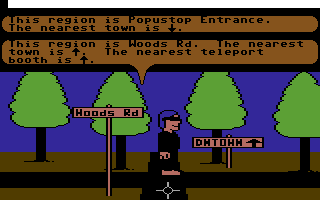
Habitat shines as a pioneering sandbox MMO where player creativity and social interaction take center stage. Rather than relying on traditional RPG staples like levels, classes, or skill trees, it empowers players with a suite of simple but versatile actions: walking, gesturing, talking, and manipulating objects within a sprawling 2D world. From your third-person avatar’s perspective, you navigate through a patchwork of regions—cities, forests, theaters—each accessible via doors, teleporters, or hidden portals.
(HEY YOU!! We hope you enjoy! We try not to run ads. So basically, this is a very expensive hobby running this site. Please consider joining us for updates, forums, and more. Network w/ us to make some cash or friends while retro gaming, and you can win some free retro games for posting. Okay, carry on 👍)
The open‐ended design encourages emergent storytelling. Players can establish businesses, form guilds, write books or newspapers, and even perform weddings. An in‐game economy based on tokens and bank accounts underpins trade, while a mail system and telepathic “ESP” chats deepen communication. Interactions aren’t just cosmetic—tools, weapons, and magical items can be acquired or crafted, introducing light PvP fighting and safe zones where social gatherings thrive without the threat of conflict.
Quests in Habitat aren’t handed out by NPCs in a rote fashion; instead, they’re orchestrated by the enigmatic Oracle—a godlike entity that seeds one‐time challenges throughout the world. If players breeze through these tasks, developers observe and adapt, rolling out new features and environments in response to community behavior. The result is a living, breathing virtual realm where player actions shape the evolution of the game more than any rigid content roadmap ever could.
Graphics
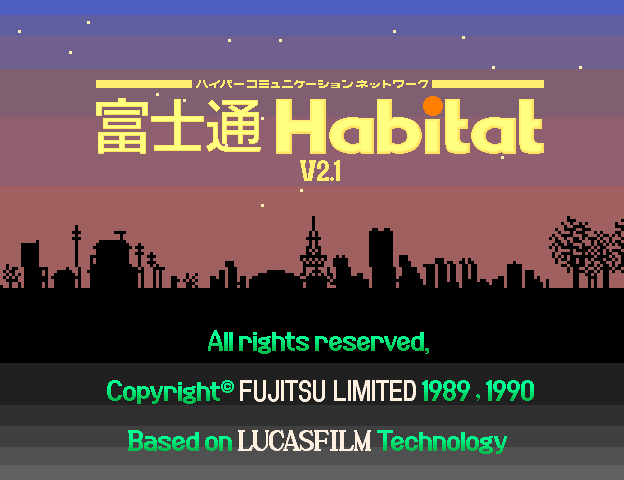
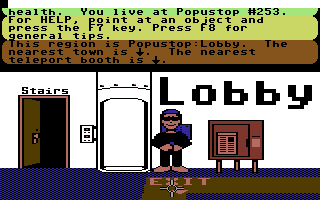
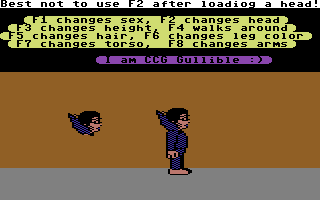
While modest by modern standards, Habitat’s pixel art brings undeniable charm and clarity to its virtual landscapes. The 2D sprite-based graphics employ a limited color palette and simple animations, but they render each environment—from quaint taverns to mystical groves—with distinct character. Avatars can be customized via skin tones, facial features, and garments, delivering a surprising degree of personalization within tight technical confines.
The UI remains intuitive: clickable icons for gestures, inventory slots for objects, and text chat windows for communication. Despite a retro aesthetic, the visuals effectively convey the social hub vibe that lies at the heart of Habitat. Object interactions—picking up items, opening doors, reading signs—feel tactile, thanks to cleverly animated sprites and context‐sensitive cursors.
For a beta‐phase game originally transmitted over slow Quantum Link connections, Habitat’s graphical performance is remarkable. Even when network traffic spiked due to heavy usage, scenes loaded quickly, animations stayed fluid, and the overall visual experience remained cohesive. Today, these graphics evoke a powerful sense of nostalgia, reminding players how far technology has come while still illustrating the timeless appeal of well‐crafted virtual worlds.
Story
Habitat doesn’t follow a linear storyline; instead, it presents a creation myth centered on the Oracle, the all-powerful entity that gave birth to the virtual realm. Global quests—rare, one‐off challenges—are woven into this mythos, so that when players unite to topple a mighty foe or solve a world-spanning puzzle, it feels like participating in living legend. These events are unrepeatable, reinforcing the feeling that each player’s experience is genuinely unique.
The narrative backbone is deliberately light, serving as a framework for player-driven drama rather than a prescriptive plot. Avatars can choose to become de facto thieves, law enforcers, or spiritual leaders, enacting personal sagas that ripple through the community. The lack of rigid class structures or developer-spawned story arcs encourages emergent roleplay, with each player authoring their own chapter in Habitat’s evolving lore.
Added gradually in response to player behavior, new narrative hooks—such as city festivals, theater performances, or the in‐game newspaper “The Rant”—create ongoing cultural touchpoints. These mechanics blur the line between developer content and community creativity, reinforcing Habitat’s reputation as more than just a game: it’s a collaborative story engine powered by its inhabitants.
Overall Experience
Stepping into Habitat feels like discovering the roots of modern MMORPGs. Although the original Quantum Link beta never hosted more than 500 concurrent players, the social experimentation it enabled set the stage for everything from Club Caribe to Fujitsu’s WorldsAway, and ultimately to today’s sprawling virtual realms. Its libertarian ethos—players free to roam, trade, form societies, and even ghost through hazardous areas—remains a compelling counterpoint to heavily guided, grind-focused games.
The community-driven evolution of content fosters a rare sense of ownership and investment. Developers listened, watched, and adapted rather than dictating a fixed roadmap, ensuring that each update addressed real player desires. From safe urban havens to wilderness PvP zones, Habitat balances risk and reward, giving users the freedom to explore, collaborate, or compete as they see fit.
For modern gamers curious about the genre’s origins, Habitat offers both a nostalgic journey and a window into early virtual world design. Its modest graphics and minimalistic mechanics pale beside contemporary blockbusters, yet the core experience—shaping your own story alongside thousands of others—remains as engaging today as it was over three decades ago. If you value social immersion, emergent storytelling, and a sandbox’s limitless possibilities, Habitat is a must-experience milestone in online gaming history.



Reviews
There are no reviews yet.