 Retro Replay Retro Replay gaming reviews, news, emulation, geek stuff and more!


Retro Replay Review
Gameplay
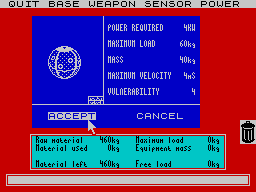
Mission Omega places you in control of a versatile robot droid tasked with infiltrating an enigmatic alien ship before it can unleash devastating missiles. From the outset, you’re introduced to an intuitive icon-based control system that allows you to customize your droid’s loadout, selecting the optimal combination of weapons and power supplies to tackle the ship’s myriad hazards. This pre-mission planning phase adds a rewarding layer of strategic depth, as you must anticipate threats and balance firepower against energy consumption.
(HEY YOU!! We hope you enjoy! We try not to run ads. So basically, this is a very expensive hobby running this site. Please consider joining us for updates, forums, and more. Network w/ us to make some cash or friends while retro gaming, and you can win some free retro games for posting. Okay, carry on 👍)
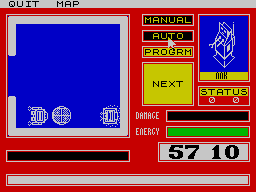
Once inside the vessel’s winding corridors and expansive chambers, the built-in mapping feature becomes indispensable. Instead of issuing step-by-step commands, you plot waypoints on the map and watch as your droid navigates obstacles, bypasses security measures, and engages hostiles. This semi-autonomous approach keeps the action flowing and allows you to focus on broader tactics—rerouting around locked doors, prioritizing reactor rooms, or staging ambushes against alien patrols.
The game’s signature time limit of one in-game hour to disable all four core reactors adds a thrilling urgency to every decision. While the timer encourages rapid progress, it also forces risk assessment: should you detour to scavenge extra power cells or push straight toward the next reactor? This tension between exploration and speed ensures each mission feels dynamic, with real consequences for detours and delays.
Complementing the mission timer is a progression system that rewards efficient play. Successfully completing objectives under time or resource constraints unlocks advanced weapon modules and enhanced shielding, giving you reasons to revisit earlier sectors with upgraded gear. This cyclical loop of challenge and reward makes Mission Omega’s gameplay both approachable on a first run and deeply replayable thereafter.
Graphics
Visually, Mission Omega delivers a gritty, sci-fi aesthetic that immerses you in the hostile environs of an alien warship. Corridors are lined with exposed conduits and flickering console panels, while reactor chambers glow ominously with pulsating energy cores. This attention to environmental detail reinforces the sense of an advanced but dangerous vessel ripe for exploration.
Lighting plays a pivotal role in establishing atmosphere. Dynamic shadows cast by your droid’s headlamp reveal creeping menace in the darkened hallways, and the occasional electrical surge bathes rooms in strobing light that heightens tension. These visual flourishes are more than window dressing—they inform gameplay by obscuring hidden threats and guiding your path through the labyrinthine layout.
The user interface integrates seamlessly with the visuals. Icons representing weapon status, power reserves, and reactor health appear unobtrusively along the screen edges, while the mini-map can be expanded into a full-screen tactical overview with a single command. This clarity of presentation ensures you’re never overwhelmed by data, even in the heat of battle.
On modern hardware, Mission Omega runs smoothly at a stable frame rate, even when particle effects from energy discharges and debris fill the screen. Load times between sections are minimal, and graphical settings can be tweaked to maintain performance on mid-range systems without sacrificing visual fidelity.
Story
The narrative thrust of Mission Omega centers on Omega—the ominous codename for an alien craft bristling with missiles capable of devastating human colonies. Your mission is twofold: neutralize the ship’s deadly payload and secure advanced alien technology before rival factions can intervene. This high-stakes premise underpins every action, lending weight to your decisions as you race against both time and unseen adversaries.
Storytelling unfolds primarily through environmental cues and scattered data logs, inviting you to piece together the vessel’s origin and intended purpose. Holographic recordings of the alien crew, broken comm-links, and cryptic schematics pepper the ship’s corridors, gradually revealing a civilization driven by desperation and scientific hubris. This minimalist approach to narrative delivery fosters a sense of discovery rather than spoon-fed exposition.
The constant countdown amplifies narrative tension. As reactor cores overload and structural integrity deteriorates, you feel the looming threat of catastrophic failure. Moments of quiet—when you pause to decode a technical readout or reroute power—are underscored by an ever-present reminder that time is slipping away, making every hallucinatory flicker and distant echo count.
Beyond the immediate mission, subtle hints at greater conspiracies tease future content or potential sequels. References to shadowy organizations vying for Omega’s technology set the stage for follow-up adventures, ensuring that the world you explore feels larger than a single-hour infiltration.
Overall Experience
Mission Omega succeeds in blending strategic planning, real-time action, and atmospheric storytelling into a cohesive package that keeps you engaged from start to finish. The core loop of configuring your droid, plotting routes, and confronting reactor defenses strikes a satisfying balance between intellectual puzzle-solving and adrenaline-fueled encounters. Even seasoned players will find new challenges in optimizing routes and loadouts under the relentless time pressure.
The game’s strengths lie in its immersive world design and flexible control scheme, which accommodate both methodical planners and on-the-fly tacticians. Your choices feel impactful, whether deciding to conserve energy for a final reactor surge or deploying an experimental weapon to clear a blocked corridor. Coupled with evocative audio cues and moody visuals, Mission Omega crafts a memorable journey into alien territory.
However, Mission Omega’s reliance on a steep learning curve and the one-hour time limit may frustrate more casual players. Mastery of the icon-based interface and map system is crucial, and early missions can feel punishing until you internalize the controls. Patience and repeated playthroughs are rewarded, but newcomers should be prepared for an initially challenging experience.
Overall, Mission Omega stands out as a compelling sci-fi infiltration game that offers both depth and tension. Its unique blend of tactical planning and real-time urgency makes it a must-play for fans of strategy-driven action and atmospheric storytelling. If you’re ready to outsmart an alien warship before the clock runs out, this mission is well worth undertaking.


Reviews
There are no reviews yet.