 Retro Replay Retro Replay gaming reviews, news, emulation, geek stuff and more!


Retro Replay Review
Gameplay
Nukewar delivers a tense, strategy-driven experience that centers on the looming threat of mutual annihilation. From the very first turn, you’re juggling espionage missions to uncover your adversary’s defenses while ramping up your own arsenal of bombers, intercontinental missiles, submarines, and anti-ballistic missile shields. Each decision—from allocating research points to deciding whether to launch a first strike—carries enormous weight, as your neighbor is equally determined to wipe you off the map.
(HEY YOU!! We hope you enjoy! We try not to run ads. So basically, this is a very expensive hobby running this site. Please consider joining us for updates, forums, and more. Network w/ us to make some cash or friends while retro gaming, and you can win some free retro games for posting. Okay, carry on 👍)
The game uses a turn-based structure, allowing you to methodically plan covert operations or rapid-fire attacks. You might spend one turn sending spy planes over hostile territory to reveal missile silos, then pivot the next turn to build additional anti-air batteries. This push-and-pull between building defenses and accumulating offensive power creates a constant strategic tug-of-war. Because resources are finite, you’ll often find yourself making gut-wrenching choices: Should you sink money into submarine patrols or shore up ground-based interceptors?
Replayability is a major strength of Nukewar. Each new game randomizes key intelligence data and starting strengths, so no two conflicts play out the same way. You can adopt a purely defensive posture, seeking to outlast your opponent until exhaustions force a truce, or take on the role of aggressor, aiming for a crushing first strike. The dynamic tension between “wait and see” and “strike now” keeps every session fresh.
Graphics
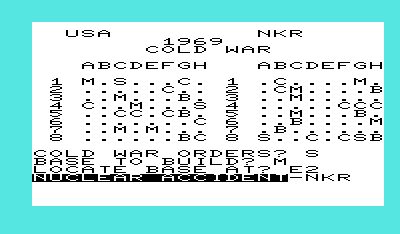
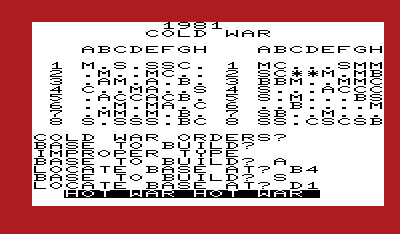
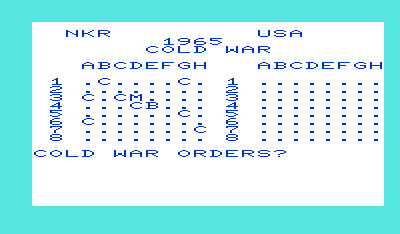
While Nukewar doesn’t aim for photorealism, its clean, minimalist interface efficiently conveys critical information. A stylized world map displays the location of your nuclear assets, enemy targets, and intelligence hotspots. Color-coded icons indicate the status of bombers on patrol, submersibles lurking in key maritime chokepoints, and missile silos primed for launch. The clarity of these visuals means you spend less time deciphering cluttered menus and more time strategizing.
When a strike is ordered, a simple yet effective animation conveys the arc of a missile or the flight path of a bomber. Explosions are represented by pulsing red and orange blips on the map, immediately illustrating impact zones and collateral damage. Although these effects may feel dated compared to modern 3D war sims, they successfully capture the grim stakes of nuclear warfare without overloading your system’s resources.
Subtle audiovisual cues—such as rumbling sound effects when multiple warheads detonate in rapid succession—heighten immersion without resorting to flashy cinematics. Meanwhile, brief mission reports and diplomatic communiqués pop up in a text window, their terse language reinforcing the cold calculus of Cold War brinkmanship. Overall, the visuals and audio work in harmony to keep the focus on strategic depth rather than graphical spectacle.
Story
Nukewar’s narrative framework is deceptively simple: two Cold War–style superpowers, each armed with nuclear weapons, inch closer to total war. The story unfolds not through cutscenes or characters with personal arcs, but through the escalating crisis you orchestrate. Every espionage success, every missile volley, and every diplomatic reminder that “world opinion” is hanging in the balance weaves an emergent narrative unique to your playthrough.
Because victory hinges not only on destroying enemy weaponry but also on preserving civilian lives and global reputation, the game presses you to consider the moral dimensions of nuclear escalation. If you launch a pre-emptive strike, you may cripple your foe’s defenses—but you’ll also incur heavy civilian casualties and diplomatic condemnation. This dynamic creates a built-in “narrative engine” that rewards players who balance cold strategy with a keen sense of political fallout.
The lack of predefined protagonists or scripted story beats means that your decisions become the story. Veteran players often recall the time they feinted an all-out submarine attack, then negotiated a truce at the eleventh hour, or the painful occasion when both sides virtually wiped each other out in a final exchange. These player-driven tales lend Nukewar a memorable quality more typical of tabletop wargames than mainstream video titles.
Overall Experience
Nukewar is a compelling pick for strategy enthusiasts who relish high-stakes decision-making and moral complexity. The learning curve can be steep, particularly when mastering espionage mechanics and balancing resource allocation, but the payoff is a deeply engaging tug-of-war that never feels repetitive. Each victory or near-miss carries emotional weight, thanks to the game’s emergent storytelling and the ever-present specter of nuclear ruin.
For prospective buyers, it’s worth noting that Nukewar’s UI and audiovisual presentation lean toward the utilitarian rather than the cinematic. If you’re seeking flashy 3D explosions or richly detailed environments, you may come away underwhelmed. However, if your priority is crisp, intuitive controls and a gameplay loop that consistently forces you to weigh risk, reward, and reputation, Nukewar excels.
In sum, Nukewar offers a focused, suspenseful strategic experience that challenges you to navigate the razor’s edge between deterrence and devastation. Its combination of espionage intrigue, resource management, and moral stakes make it a standout choice for anyone intrigued by Cold War themes or grand strategy clashes with real consequences. Strap in, plan your next move carefully, and prepare for an unforgettable descent into brinkmanship.



Reviews
There are no reviews yet.