 Retro Replay Retro Replay gaming reviews, news, emulation, geek stuff and more!




Retro Replay Review
Gameplay
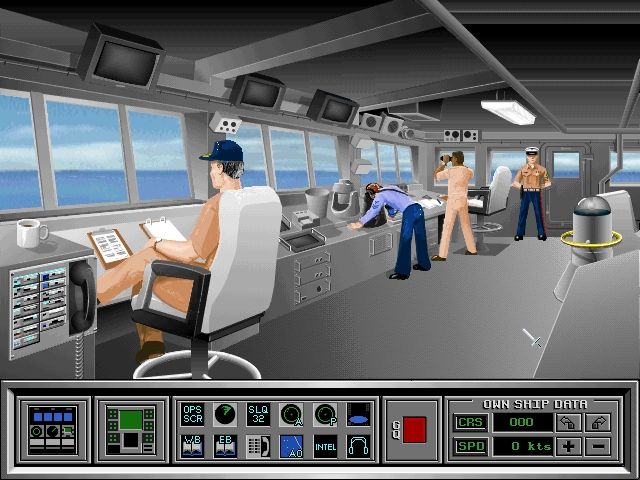
Aegis: Guardian of the Fleet places you squarely in the command chair of a Ticonderoga–class guided missile cruiser, tasking you with mastering every facet of modern naval warfare. From the bridge you can seamlessly switch between radar, sonar, weapons control, and navigation stations by clicking on each monitor. This station-based design allows you to take full command of the ship’s technical systems, whether you’re tracking an incoming aircraft on the SPS-49 radar or preparing an ASROC launch to neutralize an underwater threat.
(HEY YOU!! We hope you enjoy! We try not to run ads. So basically, this is a very expensive hobby running this site. Please consider joining us for updates, forums, and more. Network w/ us to make some cash or friends while retro gaming, and you can win some free retro games for posting. Okay, carry on 👍)
The game boasts over 100 missions spread across seven distinct battle sets, as well as a comprehensive training area. Early scenarios ease you into the simulation’s depth, guiding you through basic maneuvers, target acquisition, and weapons deployment. As you progress, missions become increasingly complex—requiring you to coordinate escort convoys, conduct reconnaissance runs, or execute precision strikes against enemy submarines and surface vessels.
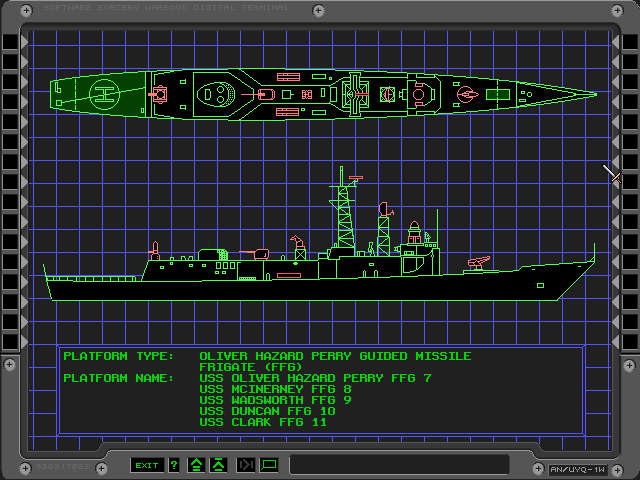
Integral to its realism is the interactive “Warbook,” an in-game compendium that details every weapon system and sensor on board. You can reference performance specs, engagement envelopes, and tactical tips at any time. This resource not only helps you choose the right munition for each threat but also deepens your understanding of real-world naval doctrine.
Graphics
While Aegis is firmly a simulation rather than a graphical showcase, its visuals effectively convey the atmosphere of a modern warship at sea. The bridge interior is modeled with meticulous attention to detail: polished instrument panels, glowing CRT monitors, and realistic lighting effects immerse you in a working command center. Viewports reveal an ever-changing ocean horizon, complete with dynamic weather patterns and day-night cycles.
External ship models retain a high level of authenticity, from the distinctive arrays atop the superstructure to the missile launch cells on deck. Enemy vessels and aircraft are represented with clear silhouettes and universally recognizable military profiles, making target identification straightforward. Sonar contacts and radar blips appear on your displays with appropriate side-lobe artifacts and interference, further enhancing the simulation’s technical immersion.
Although texture resolutions may feel dated compared to mainstream action titles, the art direction prioritizes functional clarity over flash. Every console readout, map icon, and weapon status indicator is crisply rendered to ensure you can instantly interpret battlefield data. This focus on utility aligns perfectly with the game’s emphasis on authentic naval operations.
Story
Aegis: Guardian of the Fleet does not weave an overarching narrative in the traditional sense. Instead, its “story” unfolds through mission objectives and operational briefs. Each battle set introduces you to a different theater—ranging from narrow straits threatened by hostile submarines to open-ocean carrier battle groups under attack.
Your role is that of the ship’s commanding officer, making real-time decisions that shape each engagement. There’s an implicit storyline as you advance through training and scripted scenarios, building up to more strategic tasks like shepherding amphibious assault forces or coordinating joint strikes with allied units. These episodic segments allow you to feel progression and achievement without relying on cutscenes or scripted dialogue.
The mission briefings are concise but informative, offering enough context—political tensions, enemy capabilities, and friendly dispositions—to ground each assignment in a believable modern-day conflict. If you’re looking for character-driven drama, you might find the presentation barebones; however, for naval simulation purists, the operational authenticity and sequence of mission sets provide all the narrative motivation you need.
Overall Experience
Aegis: Guardian of the Fleet is tailored squarely to fans of serious military simulations. Its steep learning curve and wealth of technical systems can be overwhelming for newcomers, but those willing to invest time in the training area and the Warbook will find a richly rewarding experience. Successfully coordinating sensor data, managing weapons load-outs, and executing multi-axis attacks delivers a genuine sense of accomplishment.
The game’s interface strikes a careful balance: complex enough to mirror real naval operations, yet intuitive enough that you aren’t buried under menus. While you may pause occasionally to consult the Warbook or review the tactical map, the overall flow keeps you engaged in the heat of battle. The 100+ missions ensure hours of replayability, especially if you enjoy refining tactics or challenging yourself with higher difficulty settings.
In sum, Aegis: Guardian of the Fleet offers an unmatched window into the world of guided-missile cruisers. Its dedication to authenticity, comprehensive mission roster, and interactive reference materials make it a must-have title for naval aficionados. Casual gamers may find the pace deliberate, but for those craving a deep dive into modern maritime warfare, it stands as a highly engaging and informative simulation.


Reviews
There are no reviews yet.