 Retro Replay Retro Replay gaming reviews, news, emulation, geek stuff and more!


Retro Replay Review
Gameplay
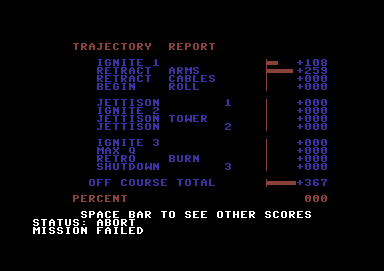
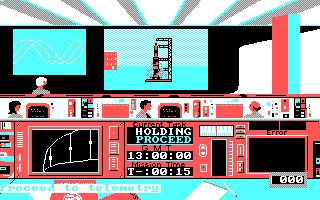
Apollo 18: Mission to the Moon offers a multi-stage simulation that faithfully captures the tension and precision of a real lunar mission. The game begins with a launch sequence where timing is everything—you must hit a moving bar at its peak to ensure a successful lift-off. From there, you transition to a series of course correction maneuvers that require careful attention to telemetry screens and trajectory data. Each button press and console input feels meaningful, and mistakes can send your spacecraft off course or force an early mission abort.
(HEY YOU!! We hope you enjoy! We try not to run ads. So basically, this is a very expensive hobby running this site. Please consider joining us for updates, forums, and more. Network w/ us to make some cash or friends while retro gaming, and you can win some free retro games for posting. Okay, carry on 👍)
The orbital rendezvous phase adds another layer of challenge. You’ll need to undock the lunar module and re-dock it after the moonwalk in a series of delicate maneuvers. The interface mimics period-accurate controls, and the digitised speech—crackly and authoritative—guides you through each step. Managing fuel levels, thruster adjustments, and computer inputs highlights the game’s emphasis on planning and real-time problem solving.
Landing on the lunar surface is perhaps the most thrilling part of the experience. With only a limited fuel supply and three potential landing zones—each with its own terrain hazards—you’ll need a steady hand and a clear mind. The descent sequence ramps up the pressure as you monitor your vertical velocity, altitude, and fuel gauge. Once you’ve touched down safely, the moonwalk is on a strict timer, forcing you to balance exploration with the need to get back to the lunar module before life support runs low.
After the surface excursion, Apollo 18: Mission to the Moon shifts gears with an EVA to capture and repair a malfunctioning satellite. This segment injects a fresh challenge, demanding you to navigate the vacuum of space and manipulate tools in zero gravity. Finally, the re-entry and splashdown sequence provides a cinematic conclusion—timing your re-entry angle and ensuring the heat shield holds up. Success means seeing your capsule safely touch down in the ocean, concluding a gripping, multi-stage adventure.
Graphics
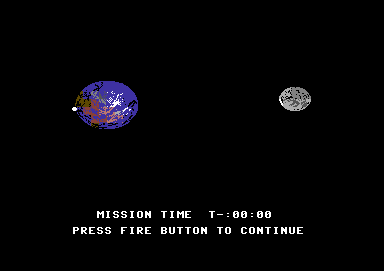
Visually, Apollo 18 embraces a retro aesthetic that evokes early 1980s computer simulations. The game’s color palette is dominated by muted grays, deep blacks, and functional instrument hues, reinforcing the feeling of peering at an authentic mission control console. Though it doesn’t rely on flashy 3D models, the detailed telemetry readouts, schematics, and trajectory plots serve a clear purpose and are designed with period accuracy in mind.
The lunar surface itself is rendered in simple line art and shaded polygons, but it’s surprisingly effective at conveying the haunting emptiness of space. Craters, rocks, and module shadows provide just enough detail to make each of the three landing sites feel distinct. Animations for engine flares, hatch openings, and astronaut movements are minimalistic yet convincing, leaving the player’s imagination to fill in the rest.
One of the game’s standout features is its digitised speech. Delivered with that unmistakable crackle heard on classic NASA audio recordings, mission control calls out key instructions and status updates throughout every phase. This audio layer immerses you in the atmosphere of a genuine lunar operation and elevates the overall presentation beyond what pure visuals could achieve.
In addition to in-game visuals, the accompanying manual and reference sheets are beautifully designed to mimic period documentation. These external materials enrich the graphical narrative and help you track checklists, emergency procedures, and flight plans without constantly toggling menus.
Story
Although Apollo 18: Mission to the Moon is a simulation at heart, it weaves a compelling narrative by positioning you as the commander of a fictional follow-up mission after Apollo 17. The backstory imagines NASA’s last-minute decision to push one more crew to the Moon before the program’s cancellation—a premise that taps into the lingering “what if?” intrigue surrounding America’s lunar legacy.
Throughout the mission, briefings and radio chatter develop the personalities of your ground-based support team. They celebrate your successes, warn you of potential risks, and occasionally crack a dry joke when tensions run high. These little touches humanize the sterile console screens and help you feel invested in the mission’s outcome.
The satellite repair subplot on the return journey serves as an unexpected twist that broadens the narrative scope. What starts as a routine lunar expedition culminates in a high-stakes orbital repair operation, reminding you that space exploration is unpredictable and fraught with hidden dangers. This story beat underscores the resourcefulness and adaptability astronauts needed during the real Apollo era.
By the time you guide your capsule back to Earth for a splashdown, Apollo 18 has told a complete, self-contained tale of triumph against the odds. The sense of closure—paired with the historical what-if premise—leaves you pondering how real missions might have evolved had the program continued.
Overall Experience
Apollo 18: Mission to the Moon stands out as an immersive and historically inspired simulation that balances authenticity with engaging gameplay. Its multi-phase structure keeps you on your toes, while the reliance on period-correct controls, telemetry screens, and digitised speech enhances immersion. The difficulty curve is steep but fair, rewarding meticulous planning and quick thinking.
While modern gamers accustomed to flashy graphics and fast-paced action may find its aesthetics rudimentary, those who appreciate attention to detail and strategic depth will discover a rich, rewarding experience. The game’s documentation and on-screen prompts guide newcomers through complex procedures, making it accessible even to players new to simulation titles.
The fictional narrative framing provides motivation beyond mere checklist completion, and the surprise satellite repair segment adds a refreshing twist. Replay value is high: you can aim for more precise landings, faster moonwalks, or flawless re-entries, challenging yourself to shave off seconds and conserve precious fuel.
In sum, Apollo 18: Mission to the Moon is a must-play for anyone fascinated by space history and simulation games. Its combination of engaging sequences, retro-style presentation, and a compelling “what if” storyline makes it a unique title that captures the spirit of NASA’s golden age of lunar exploration.


Reviews
There are no reviews yet.