 Retro Replay Retro Replay gaming reviews, news, emulation, geek stuff and more!
Retro Replay Review
Gameplay
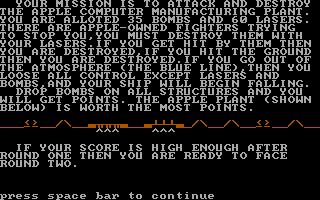
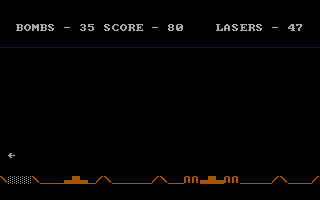
Attack delivers a straightforward yet surprisingly challenging arcade-style experience. Players pilot a lone bomber aircraft, tasked with infiltrating and obliterating Apple Computers’ manufacturing base. Armed with just 35 bombs and 60 lasers, every shot counts. Wisely managing your limited munitions is essential to make it through each wave of Steve Jobs’ fighter fleet and the fortified structures on the ground.
(HEY YOU!! We hope you enjoy! We try not to run ads. So basically, this is a very expensive hobby running this site. Please consider joining us for updates, forums, and more. Network w/ us to make some cash or friends while retro gaming, and you can win some free retro games for posting. Okay, carry on 👍)
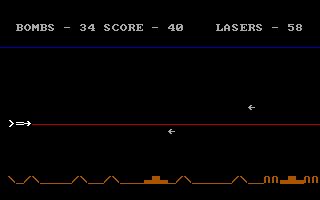
Each playthrough follows a simple loop: fly across the screen, dodge or destroy incoming enemy fighters, then drop bombs on the plant’s ASCII-rendered buildings. The controls respond with Bakelite-era precision, tapping a key to release bombs and another to fire lasers. While basic by modern standards, the twitch-based challenge can be immensely satisfying once you nail the timing and resource management.
Difficulty ramps up quickly, as enemy fighters become more aggressive and can approach from multiple vectors. Staying within Earth’s atmosphere limits vertical escape options, forcing you to balance offensive dives against strategic retreats. For fans of minimalist action, the pick-up-and-play formula holds up well, delivering tension and replayability in short bursts.
Graphics
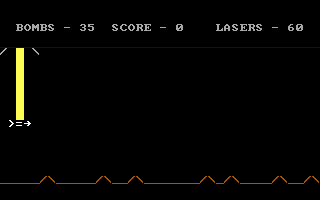
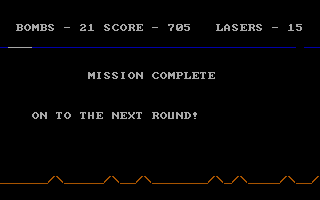
Attack’s graphics are purely ASCII-based, harking back to the dawn of home computing. Every building, fighter jet, and explosion is rendered using letters, numbers, and punctuation symbols. While this aesthetic might feel primitive today, it lends the game a distinctive charm and showcases what early programmers could achieve within severe hardware constraints.
The monochrome display highlights each element with stark clarity. Enemy fighters flit across the sky as clusters of greater-than and less-than signs, while bomb drops are marked by cleverly timed asterisks. The visual simplicity means you never lose track of the action, and the occasional flicker of the old CRT effect adds to the retro ambiance.
Despite – or perhaps because of – its rudimentary presentation, Attack proves that good design trumps fancy visuals. The ASCII approach keeps the focus firmly on gameplay and strategy, rather than flashy graphics. For collectors of vintage software and those curious about the golden age of BASIC programming, the art style is part of the game’s authentic appeal.
Story
At its core, Attack spins a tongue-in-cheek narrative of corporate rivalry taken to an extreme. Your mission is to sabotage Apple Computers’ manufacturing base in a cartoonish display of corporate pettiness. The premise reads like a witty fable about tech titans, with Steve Jobs himself commanding a squadron of fighters to defend the plant.
There are no cutscenes or dialogue trees – the story unfolds purely through your actions and the simple mission brief. This minimalist storytelling fits perfectly with the game’s short, looping format. Each successful run reinforces the playful notion of the underdog bomber versus the unstoppable corporate giant.
While the plot may not win literary awards, it injects personality into the arcade framework. The cheeky concept of bombing a real-world tech company adds an unexpected layer of humor and historical curiosity, especially knowing the game was penned in BASIC during computing’s formative years.
Overall Experience
Attack stands as a compelling relic of early home computing, offering fast-paced action wrapped in ASCII graphics and a mischievous premise. Its ease of access and swift gameplay loops make it perfect for quick sessions, yet the increasing difficulty curve ensures that mastery requires practice. Retro gaming enthusiasts and history buffs will appreciate the game’s place in the evolution of indie programming.
While modern gamers accustomed to sprawling 3D worlds may find the visuals and narrative barebones, Attack’s distilled mechanics deliver pure arcade thrills. The limited ammo count, atmospheric constraint, and wave-based enemies combine to create a tight gameplay loop that remains surprisingly engaging decades after its creation.
In sum, Attack is a must-try title for those interested in the roots of PC gaming. Its blend of strategic resource management, nimble combat, and offbeat storyline offers a unique window into the ingenuity of BASIC-era developers. Whether you’re a collector of retro software or simply curious about gaming’s origins, Attack provides a memorable—and explosively fun—journey back to the dawn of digital entertainment.


Reviews
There are no reviews yet.