 Retro Replay Retro Replay gaming reviews, news, emulation, geek stuff and more!
Retro Replay Review
Gameplay
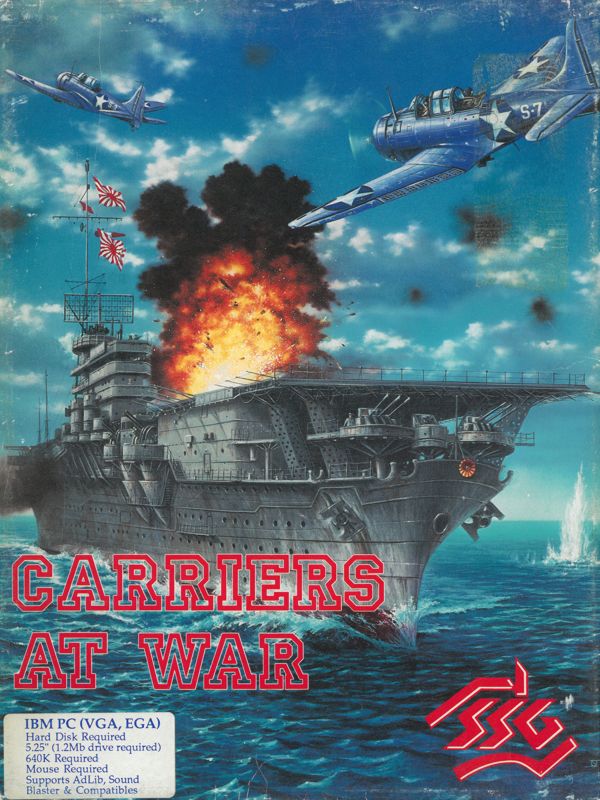
Carriers at War places you at the helm of a World War II Pacific task force, challenging you to think like a fleet commander. The strategic depth stems from the game’s detailed simulation of naval and air operations, where every decision—from aircraft sortie timing to damage control—can tip the scales of battle. Six historic engagements, including Pearl Harbor and the pivotal Battle of Midway, are faithfully recreated, allowing players to explore alternate outcomes and refine their tactics in each scenario.
(HEY YOU!! We hope you enjoy! We try not to run ads. So basically, this is a very expensive hobby running this site. Please consider joining us for updates, forums, and more. Network w/ us to make some cash or friends while retro gaming, and you can win some free retro games for posting. Okay, carry on 👍)
One of the most compelling additions in this remake is the new fire damage system. Damage sustained by your carriers and support vessels can now spread dynamically, forcing you to prioritize repairs and damage containment under pressure. This mechanic not only adds urgency to every choice but also rewards careful planning: dispatch firefighting teams efficiently, reroute power to critical systems, and keep your fleet afloat until reinforcements arrive.
Air operations have been overhauled as well, giving players granular control over individual aircraft rather than generic squadrons. Scout planes, dive bombers, and torpedo bombers can be inspected and assigned targets with surgical precision. This level of detail, combined with a smarter AI that operates with imperfect information, makes each encounter feel unpredictable and alive—akin to playing a human opponent rather than a scripted computer routine.
Graphics
The graphical revamp in Carriers at War is instantly noticeable the moment you load a scenario. A modern windowed interface replaces the archaic text menus, streamlining navigation through your fleet roster, mission briefings, and tactical overlays. This menu system feels intuitive, letting you focus on strategy rather than wrestling with controls.
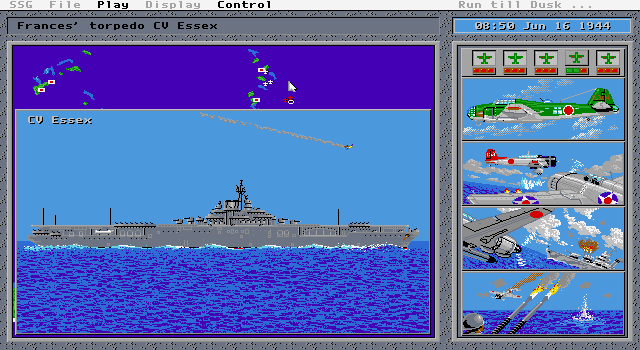
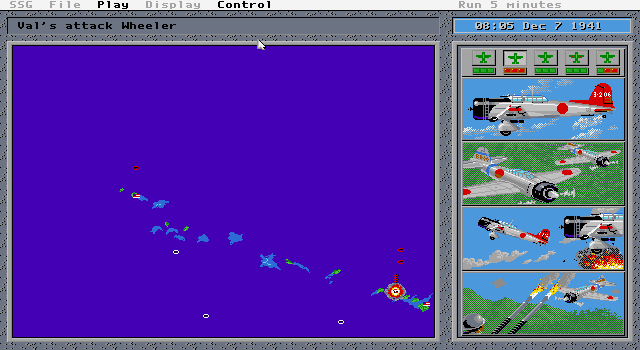
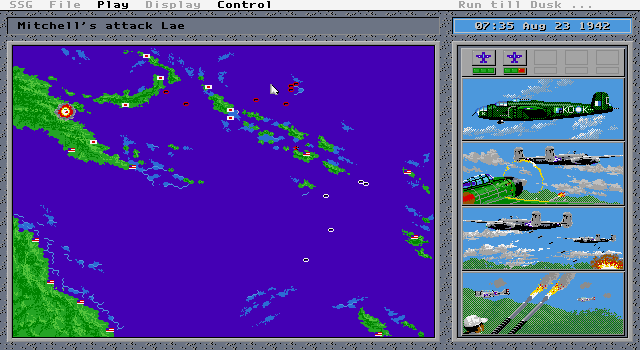
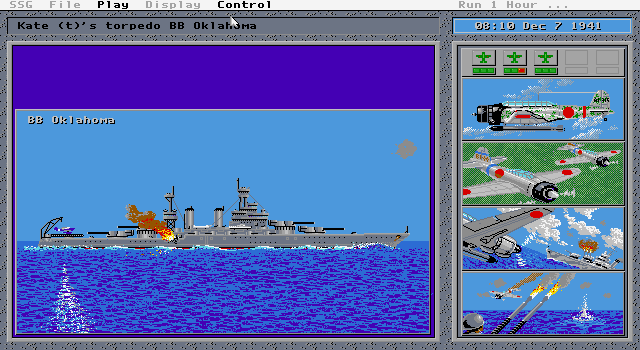
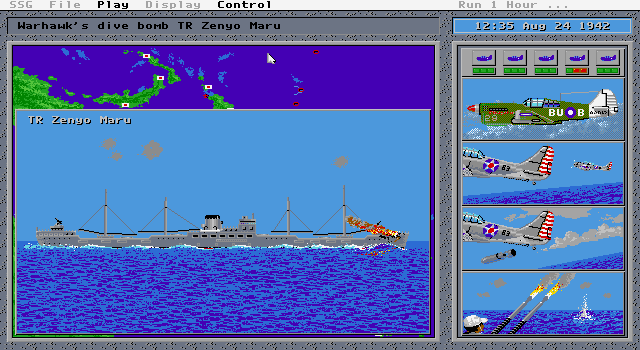
Perhaps the standout improvement is the animated combat view. Carrier launches, torpedo runs, and anti-aircraft barrages now play out in graceful, wartime-era art animations rather than static icons. Watching dive bombers streak toward enemy vessels or fighters dogfight overhead adds dramatic flair, turning abstract numbers on a grid into a vivid reenactment of historical battles.
Map visuals and unit sprites are crisp yet respectful of the original’s retro roots. Ship silhouettes, island chains, and weather effects are all rendered with enough detail to distinguish vessel classes and terrain features at a glance. Even veteran wargamers will appreciate how the interface overlays tactical information—fuel ranges, aircraft readiness, and damage status—without cluttering the battlefield view.
Story
While Carriers at War is fundamentally a historical simulation, it weaves a compelling narrative through its carefully researched scenarios. Each battle is prefaced by background text and archival images that set the stage for the action to follow. You’ll relive the shock of aerial torpedoes at Pearl Harbor, the tense scouting flights over the Coral Sea, and the desperate defense of Midway’s atoll under assault.
The game doesn’t push a contrived hero’s journey but rather highlights the operational challenges faced by real task force commanders. You must grapple with supply shortages, unpredictable weather, and incomplete intelligence—all factors that shaped decisions in the Pacific Theater. This grounded approach to storytelling makes successes feel hard-earned and defeats weighty with historical consequence.
Victory conditions vary by scenario, from sinking a set tonnage of enemy shipping to disabling key airstrips before they can launch counterstrikes. These objectives encourage multiple playthroughs as you experiment with aggressive or conservative strategies. Over time, you begin to appreciate the ebb and flow of carrier warfare and the strategic importance of timing, positioning, and adaptability.
Overall Experience
Carriers at War offers a richly detailed, thoughtful wargaming experience that balances historical authenticity with modern interface conveniences. The learning curve can be steep—new players may need some time to master aircraft launch cycles and damage control procedures—but the in-game tutorials and scenario-by-scenario guidance ease you in. Once you’ve unlocked the fundamentals, the game’s depth reveals itself in satisfying waves of aerial combat and naval maneuvering.
Replayability is one of this title’s greatest strengths. With six core scenarios and the ability to adjust parameters like weather, fleet compositions, and AI difficulty, each engagement can feel fresh. The refined AI, which now “hesitates” and “misreads” your feints in a human-like fashion, ensures that no two battles unfold exactly the same way.
Ultimately, Carriers at War is a must-play for dedicated wargamers and history enthusiasts alike. Its blend of animated visuals, meticulous strategic layers, and evocative story elements makes it more than just a tribute to a classic—it’s a thoroughly modern simulation that honors the legacy of naval aviation in the Pacific War. Whether you’re reenacting famous clashes or forging alternate histories, this remake delivers an engrossing command experience.


Reviews
There are no reviews yet.