 Retro Replay Retro Replay gaming reviews, news, emulation, geek stuff and more!


Retro Replay Review
Gameplay
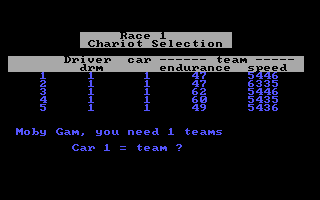
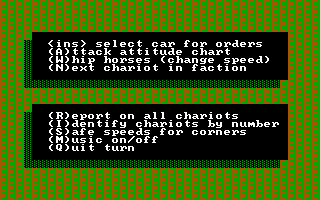
Computer Circus Maximus offers a thrilling blend of tactical decision-making and high-stakes racing as you guide your chariot—and horses—around the ancient Roman hippodrome. Each turn, you must assess your speed, position your team, and decide when to crack the whip. Using the whip against your own horses can boost acceleration at the risk of fatigue, while targeting an opponent’s horses or chariot can throw the race wide open. The result is an intense tug-of-war between risk and reward, where every move can dramatically alter the standings.
(HEY YOU!! We hope you enjoy! We try not to run ads. So basically, this is a very expensive hobby running this site. Please consider joining us for updates, forums, and more. Network w/ us to make some cash or friends while retro gaming, and you can win some free retro games for posting. Okay, carry on 👍)
The game’s AI drivers emulate the cutthroat strategies of human opponents: they will jostle for position, force you into tight corners, and even attempt to crash you out of contention. Learning to read your rivals’ tactics becomes as critical as mastering your own chariot’s momentum. Veteran players will appreciate the depth of the decision trees—should you conserve your horses’ stamina on a slow lap or press the advantage at the first sign of weakness in another driver? This layer of strategy elevates Circus Maximus well beyond a simple racing title.
One of the most compelling aspects of the gameplay is its emergent storytelling. A nail-biting comeback from dead last, a last-second whip that sparks a multi-chariot pileup, or a risky inside pass on the final turn—these moments create memorable highlights that keep you coming back. Multiplayer matches, whether hot-seat or asynchronous play, heighten the drama, as alliances form and dissolve with each lash of the whip. The strategic depth combined with unpredictable wrecks ensures that no two races feel the same.
Graphics
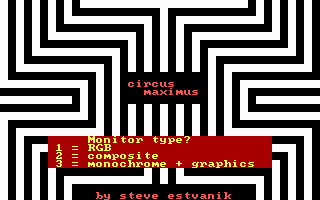
Visually, Computer Circus Maximus leans into a stylized representation of Roman chariot racing. The tracks are rendered with vibrant sands and tilted perspectives that offer a clear view of oncoming opponents and tight chicanes. Chariot models are detailed enough to distinguish different teams by color and emblem, while subtle dust clouds and dynamic camera shakes accentuate high-speed collisions and sudden crashes.
Animation frames are smooth, conveying the rapid hoofbeats of horses and the jerking turns of the charioteer’s reins. While not a showcase of cutting-edge realism, the game’s graphics strike a pleasing balance between clarity and historical flair. The user interface remains unobtrusive, placing key information—horse stamina, whip readiness, track position—at the corners of the screen without obscuring the action.
Track design shows thoughtful variation: some circuits feature sweeping turns that reward patient strategy, while others boast tighter straights where split-second whip decisions make all the difference. Occasional weather effects like dust storms or sudden showers add another layer of visual drama, impacting tire-equivalent grip and forcing drivers to adapt mid-race. Overall, the graphics serve the gameplay well, providing both functional clarity and a sense of immersion in the ancient world.
Story
Unlike narrative-driven epics, Computer Circus Maximus places you directly in the heart of chariot warfare without elaborate cutscenes or lengthy dialogue. The “story” unfolds organically through each race, as drivers vie for honor, wealth, and the favor of Rome’s cheering crowds. Tension mounts lap after lap, with faction rivalries and personal rivalries hinted at through pre-race banter and victory celebrations.
The absence of a traditional storyline is not a drawback here; rather, it allows players to craft their own narratives. Will you play the honorable driver who focuses on clean tactics, or the ruthless competitor who aims to sabotage every rival in reach? Each victory—and each spectacular crash—becomes a chapter in your personal saga. This organic storytelling hooks you more effectively than a linear plot by fostering genuine attachment to the outcomes you engineer.
For fans of historical flavor, small touches like Latin-labeled menus, evocative crowd chants, and stylized Roman architecture bordering the track provide context without bogging down the pacing. The game’s manual even includes a short primer on the original Avalon Hill board game, tying your digital races back to centuries-old gaming traditions. In that way, Computer Circus Maximus celebrates its board game heritage while forging its own legacy.
Overall Experience
Computer Circus Maximus succeeds in translating the strategic richness of its board game predecessor into a dynamic, digital racing experience. The tension between conserving your horses and disrupting your rivals offers a satisfying mental challenge that few racing games can match. Whether you’re a solo player battling AI or coordinating a multiplayer tournament, the sense of drama never wanes.
While the graphics and presentation may feel dated by modern standards, they remain more than serviceable and contribute to the title’s charm. The game’s pacing is brisk, with most races lasting just long enough to build suspense without overstaying their welcome. Controls are intuitive, allowing players to focus on tactics rather than wrestling with complex inputs.
For history buffs, board game enthusiasts, and strategy-minded racers alike, Computer Circus Maximus provides hours of unpredictable fun. Its faithful adaptation of the Avalon Hill classic, combined with engaging AI and multiplayer options, makes it a worthwhile addition to any gamer’s library. If you’re looking for a racing game that rewards planning as much as reflexes—and guarantees heart-pounding crashes—then mounting your chariot in Circus Maximus is an experience not to be missed.


Reviews
There are no reviews yet.