 Retro Replay Retro Replay gaming reviews, news, emulation, geek stuff and more!
Retro Replay Review
Gameplay
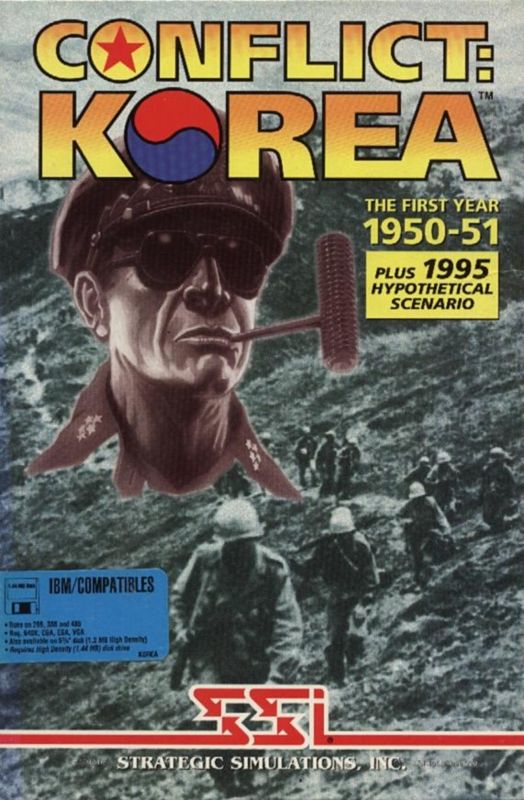
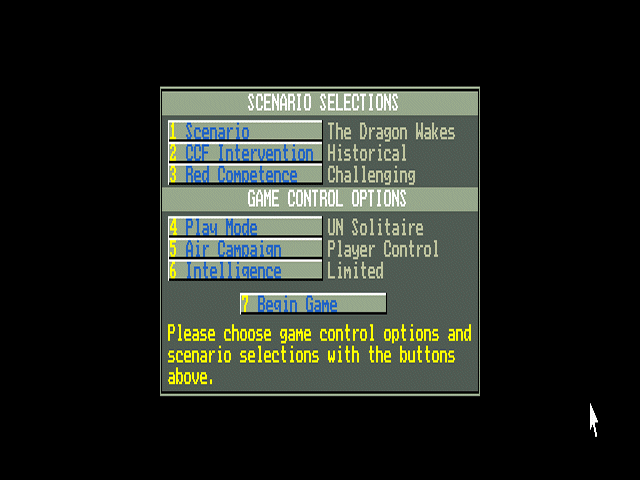
Conflict: Korea – The First Year 1950-51 delivers a deeply strategic, turn‐based wargaming experience that will appeal to history buffs and hardcore strategists alike. Players take command of either United Nations forces under General MacArthur or the North Korean army throughout three meticulously crafted historical scenarios. An additional hypothetical 1995 scenario spices up the campaign, allowing commanders to test modernized forces against vintage tactics.
(HEY YOU!! We hope you enjoy! We try not to run ads. So basically, this is a very expensive hobby running this site. Please consider joining us for updates, forums, and more. Network w/ us to make some cash or friends while retro gaming, and you can win some free retro games for posting. Okay, carry on 👍)
The move‐and‐attack mechanics will feel familiar to fans of Strategic Simulations Inc.’s lineup, sharing the same hex‐based battlefield design as Conflict: Middle East and Second Front. Each turn is divided into phases—movement, combat resolution, and supply allocation—requiring you to plan offensives carefully. Terrain effects, supply lines, and unit morale all play a critical role: a single misstep in logistical planning can leave an advancing column stranded in mountainous valleys or pushed into Soviet‐style ambushes.
While the learning curve can be steep, a comprehensive manual and scenario introductions guide you through the complexities of combined arms warfare. You’ll juggle infantry, armor, artillery, and air support, all while managing reinforcements and replacement points. For those who relish micromanagement, the game’s depth is satisfying. Casual players, however, may find the detail overwhelming without patient study and repeat playthroughs.
Graphics
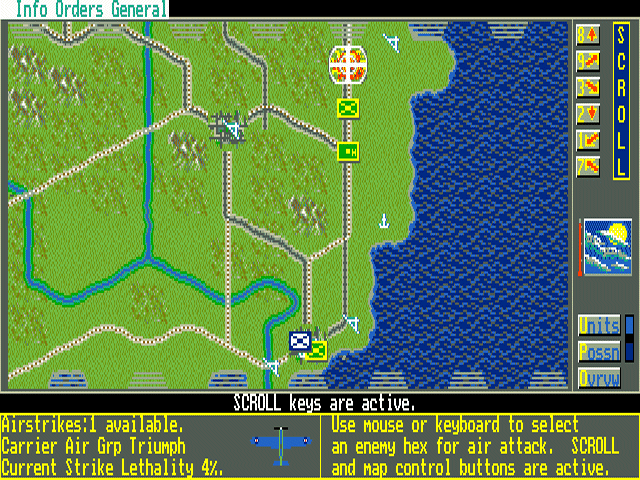
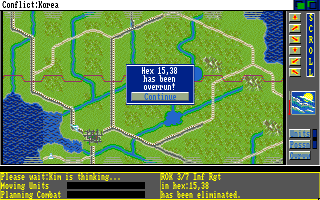
The visual presentation in Conflict: Korea leans toward functionality over flash. Hexagonal terrain tiles are color‐coded for quick recognition—forests in dark green, cities in muted brown, mountains in gray—while units are represented by simple counters bearing recognizable insignia. This clean, no‐nonsense aesthetic allows you to focus on tactical decisions rather than flashy animations.
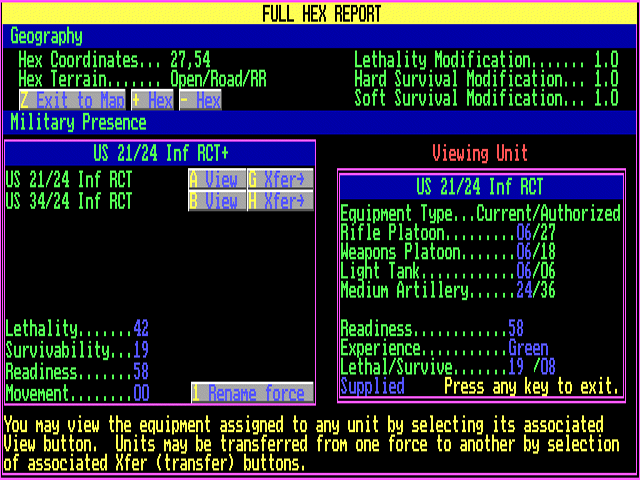
Zooming in reveals just enough pixel detail to distinguish different vehicle silhouettes—T-34 tanks look distinct from M26 Pershings—and infantry icons change posture based on entrenchment or movement status. Despite being two decades old, the graphics remain serviceable, and the clear UI overlays ensure that vital information like supply status, attack strength, and defensive modifiers are always at your fingertips.
If you’re accustomed to modern, high‐definition war simulations, you might find the visuals dated. Yet this retro style has a certain charm, evoking the era of board wargaming translated to the computer screen. Color palettes are restrained to avoid eye strain during long sessions, and unit animations—though limited—convey the flow of battle effectively without unnecessary clutter.
Story
Rather than a scripted narrative with cutscenes, Conflict: Korea weaves its story through scenario briefs and the battlefield itself. Historical conditions are recreated with care: the North Korean blitz of June 1950, the UN counteroffensive at Inchon, and the brutal winter withdrawal are all presented with period‐accurate starting orders of battle and objectives. The emergent storytelling arises from how you choose to rewrite—or faithfully reenact—history.
The game’s hypothetical 1995 scenario adds a “what if” dimension, challenging you to imagine how modern warfare doctrines and weaponry might have influenced the Korean Peninsula’s fate. This creative twist offers fresh tactical puzzles and invites speculation about airpower dominance, precision‐guided munitions, and rapid armored thrusts in a mid-20th‐century setting.
Even without cinematic exposition, the weight of decisions resonates. Will you risk a daring amphibious landing at Inchon, or play defensively as the North Korean commander to hold terrain and exhaust enemy supply lines? Each choice feels momentous, and the game’s detailed after‐action reports recap victories and setbacks, lending a sense of narrative momentum to your campaigns.
Overall Experience
Conflict: Korea – The First Year 1950-51 is a niche gem for aficionados of classic computer wargames. Its depth and fidelity to historical events provide an immersive sandbox for strategic experimentation. If you crave a simulation that prioritizes realism and thoughtful planning over flashy visuals, this title delivers in spades.
On the downside, newcomers to the genre may be intimidated by the complexity and dated interface conventions. The absence of modern conveniences—such as context-sensitive tooltips or streamlined tutorials—means you’ll need to invest time learning the rules and mastering supply chain intricacies. Patience and perseverance will be rewarded, but it’s not a pick-up-and-play affair.
Replayability is high thanks to multiple scenarios and the variability of AI behavior. Experimenting with different force compositions, supply strategies, and choice of offensive or defensive postures keeps each session fresh. Ultimately, Conflict: Korea stands as a testament to the enduring appeal of hex‐based wargaming and offers a rich, challenging journey through one of modern history’s pivotal conflicts.


Reviews
There are no reviews yet.