 Retro Replay Retro Replay gaming reviews, news, emulation, geek stuff and more!



Retro Replay Review
Gameplay
Demon Stalkers is essentially a Gauntlet clone, tasking players with navigating 99 increasingly perilous mazes before confronting the ultimate demon. Each maze introduces new enemy types, environmental hazards, and cleverly placed clues that guide you toward secret passages and power-ups. The core loop of exploration, combat, and puzzle-solving remains engaging throughout, thanks to brisk pacing and varied level objectives.
(HEY YOU!! We hope you enjoy! We try not to run ads. So basically, this is a very expensive hobby running this site. Please consider joining us for updates, forums, and more. Network w/ us to make some cash or friends while retro gaming, and you can win some free retro games for posting. Okay, carry on 👍)
The combat system is straightforward but satisfying: your weapons and spells feel responsive, and the strategic placement of foes forces you to think on your feet. Whether you’re fending off swarms of skeletons or dodging fireballs shot by imps, the challenge ramps up organically. Hidden switches and levers add a puzzle element, requiring you to pay attention to cryptic inscriptions or hints scrawled on the walls of each maze.
One of Demon Stalkers’ standout features is its two-player cooperative mode. Teaming up with a friend transforms the experience—coordination becomes key when splitting up to trigger remote switches or covering each other against overwhelming odds. The game’s shared health system encourages a balanced approach: rush in and you risk dragging your partner into a critical situation.
Beyond the pre-designed levels, the built-in level editor offers remarkable flexibility. Using simple pull-down menus, you can craft custom mazes, populate them with your choice of monsters, and even weave in an original storyline. Editable scroll texts let you pepper your creations with lore, custom dialogue, or hidden riddles, turning Demon Stalkers into a budding platform for community-driven content.
Graphics
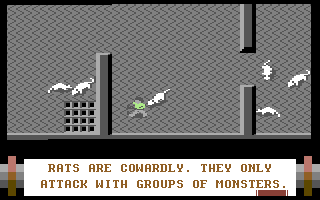
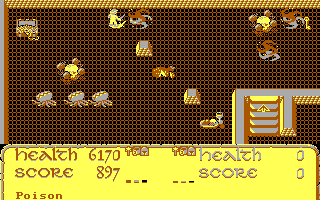
Demon Stalkers presents a classic 16-color palette that will feel nostalgic to fans of late-’80s PC gaming. While the visuals don’t push any technical boundaries, the sprite work is clear and functional—enemies sport distinct silhouettes, making it easy to identify threats at a glance. Walls, floors, and decorative elements maintain consistency, ensuring your focus remains on exploration rather than deciphering muddled textures.
Environmental variety comes from subtle changes in color schemes and props: icy caverns, lava-soaked chambers, and gothic crypts each feature unique flooring patterns and thematic obstacles. Though repetitive after dozens of levels, the editor lets you mix and match assets to breathe fresh life into the aesthetic, ensuring your custom dungeons never feel stale.
The user interface likewise adheres to a no-frills design. Health bars, inventory slots, and mini-map indicators are laid out logically along the screen borders, keeping vital information in view without cluttering the play area. When crafting levels, the pull-down menus and icon-based toolbars are intuitive, even if they look a bit dated by modern standards.
Story
At its core, Demon Stalkers has a minimalistic storyline: a powerful demon has overtaken a labyrinth of 99 mazes, and only a brave warrior—or two—can venture in to end its tyrannical reign. The narrative serves primarily as a framework for the game’s relentless dungeon crawling, with occasional scrolls and cryptic messages providing lore breadcrumbs.
Thanks to the in-built editor, however, the narrative potential can expand dramatically. Enthusiastic players can prepend or append custom lore by editing text on scrolls scattered throughout the maze. This feature transforms Demon Stalkers into more than just a combat challenge; it can become a storytelling canvas, where each chest note or wall inscription adds context to the underworld you’ve chosen to invade.
Whether you stick to the original demon-slaying premise or craft your own mythology, the game’s flexible approach to story elements encourages creativity. You could create a multi-chapter saga, design moral choices via branching scroll text, or even develop riddles that tie directly into the combat mechanics and level progression. The narrative experience is limited only by your imagination.
Overall Experience
Demon Stalkers strikes a balance between classic dungeon-crawling action and user-driven creativity. The core gameplay loop—exploring mazes, battling foes, solving puzzles—remains engaging across dozens of levels, and the two-player mode injects an extra layer of strategy and camaraderie. While its graphical presentation feels dated, the clean design ensures nothing distracts from the heart of the adventure.
Where Demon Stalkers truly sets itself apart is its level editor. By offering an easy-to-use toolkit for map creation and narrative scripting, it extends the game’s lifespan exponentially. Fans of retro dungeon crawlers and aspiring designers alike will find hours of fun in customizing their own labyrinths and crafting original storylines.
For potential buyers seeking a challenging, cooperative dungeon crawler with deep customization options, Demon Stalkers delivers an unexpectedly robust package. Its homage to Gauntlet may feel familiar, but the game’s emphasis on player creativity and storytelling elevates it beyond a simple clone. Whether you’re solo-stalking demons or inviting friends to design epic quests, there’s a wealth of content waiting to be unearthed.


Reviews
There are no reviews yet.