 Retro Replay Retro Replay gaming reviews, news, emulation, geek stuff and more!
Retro Replay Review
Gameplay
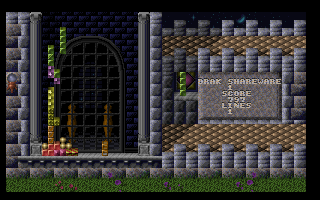
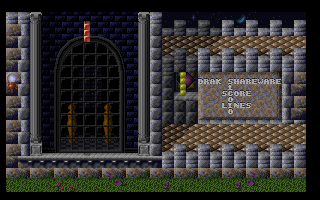
At its core, Drak is a familiar yet refined take on the classic line-clearing puzzle formula. Blocks of various shapes descend from the top of the screen, and your task is to rotate and position them so that they form complete horizontal lines. Once a line is filled, it disappears, rewarding you with points and making room for additional pieces. This basic loop is instantly recognizable to fans of Tetris, but Drak spices things up with new mechanics that keep each session fresh.
(HEY YOU!! We hope you enjoy! We try not to run ads. So basically, this is a very expensive hobby running this site. Please consider joining us for updates, forums, and more. Network w/ us to make some cash or friends while retro gaming, and you can win some free retro games for posting. Okay, carry on 👍)
The heart of Drak lies in its Conquest mode, a gauntlet of 100 increasingly challenging stages. In this mode, you’re not merely chasing a high score—you’re racing to fill up a progress indicator that shifts from red to yellow as you clear lines. Reach the yellow threshold and you advance to the next stage, but allow the blocks to stack too high and it’s game over. This risk-and-reward drive gives Conquest its addictive pull, inviting repeated runs to conquer every level.
Bombs and obstacles frequently rain down alongside standard blocks, demanding quick reflexes and strategic planning. Bombs detonate on impact or after a short fuse, clearing adjacent blocks in a satisfying flash but occasionally creating unpredictable gaps. Meanwhile, obstacles—such as indestructible barriers or irregularly shaped blocks—force you to adapt your line-clearing patterns on the fly. Together, these elements add a tactical layer that separates Drak from more straightforward clones.
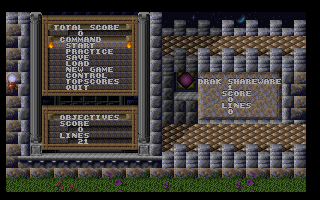
For those seeking a more laid-back experience, Drak’s Practice mode lets you hone your skills without the pressure of a 100-stage gauntlet. Customize drop speed, toggle obstacle frequency, and experiment with bomb settings to develop strategies before tackling Conquest. Whether you’re a casual puzzler or a seasoned veteran, the combination of structured progression and sandbox practice ensures Drak’s gameplay loop remains both approachable and endlessly engaging.
Graphics
Drak presents its phantasy world with crisp 2D visuals and a muted color palette that evokes a land on the brink of renewal. Each stage’s backdrop subtly shifts—from crumbling castle walls to overgrown forest ruins—reinforcing the narrative of a realm rising from its own decadence. These backdrops never overwhelm the playfield, ensuring that falling blocks and UI elements remain clear and readable at all times.
The block sets themselves are designed with attention to detail: edges glow softly when they lock into place, and line-clear animations burst with particles that fade into lingering trails. Bombs explode in a satisfying, cartoon-style puff, while special obstacles like stone prisms or drifting spore clouds come with their own visual cues. These effects are more than eye candy—they provide critical feedback that helps you make split-second decisions.
UI and HUD elements strike a balance between form and function. The progress indicator bar below the playfield changes color dynamically as you clear lines, turning from red to yellow to signal your stage completion. Menus are framed by ornate filigree reminiscent of ancient tomes, hinting at Drak’s lore without overshadowing the core puzzle action. Overall, the graphical presentation is polished and cohesive, even if it doesn’t break entirely new ground.
While Drak doesn’t leverage cutting-edge 3D engines or photorealistic textures, its stylized 2D art serves the gameplay perfectly. The clarity of each piece, coupled with smooth animations and thematic backdrops, ensures that every session feels visually satisfying. For buyers who prioritize straightforward readability over flashy spectacle, Drak’s graphics hit the mark.
Story
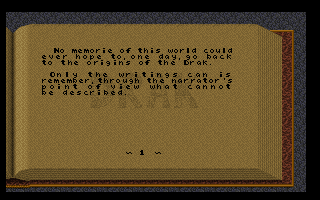
Drak takes place in a reconstructed phantasy world emerging from a period of decadence. According to scattered lore entries, the game Drak became the realm’s favorite pastime—an exercise in discipline and strategy that mirrored the society’s struggle for renewal. As you progress through Conquest, brief textual vignettes hint at the world’s history, revealing fragments of forgotten kingdoms and the role the game once played in governance and ceremony.
The narrative framework is deliberately minimalist, casting you as an unseen champion climbing the ranks of Drak’s grand tournament. Every ten stages unlocks a short cutscene or a snippet of lore, delivered through stylized parchment pop-ups. Though these story beats are sparse, they lend context to the progression and offer a sense of purpose beyond accumulating high scores.
Players seeking a deep, branching storyline might find Drak’s lore lean, but those content with a puzzle-driven experience will appreciate the thematic glue that binds gameplay and setting. The occasional in-game journal entries, accessible from the main menu, expand on the phantasy world’s gods, heroes, and forgotten conflicts. This light world-building gives Drak personality without demanding more from players than they signed up for.
In essence, the story of Drak enhances rather than overshadows the core mechanics. It’s a tasteful backdrop that rewards attentive players with world details and a sense of progression, making each cleared stage feel like a step toward restoring a realm long lost to chaos.
Overall Experience
Drak succeeds as a polished, accessible puzzle title that balances familiarity with fresh twists. The Conquest mode’s 100 stages offer a clear—if sometimes steep—difficulty curve, while Practice mode provides a safe space for strategy development. Bombs and obstacles add a layer of tactical depth, ensuring that no two runs feel identical.
Visually, Drak’s stylized 2D art and clean UI design create a pleasant atmosphere without distracting from gameplay. The phantasy setting is woven into backgrounds, menus, and occasional lore snippets, lending thematic cohesion that elevates Drak above a simple Tetris clone. Performance is rock-solid even on modest hardware, with no noticeable framerate dips or loading hiccups.
While the narrative remains intentionally light, it delivers just enough context to make each stage feel meaningful. If you crave heavy storytelling, you might find the lore elements minimal, but for puzzle enthusiasts, the core challenge will take center stage. Drak strikes a fine balance between challenge, accessibility, and thematic flair.
Ultimately, Drak is a compelling package for anyone drawn to line-clearing puzzles. Its blend of classic mechanics and inventive additions yields endless replayability, whether you’re chasing the final stage of Conquest or fine-tuning your skills in Practice mode. For potential buyers seeking a spacious yet focused puzzle experience, Drak is well worth exploring.


Reviews
There are no reviews yet.