 Retro Replay Retro Replay gaming reviews, news, emulation, geek stuff and more!

Retro Replay Review
Gameplay
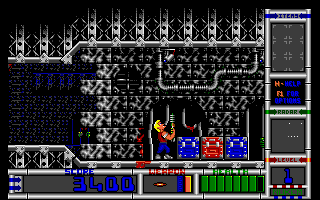
Duke Nukem II delivers classic side-scrolling action that remains as satisfying today as it was upon release. You guide the burly Duke through four distinct episodes, each consisting of a series of cleverly designed levels packed with enemies, environmental hazards, and secret areas. The level variety keeps the pace fresh, seamlessly alternating between tight corridors, open arenas, and gravity-defying jump puzzles.
(HEY YOU!! We hope you enjoy! We try not to run ads. So basically, this is a very expensive hobby running this site. Please consider joining us for updates, forums, and more. Network w/ us to make some cash or friends while retro gaming, and you can win some free retro games for posting. Okay, carry on 👍)
The core combat loop centers on exploring each stage and scavenging for more powerful weaponry. Starting with a pedestrian laser rifle, Duke can pick up a flamethrower—perfect for blasting foes and performing high jumps—a rocket launcher for crowd control, and an overpowered laser cannon for precision eliminations. Limited ammo forces you to juggle weapon choices, creating tense moments where you must decide whether to conserve rockets or switch back to your trusty rifle.
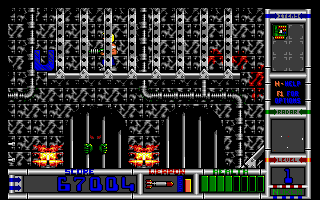
Beyond shooting, the game brims with interactive elements: shootable colored boxes might hide health boosts, collectible merchandise for bonus points, access cards to disable barriers, or treacherous bombs that hurt rather than help. Keys and cards unlock new paths, making you scan every nook and cranny for progression items. On select levels, Duke even commandeers a small spaceship, turning the game into a fast-paced shoot ’em up—until you reach a tunnel or low ceiling and have to abandon the craft, resuming foot-based combat.
Graphics
For its era, Duke Nukem II’s graphics are a vibrant showcase of pixel artistry. Each episode introduces a unique palette: from alien-infested corridors bathed in sickly greens to industrial complexes dripping with mechanical detail. The sprites are crisp and well-animated, giving Duke a muscular swagger as he runs, jumps, and fires upon his captors.
Enemy designs stand out with playful exaggeration—Rigelatin soldiers, bizarre alien fauna, and robotic sentries each boast clear visual identities, making it easy to recognize threats at a glance. Backgrounds often contain layered parallax scrolling, lending depth to the 2D environments. Subtle animations, like flickering lights and moving machinery, inject life into otherwise static backdrops.
Hidden secrets and destructible walls are cleverly hinted at through slight texture variations or oddly placed objects, rewarding observant players. The spaceship segments raise the bar, featuring smooth scrolling and larger, more destructive projectiles. While not on par with later console 16-bit titles, Duke Nukem II’s graphics remain charming and functional, ensuring gameplay clarity without sacrificing style.
Story
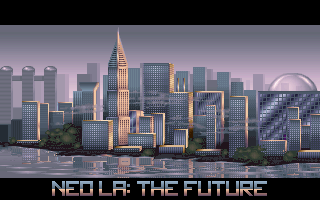
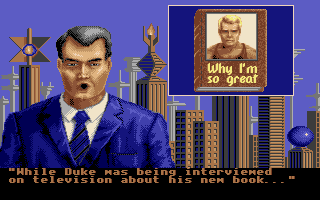
Duke Nukem II picks up immediately after Duke’s televised capture by the nefarious Rigelatins, who plan to harvest his brain for world domination. True to the series’ tongue-in-cheek tone, the story unfolds through brief cutscenes and on-screen text, emphasizing Duke’s wisecracks and no-nonsense attitude. It’s simplistic, but it perfectly frames the game’s over-the-top action.
The episodic structure loosely ties into the narrative, with each chapter taking place on a different exotic locale—alien nests, molten factories, and more. The lack of deep character development is more a feature than a bug, letting players jump right into the action without wading through needless exposition. Duke’s one-liners and the game’s winking approach to campy sci-fi tropes add personality and humor to every mission.
While the plot won’t win any awards for complexity, it fulfills its primary purpose: giving Duke a reason to blast through waves of enemies. The sense of progression—liberating each level, retrieving keycards, and ultimately thwarting the Rigelatin brain-harvesting plot—provides enough motivation to keep pushing forward until the final showdown.
Overall Experience
Duke Nukem II stands as a testament to the golden age of PC platformers. The tight controls, varied weapons, and cleverly hidden secrets ensure each play session offers fresh discoveries. Difficulty ramps up at a steady pace, catering both to newcomers and hardened veterans of the genre.
The game’s pacing is on point: brief spaceship interludes break up the foot-slogging grind, while the search for keys and hidden power-ups adds a metroidvania-lite element. Replay value is high thanks to alternate routes and collectibles—returning to earlier levels with new weapons reveals previously inaccessible areas.
Though technology has come a long way since its 1993 release, Duke Nukem II’s core design still resonates. It’s a tight, action-packed romp that balances humor with challenging platforming and shooting mechanics. For retro enthusiasts or newcomers curious about gaming history, Duke Nukem II remains an engaging experience well worth revisiting.


Reviews
There are no reviews yet.