 Retro Replay Retro Replay gaming reviews, news, emulation, geek stuff and more!

Retro Replay Review
Gameplay
FastTracker 2’s core appeal lies in its dual nature: a powerful .MOD-tracking utility and a bite-sized arcade diversion. As a tracker, it offers a pattern-based interface where you can assign up to 32 channels of sampled audio, toggle note delay commands, and apply fine-tuning to every sample. The intuitive mouse support complements the traditional keyboard shortcuts, letting newcomers quickly click their way around the pattern editor while pros refine sequences with precise keystrokes.
(HEY YOU!! We hope you enjoy! We try not to run ads. So basically, this is a very expensive hobby running this site. Please consider joining us for updates, forums, and more. Network w/ us to make some cash or friends while retro gaming, and you can win some free retro games for posting. Okay, carry on 👍)
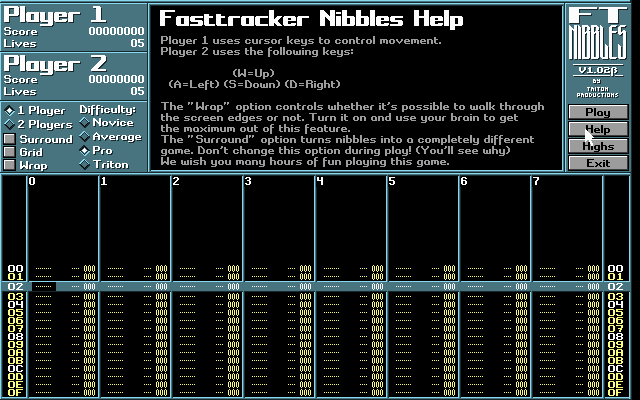
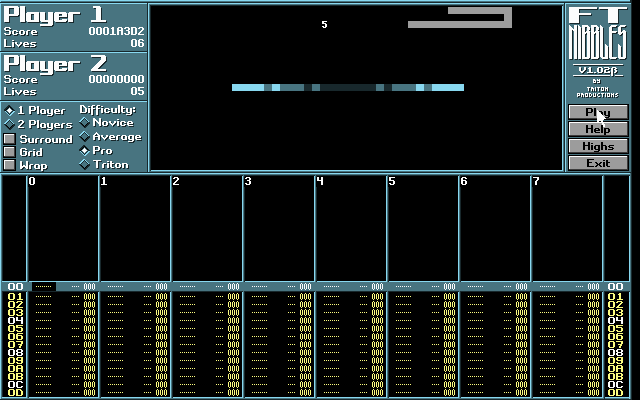
When you need a break from layering snares and basslines, FastTracker 2 ships with a hidden gem: a compact clone of Microsoft QBasic’s Nibbles. This snake-style minigame effortlessly pauses your composition workflow and drops you into light-bike arenas rendered in ASCII-style graphics. You guide a growing worm through a numbered grid, chomping boxes to lengthen your tail, avoiding walls and collisions, and even wrapping around the edges when boundary barriers are disabled.
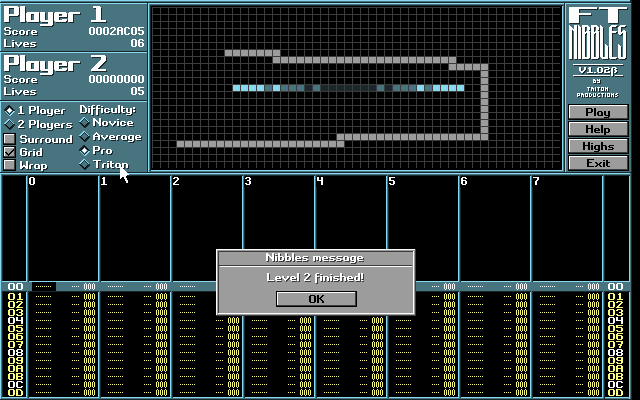
The snake variant isn’t just an Easter egg—it demonstrates real-time responsiveness and shows off FastTracker 2’s event handling. You can adjust play speed, toggle multiplayer mode for head-to-head matches, and overlay a grid to anticipate tight maneuvers. While it’s never mistaken for a full-blown arcade title, the inclusion of this game injects surprising replay value and highlights the developers’ playful side.
Graphics
Visually, FastTracker 2 embraces a no-frills DOS interface rendered in VGA’s 320×200 palette. Sample waveforms are displayed in crisp monochrome graphs, while instrument lists and pattern data appear in color-coded columns. Although there’s no high-resolution artwork or sprite animations beyond the embedded minigame, the layout is clean, legible, and optimized for composing intricate tunes without distraction.
The snake clone itself occupies only a small window within the tracker screen, yet its blocky worms and numeric pick-ups read clearly even on CRT-era displays. The use of contrasting colors for each worm and the optional superimposed grid help distinguish collision zones, making split-second decisions more manageable. It’s a charming throwback to 8-bit simplicity that never feels out of place in a music editor.
Despite the absence of modern graphical trappings—no pixel shaders, no dynamic lighting—FastTracker 2’s UI design remains highly functional. Menus snap into view without flicker, scrolling through patterns feels instantaneous, and the application sustains a steady framerate on vintage hardware. For those seeking slick visuals, this isn’t the game to buy; for creatives valuing clarity and speed, it’s hard to beat.
Story
FastTracker 2 isn’t driven by narrative—it’s a creative workshop rather than an adventure. Its “story” is the tale of music producers in the early ’90s, racing to squeeze every ounce of performance from PC sound cards and competing with Amiga-based trackers. The real drama played out in demos and music disks, as composers sought to wow audiences at parties and on bulletin boards with sonic innovations.
The inclusion of the snake clone hints at the coders’ nostalgia for simple, addictive gameplay. Rather than tucking it away in an installer, they wove it into the main interface—a nod to the carefree moments spent testing tunes between levels and high-score runs. It’s a reminder that even serious tools can shrug off formality and let you unwind with a quick diversion.
In effect, FastTracker 2’s story is communal. It’s about the underground scene of tracker musicians, the thrill of sharing .MOD files over floppy disks, and the rivalry with contemporaries like ScreamTracker. Each composition you create becomes part of that living chronicle, with the snake minigame emblematizing the playful spirit that fueled a generation of digital artists.
Overall Experience
For prospective buyers seeking a modern DAW, FastTracker 2 will feel like stepping into a time capsule. Yet for those intrigued by the origins of PC-based sample tracking or craving a compact package that blends creativity and quick-hit gaming, it delivers in spades. The tracker engine remains surprisingly capable, letting you craft complex arrangements with minimal hardware overhead.
The built-in snake game, while not the main draw, consistently surprises newcomers. It breaks up long editing sessions, provides a nostalgic jolt, and underscores the developers’ willingness to blend utility with entertainment. Even if you never touch the game again after your first few runs, its presence is a testament to the era’s experimental ethos.
In sum, FastTracker 2 stands as both a milestone in music software history and a quirky artifact of early PC culture. It may not dazzle with cinematic flair or narrative depth, but it excels at its core mission: empowering musicians to compose tracker music while offering a lighthearted respite when inspiration needs a breather. For collectors, demo-scene aficionados, or anyone curious about the roots of digital composition, it’s a must-own classic.


Reviews
There are no reviews yet.