 Retro Replay Retro Replay gaming reviews, news, emulation, geek stuff and more!



Retro Replay Review
Gameplay
Fates of Twinion picks up the torch from Shadow of Yserbius and delivers a classic dungeon-crawling experience that feels both familiar and expanded. Players still guide a party of warriors and wizards through tiled, square-based labyrinths, triggering random encounters and hunting for treasure in every nook and corridor. Although the underlying engine remains largely unchanged, the sequel’s careful balance of combat, exploration, and inventory management keeps the action engaging for hours on end.
(HEY YOU!! We hope you enjoy! We try not to run ads. So basically, this is a very expensive hobby running this site. Please consider joining us for updates, forums, and more. Network w/ us to make some cash or friends while retro gaming, and you can win some free retro games for posting. Okay, carry on 👍)
The developers have clearly taken advantage of the original framework by introducing a wider variety of puzzles and traps. Pressure plates, hidden switches, and timed door mechanisms force players to think twice before sprinting down each hallway. This emphasis on environmental challenges deepens the tactical layer: you’ll need to position your party strategically, make use of spells to detect secret passages, and ration limited resources to survive deeper levels.
Combat retains its straightforward, turn-based rhythm, but the random encounter tables have been tuned to offer occasional breathers between skirmishes. While you’ll still face waves of goblins, skeletons, and other traditional foes, the pacing allows for exploration and puzzle-solving without constant threat. Boss encounters punctuate each dungeon with tougher fights that require careful party composition and spell usage, making each descent feel like a genuine progression in difficulty and reward.
Graphics
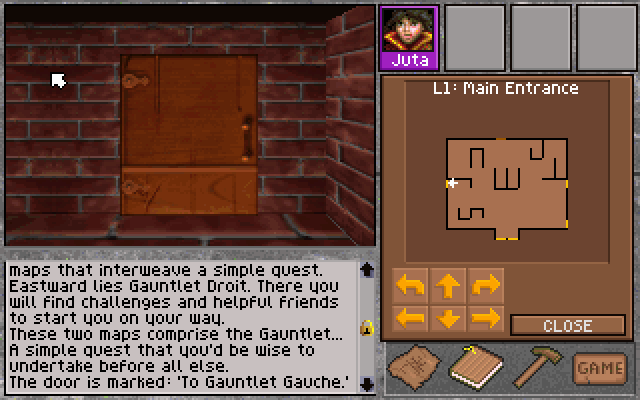
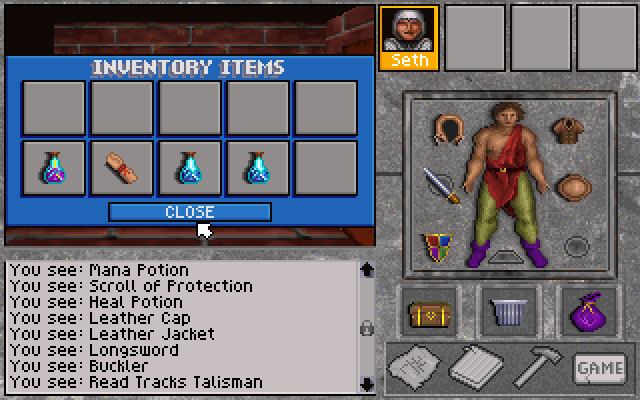
Visually, Fates of Twinion adheres closely to its predecessor’s aesthetic, relying on crisp, colorful tiles and simple animations. The square-grid dungeon map is easy to read, with clear visual cues for doors, traps, and treasure chests. Though the overall look may feel dated by modern standards, it evokes a charming, retro atmosphere that many fans of early Sierra games will find nostalgic.
Character and monster sprites are well-detailed within the engine’s limitations. Each creature type is instantly recognizable, and spell effects—such as fireballs or healing glows—add a satisfying flash of color in the dimly lit corridors. Environmental details like flickering torches, trap markers, and secret wall textures enhance the sense of immersion, even if the entire palette is built from a modest library of tiles.
One of the sequel’s strongest points is its consistency in visual design. Rather than trying to overhaul the engine or introduce flashy new graphics, Sierra focused on refining existing assets. The result is a cohesive look that feels polished and intentional. While you won’t find 3D environments or dynamic lighting, the art style perfectly suits the game’s dungeon-centric theme and keeps hardware requirements low.
Story
The narrative in Fates of Twinion goes beyond “descend, loot, and repeat,” weaving in a series of interlinked quests that gradually reveal the source of the land’s corruption. Early missions involve simple fetch quests and monster clearances, but as the game progresses, Sibylline prophecies and ancient inscriptions hint at a deeper conspiracy threatening two neighboring kingdoms.
Dialogue is delivered through concise text windows, and interactions with NPCs are minimal but purposeful. Villagers, fellow adventurers, and imprisoned sages each provide snippets of lore that encourage exploration and piecing together clues. While the storytelling can feel episodic at times, the payoff at the final dungeon—where all plot threads converge—is satisfying and offers a genuine sense of accomplishment.
The sequel’s strength lies in its ability to extract narrative depth from a relatively simple engine. By alternating between dungeon crawls and story-driven interludes, Sierra achieves a balanced pacing that keeps players invested in the world of Twinion. The plot may not rival modern role-playing epics, but it delivers enough twists and world-building to motivate completionists and casual adventurers alike.
Overall Experience
Fates of Twinion may not revolutionize the dungeon-crawling genre, but it refines the formula established by its predecessor into a well-rounded solo RPG. The combination of thoughtful puzzles, strategic combat, and a modest yet engaging storyline makes for a rewarding adventure that feels longer and more varied than the original Shadow of Yserbius solo module.
Fans of retro RPGs will appreciate the low-key presentation and emphasis on pure gameplay fundamentals. The user interface remains intuitive, and save points are generously placed to reduce frustration. Occasional slowdowns when rendering large battle scenes are the only real technical hiccup, and they rarely interfere with the game’s flow.
All told, Fates of Twinion offers a nostalgic trip through pixelated dungeons without sacrificing modern sensibilities in design and pacing. Whether you’re a veteran of Sierra’s classic titles or a newcomer curious about the roots of online dungeon adventures, this solo sequel delivers a solid, engaging experience that stands the test of time.


Reviews
There are no reviews yet.