 Retro Replay Retro Replay gaming reviews, news, emulation, geek stuff and more!



Retro Replay Review
Gameplay
Ford Simulator II’s gameplay centers on a robust Driving Simulator section that offers unparalleled customization. Players can tailor controls across keyboard, mouse, or joystick, adjust sound levels, select difficulty, and choose from three distinct driving events: Test Track, City Challenge, or Back Roads. This flexibility ensures both casual users and seasoned sim racers find settings that match their skill and preferences.
(HEY YOU!! We hope you enjoy! We try not to run ads. So basically, this is a very expensive hobby running this site. Please consider joining us for updates, forums, and more. Network w/ us to make some cash or friends while retro gaming, and you can win some free retro games for posting. Okay, carry on 👍)
The Test Track is subdivided into three unique challenges. The Drag Strip demands precise gear shifts for maximum acceleration; the Amoeba Track tests top speed on a winding, whirly course; and the Obstacle Course requires you to maintain high velocity while deftly avoiding pylons. Each variant hones a different aspect of racing skill, from smooth shifting to razor-sharp reflexes.
City Challenge transports you to airport perimeters, bustling shopping centers, and downtown streets where traffic and tight turns amp up the tension. Meanwhile, Back Roads unfolds over 5-, 10-, and 15-mile treks filled with twists, turns, and oncoming trucks. These courses emphasize endurance and adaptability, as you navigate varying road conditions and vehicle interactions.
Across all events, the first-person perspective places you firmly behind the wheel of the Simulator Car (S.C.). Beginner mode features automatic shifting and forgiving boundaries, whereas Intermediate and Advanced require manual gear changes and impose strict disqualification for off-road excursions or collisions. Upon completion, a dynamic scoring system calculates average speed, obstacles avoided, and difficulty-scaled points, offering instant feedback and replay incentive.
Graphics
Visually, Ford Simulator II strikes a balance between functional clarity and early-90s charm. Vehicle models in the Electronic Showroom are presented with crisp, hand-drawn illustrations that highlight body lines, color options, and interior trim. While polygons are modest by today’s standards, each Ford and Lincoln-Mercury model feels distinct and true to its real-world counterpart.
On the track, environments are rendered with clean textures and bold color palettes. The whirly courses of the Amoeba Track and Obstacle Course pop against the neutral backdrop, making pylons and barriers easy to spot. City Challenge areas feature simple but effective building facades, road signage, and other traffic that create a believable urban atmosphere without overwhelming the hardware.
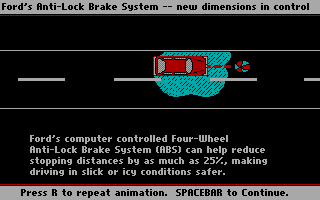
The Electronic Showroom and InfoCenter sections leverage static images and lightweight animations to showcase innovations like anti-lock brakes and aerodynamic design features. These animations, though brief, add a dynamic layer to what could otherwise be a purely text-based presentation. They provide visual relief and underscore the technological focus of the program.
Performance is smooth on period-typical PCs, and load times between sections remain minimal. While modern sim enthusiasts may miss detailed shaders or realistic lighting effects, the game’s graphic style communicates information clearly and keeps the focus squarely on driving performance and vehicle specs.
Story
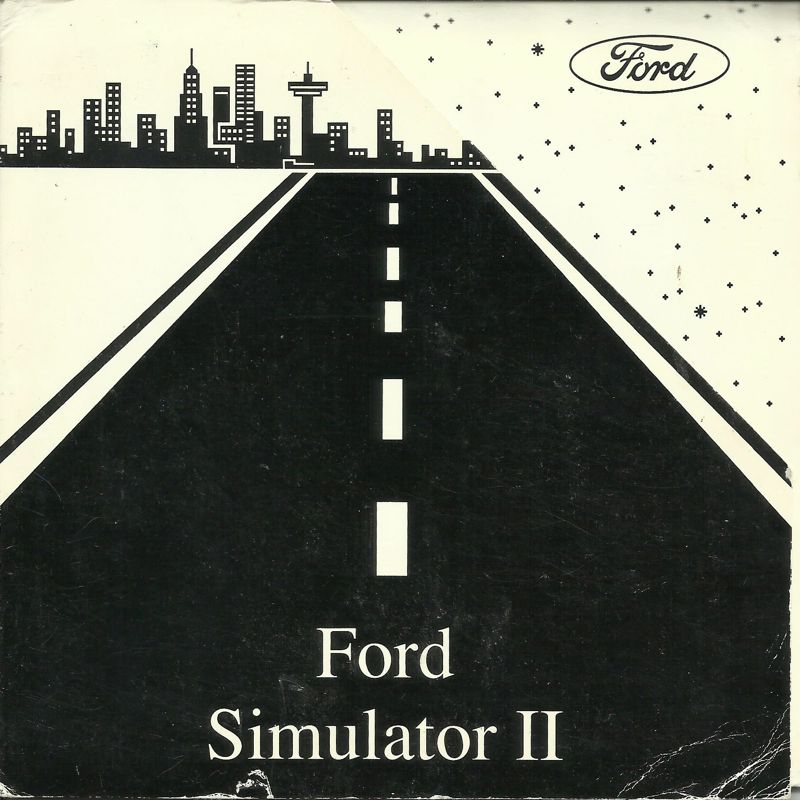
Ford Simulator II eschews a traditional narrative in favor of a structured, five-section journey through Ford’s 1990 product line. Each section serves as a chapter in an overarching marketing story: the Driving Simulator delivers first-hand performance thrills, the Electronic Showroom provides a visual tour of 16 models, and the Ford Buyer’s Guide offers an in-depth exploration of specifications, options, and financing.
The Ford InfoCenter acts as a technological subplot, spotlighting innovations through text descriptions paired with animations that illustrate breakthroughs in safety, performance, and comfort. Meanwhile, the Customer Feedback section closes the loop by inviting real-world opinions, reinforcing the notion that you’re part of Ford’s design conversation.
Though there’s no central protagonist or linear plot, the game’s structure guides users from adrenaline-pumping driving events to contemplative showroom browsing. This ebb and flow of action and information weaves a cohesive promotional narrative, turning what could be a simple brochure into an interactive experience.
The pacing encourages exploration: after mastering a tricky Back Roads run, you’re rewarded with access to new vehicle stats or feature animations. This design choice underlines Ford’s dual intent—to entertain drivers and educate potential buyers—making the “story” one of discovery, performance, and brand immersion.
Overall Experience
Ford Simulator II offers a uniquely hybrid experience that blends arcade-style driving challenges with comprehensive automotive information. For enthusiasts curious about Ford’s 1990 lineup or drivers seeking a no-pressure environment to practice shifting and cornering, the game strikes an appealing balance between simulation and sales brochure.
Its strengths lie in deep customization, a variety of driving events, and an interactive presentation of vehicle specs that goes far beyond static catalogs. The dynamic scoring system and tiered difficulty modes provide ample motivation to improve your lap times and obstacle avoidance skills, while the Electronic Showroom and Buyer’s Guide sections equip you with detailed knowledge should you ever consider purchasing a real Ford vehicle.
That said, the graphics and sound design reflect early-90s limitations—no true 3D textures or immersive audio cues—but these constraints don’t detract significantly from the core experience. Multiplayer modes and contemporary realism features are absent, which may disappoint users seeking modern sim fidelity.
Overall, Ford Simulator II succeeds as both a promotional tool and a light driving simulator. Its approachable gameplay, thorough informational modules, and emphasis on Ford’s key selling points make it an engaging package for its intended audience—prospective car buyers, brand loyalists, and simulation newcomers alike.


Reviews
There are no reviews yet.