 Retro Replay Retro Replay gaming reviews, news, emulation, geek stuff and more!
Retro Replay Review
Gameplay
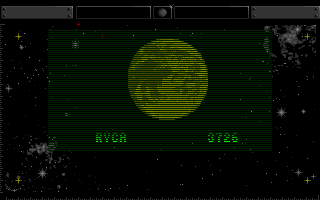
Galactic Conqueror excels at marrying frenetic action with strategic decision-making, giving players multiple layers of engagement. You spend equal time in the cockpit of the Thunder Cloud II executing precision strikes and at the galactic map plotting your next move against the rebel onslaught. The seamless shift between high-octane pseudo-3D sequences and real-time invasion planning keeps tension high and prevents the experience from ever feeling stale.
(HEY YOU!! We hope you enjoy! We try not to run ads. So basically, this is a very expensive hobby running this site. Please consider joining us for updates, forums, and more. Network w/ us to make some cash or friends while retro gaming, and you can win some free retro games for posting. Okay, carry on 👍)
The action sequences themselves break down into three distinct modes: ground combat, aerial dogfights, and zero-gravity space battles. Each mode has its own motion physics and control scheme, so strafing columns of enemy walkers on a desert world feels weighty and deliberate, while high-speed intercepts in the upper atmosphere reward quick reflexes and precise joystick work. Space battles add a welcome sense of three-dimensional freedom, letting you drift, roll, and thrust in full 360 degrees as you weave through starfields and capital ships.
Beyond pure action, the galactic map layer adds real-time pressure to your campaign. As rebel forces advance on key systems, you must decide whether to launch diversionary raids, fortify your home base, or cut supply lines at the edge of known space. Every choice is accompanied by a countdown timer, forcing rapid judgments that can shift the flow of battle. This dynamic strategic element grounds the arcade-style combat in broader context and rewards both tactical and macro-level thinking.
Graphics
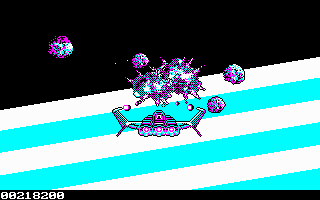
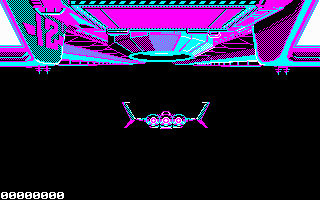
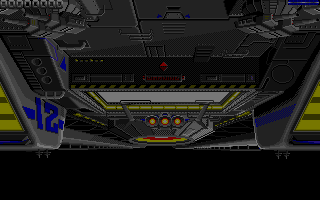
Visually, Galactic Conqueror pushes early-era hardware to its limits with an Afterburner-style pseudo-3D engine that simulates depth by cleverly scaling and rotating sprites. Environment textures are simple by today’s standards, but the sense of speed and scale is impressive, especially when threading the Thunder Cloud II between canyons or weaving through asteroid belts. Occasional pop-in on distant objects is forgivable given how smoothly the frame rate holds up during heavy on-screen action.
Each combat mode boasts distinct palettes and visual cues: ground missions use earthy browns and russets, aerial missions shift to brilliant blues and whites, and space engagements feature stark black backgrounds dotted with stars and glowing nebulae. Enemy craft models are varied enough to stay recognizable even when dodging flak or laser bursts, and explosions are accompanied by colorful flashes that momentarily light up the cockpit canopy. The result is a clear visual language that never leaves you guessing what threat lies ahead.
On PC, the developers went the extra mile by using speaker tweaks to render the game’s main theme and in-mission tunes through the standard hardware speaker. While this isn’t a graphical feature per se, it reflects the overall polish: just as the visuals adapt to limited color ranges, the audio engine compensates for inferior hardware to deliver an immersive experience. Combined, these technical touches highlight the ingenuity that went into making Galactic Conqueror look and feel great on modest systems.
Story
The narrative thrust of Galactic Conqueror is straightforward but effective: rebel forces are closing in on Gallion, the last bastion of the Allied Federation. You, piloting the pinnacle of aerial technology—the Thunder Cloud II—are mankind’s final hope. Early briefings set the stage with simple but evocative text and cutscenes, establishing the stakes and giving context to every mission you undertake.
Rather than unfolding through lengthy dialogue, the story advances organically through mission objectives and the real-time map. When you liberate a planet or repel an enemy fleet, dispatches arrive with new intel and fresh warnings of rebel movements. These automated updates and short voice cues keep the plot moving at a brisk pace without interrupting the flow of gameplay, allowing you to stay immersed in the pilot’s experience.
Character development is minimal, but the game doesn’t suffer for it. You come to care about the outcome of each mission because the invasion map visualizes rebel gains and losses in real time. Watching planets change color as you push the front line back provides a satisfying sense of progression, all the while reinforcing the overarching narrative that you are galaxy’s last line of defense.
Overall Experience
Playing Galactic Conqueror feels like commanding a personalized war effort, blending the visceral thrills of arcade flight combat with the cerebral demands of grand strategy. The diverse mission types and shifting battlefront ensure that no two play sessions feel identical, and the ticking clock of the real-time map keeps you invested in every decision.
Fans of classic pseudo-3D titles will appreciate the nods to genre staples, while strategy enthusiasts will relish the map-based layer of resource allocation and tactical strikes. The learning curve is gentle enough for newcomers, yet mastering the nuances of each combat mode provides enough depth to sustain long-term engagement. Replay value is strong, as different planet-control strategies lead to varied campaign outcomes.
Ultimately, Galactic Conqueror stands out as a compelling hybrid that delivers both fast-paced dogfights and thoughtful theatre-scale warfare. Whether you’re in it for the heart-pounding action or the strategic challenge, this title offers a uniquely balanced experience that remains memorable long after you’ve powered down the Thunder Cloud II.


Reviews
There are no reviews yet.