 Retro Replay Retro Replay gaming reviews, news, emulation, geek stuff and more!


Retro Replay Review
Gameplay
Harpoon II delivers a deep and intricate simulation of modern-era naval warfare that will immediately appeal to strategy enthusiasts. Players assume the role of a naval commander tasked with coordinating a diverse arsenal of assets, including surface ships, submarines, missile systems, and carrier-based aircraft. The real-time engine keeps tension high, but the ability to adjust the clock ratio or pause the action ensures you can make careful decisions without feeling rushed into costly mistakes. This flexibility makes Harpoon II both accessible for newcomers and satisfying for veterans who crave full control over every tactical nuance.
(HEY YOU!! We hope you enjoy! We try not to run ads. So basically, this is a very expensive hobby running this site. Please consider joining us for updates, forums, and more. Network w/ us to make some cash or friends while retro gaming, and you can win some free retro games for posting. Okay, carry on 👍)
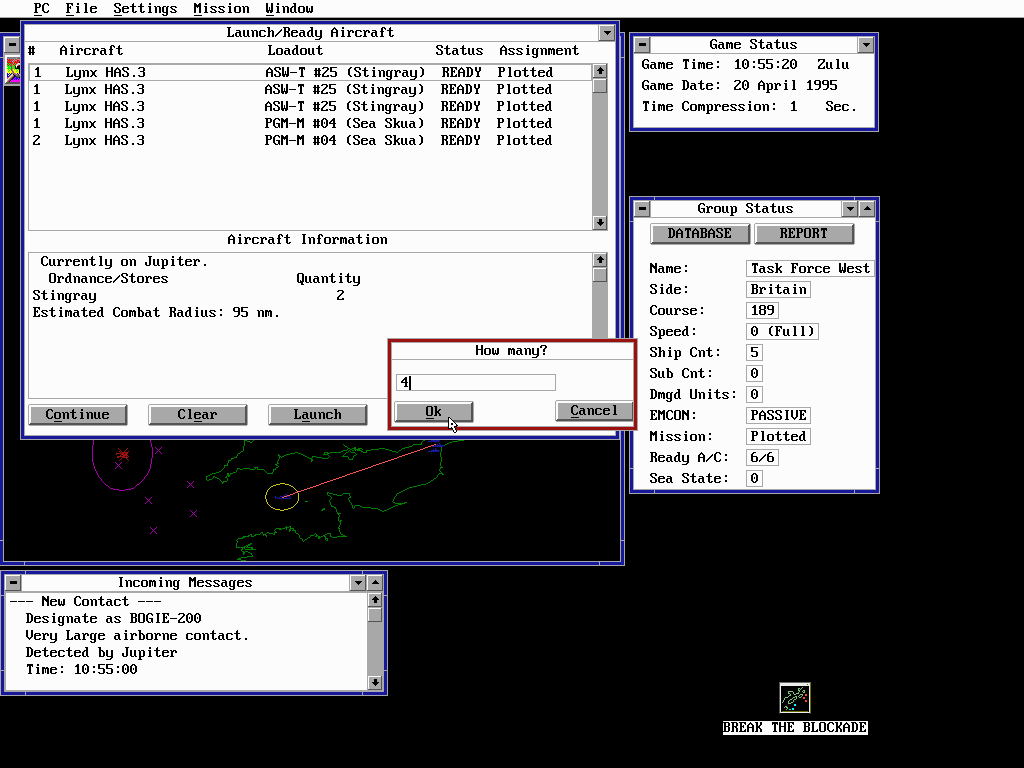
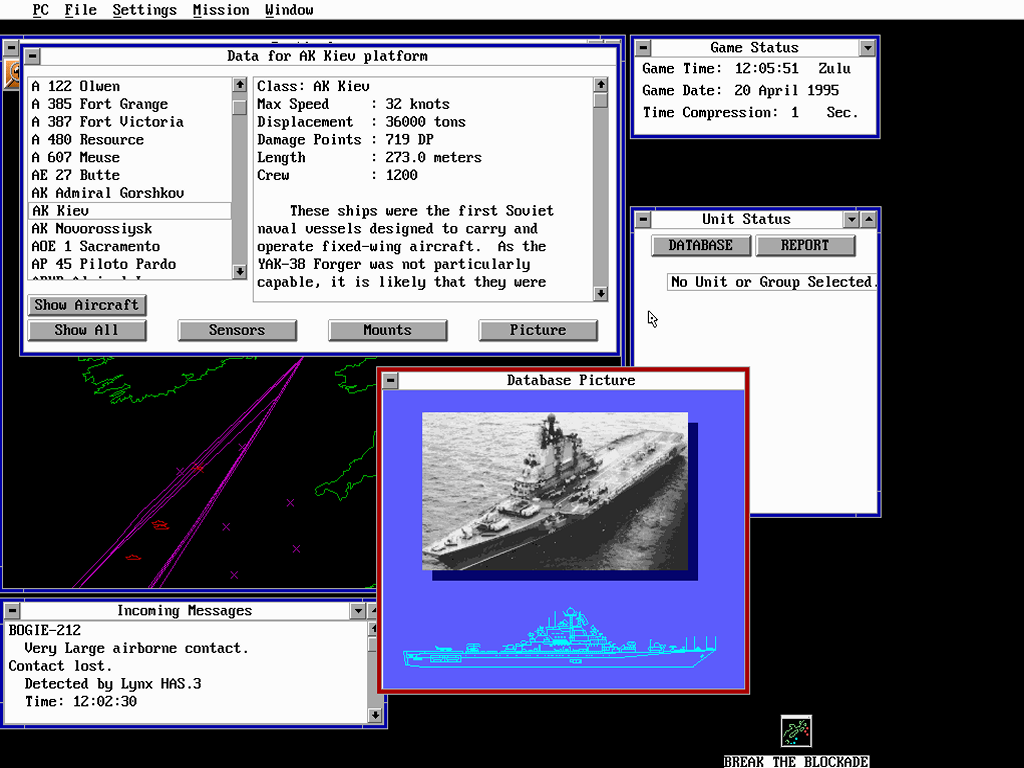
The game’s user interface is divided into multiple windows that display radar plots, unit status, weapon inventories, and overview maps. While this layout can be overwhelming at first, it is thoughtfully designed to simulate an actual command center. Quick-access menus let you issue movement orders, select weapon loadouts, and assign patrol patterns with minimal clicks. Learning to efficiently navigate these windows is part of the fun—mastering the interface feels like an achievement in itself and is rewarded with faster reaction times in critical engagements.
Scenario variety is a strong suit, with the initial BattleSet: Global Conflicts I offering fifteen distinct missions. Instead of recycling familiar Cold War face-offs, Harpoon II explores lesser-known flashpoints—think U.S. naval task forces confronting North Korean missile boats or Peruvian corvettes duking it out with Ecuadorian patrol vessels. Each mission presents unique challenges in terms of geography, force composition, and rules of engagement, ensuring that no two battles feel the same. The absence of scripted outcomes means you must adapt on the fly, and a single miscalculation—like underestimating an enemy sub’s stealth or mismanaging your air patrol—can spell disaster.
For those who enjoy micromanagement, Harpoon II shines when commanding carrier strike groups. Allocating CAP (Combat Air Patrol) sorties, timing anti-ship missile volleys, and coordinating with submarine pickets offers a level of strategic depth rarely seen in other naval sims of its era. Conversely, smaller-scale scenarios that limit you to frigates or coastal missile boats emphasize hit-and-run tactics and resource conservation. This breadth of gameplay styles keeps the experience fresh and encourages replaying missions to explore different strategies.
Graphics
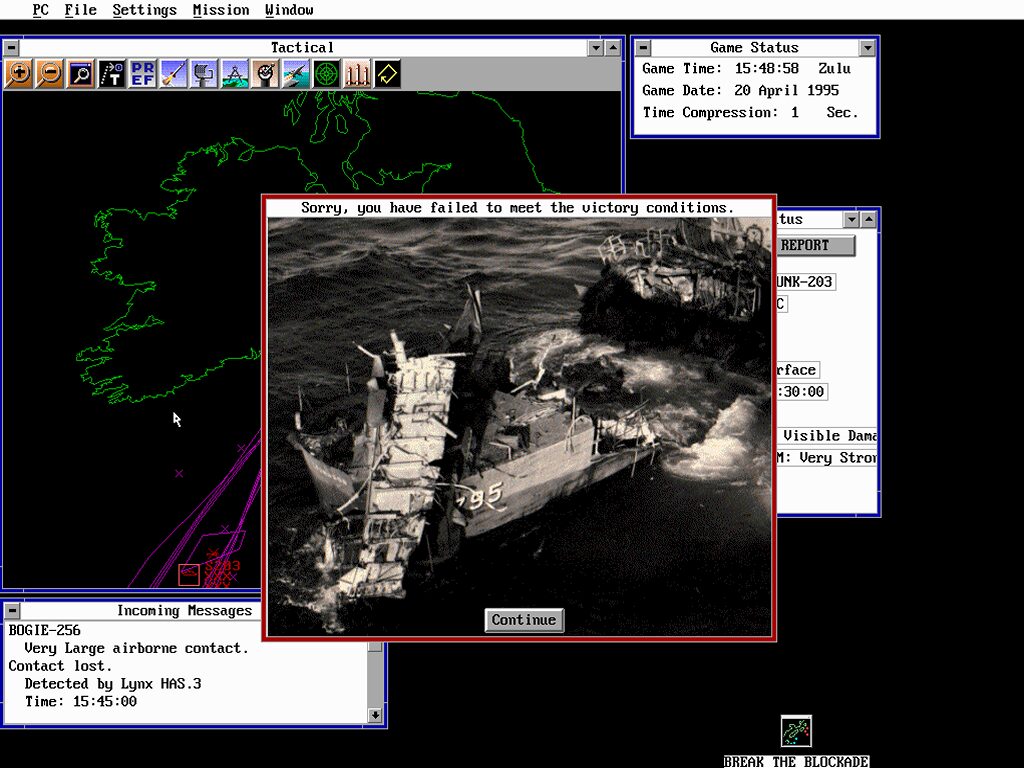
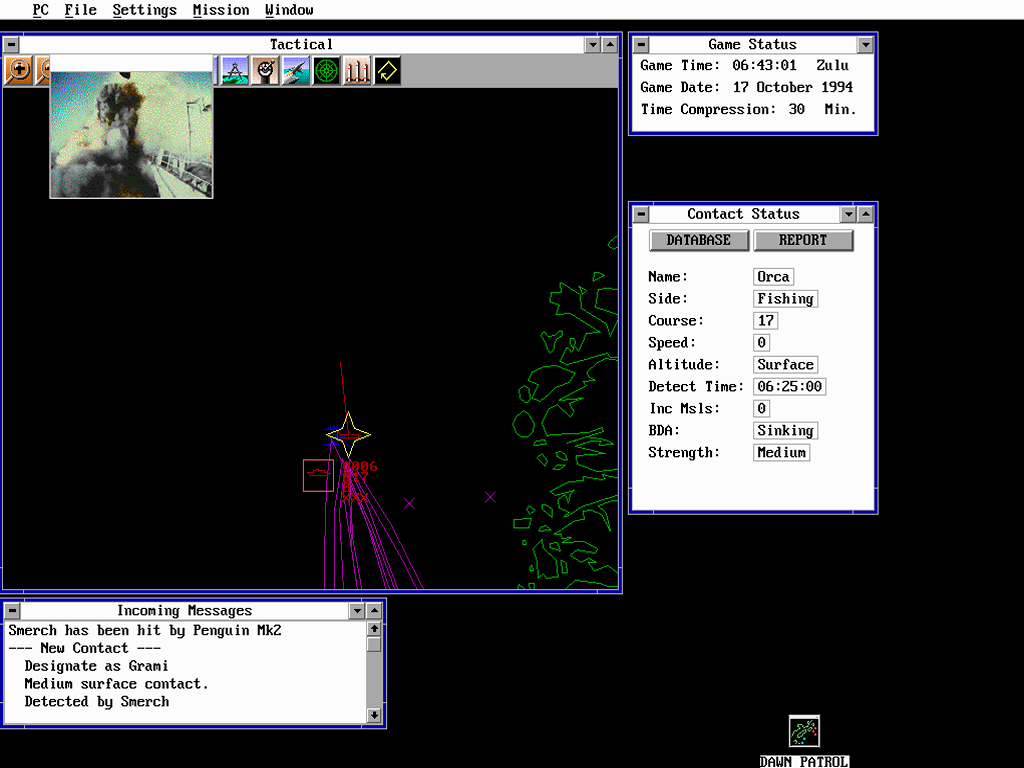
Visually, Harpoon II opts for a functional, top-down presentation rather than an immersive 3D battlefield. Ship icons, aircraft symbols, and missile tracks are rendered in simple vector graphics on a color-coded grid map. While this minimalist aesthetic lacks the cinematic flair of modern titles, it ensures critical information remains clear and legible. Every ping on the sonar display and every incoming torpedo arc is easily distinguishable—a crucial advantage when split-second decisions determine victory or defeat.
The game’s graphics are best viewed as a digital command board, where clarity takes precedence over spectacle. Terrain features like coastlines, islands, and navigational hazards are marked with basic shapes, providing just enough context for planning amphibious or littoral operations. Animated overlays show missile trajectories and aircraft flight paths in real time, giving you immediate visual feedback on your tactics. There’s no water ripple effect or dynamic lighting here, but the trade-off is a responsive interface that updates rapidly even during large-scale engagements.
Harpoon II’s map zoom function allows you to switch seamlessly between strategic overviews and tactical close-ups. At the macro level, you can direct entire fleets, while the micro view reveals individual vessel speeds, weapon reload times, and sonar signatures. This multi-scale approach compensates for the dated graphics engine, allowing you to appreciate both the grand strategy and the intricate details of your naval assets. For players who prioritize information density over aesthetics, the game’s graphical style will feel perfectly suited to its simulation goals.
Story
Unlike narrative-driven war games, Harpoon II forgoes cinematic cutscenes and scripted dialogue in favor of scenario-based storytelling. Each mission is framed by a short briefing that outlines the geopolitical context, objectives, and any special conditions—such as weather constraints or rules of engagement. These briefs provide enough background to set the stage without overwhelming you with extraneous lore. The focus remains squarely on tactical decision-making, which forms the heart of the game’s “story.”
The real intrigue arises from unscripted developments that occur during play. A routine patrol might suddenly uncover a hostile submarine, or diplomatic shifts could trigger a new order to abort your strike runs. Because enemy AI operates under realistic doctrines—prioritizing anti-submarine warfare, air defense, or hit-and-run raids—each encounter unfolds like a unique chapter in your personal campaign diary. This emergent storytelling fosters a strong sense of ownership over both triumphs and setbacks.
By placing conflicts in lesser-known theaters—Peru versus Ecuador, or U.S. forces facing North Korean coastal defenses—Harpoon II shines a light on maritime standoffs that rarely make headlines. While the lack of deep character-driven arcs may disappoint players seeking a Hollywood-style narrative, the game compensates by immersing you in the operational realities of naval command. The sense of accomplishment you feel upon successfully suppressing enemy air defenses or evading a wolf-pack attack becomes your narrative payoff.
Overall Experience
Harpoon II stands as a landmark naval simulator that balances depth with flexibility. The steep learning curve is softened by adjustable time controls and a pause feature, making it approachable for newcomers willing to invest the time to learn its systems. Veteran sim players will appreciate the game’s uncompromising attention to detail, from realistic weapon ranges and sensor limitations to the fog-of-war mechanics that keep you guessing about enemy dispositions.
One potential drawback is the dated presentation—both visually and in terms of sound design. There are no voice-overs or dynamic musical scores; alerts are delivered via simple chimes and system messages. However, this austere approach contributes to the authentic “command center” atmosphere, where you’re left to rely on data and intuition rather than dramatic cues. If you can overlook the absence of modern polish, what remains is a richly rewarding strategic playground.
Ultimately, Harpoon II excels as a sandbox for naval warfare aficionados. Its scenario-driven structure, real-time mechanics, and exhaustive order-of-battle customization offer countless hours of tactical experimentation. Whether you’re orchestrating a carrier strike in the Sea of Japan or steering a small patrol squadron through the jungled passages of South America, the game delivers an experience that is both intellectually stimulating and deeply engaging. For buyers seeking a serious simulator that puts command responsibility in their hands, Harpoon II remains a standout choice.


Reviews
There are no reviews yet.