 Retro Replay Retro Replay gaming reviews, news, emulation, geek stuff and more!
Retro Replay Review
Gameplay
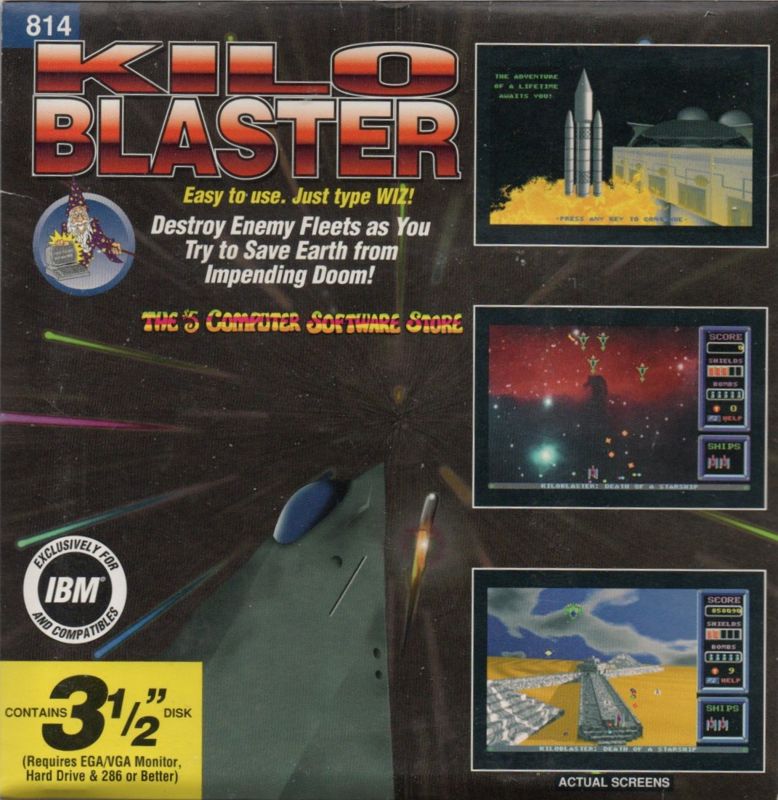
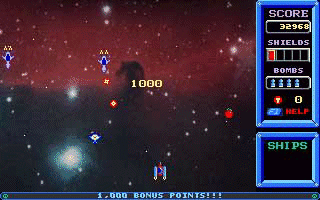
Kiloblaster wears its inspirations on its sleeve, channeling the spirit of classic shooters like Galaxian but modernizing the formula with smooth scrolling and a steady stream of colorful enemies. You pilot a one-man fighter through wave after wave of alien vessels, dodging incoming fire and weaving through tight bullet patterns. The level design keeps you moving from left to right, encouraging a constant sense of momentum rather than the static formations of its 1980s forebears.
(HEY YOU!! We hope you enjoy! We try not to run ads. So basically, this is a very expensive hobby running this site. Please consider joining us for updates, forums, and more. Network w/ us to make some cash or friends while retro gaming, and you can win some free retro games for posting. Okay, carry on 👍)
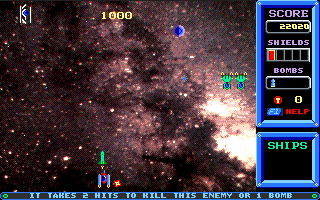
Power-ups are at the heart of Kiloblaster’s strategic layer. You’ll collect floating fruits—bananas, strawberries, even pineapples—bursting into score multipliers when harvested. There’s also the mysterious red circle emblazoned with a yellow “T,” which unleashes temporary rapid-fire, shield boosts or bomb attacks depending on your current stage. Learning when to grab these bonuses and how to stack them against tougher mid-level bosses becomes key to mastering the game’s difficulty curve.
Controls feel responsive whether you’re using a joystick or keyboard. Movement is crisp and the firing rate ramps up nicely as you pocket “T” power-ups. Sound Blaster support pumps out punchy laser blasts and explosion samples that help you parse the action. Between episodes you’ll find menus for remapping buttons, adjusting sound levels, and toggling difficulty. These options make the shareware model even more accessible, letting you fine-tune the challenge before deciding to unlock the remaining two episodes.
Graphics
Kiloblaster’s VGA palette brings a welcome splash of color to the shooter genre. Enemies range from simple, retro-styled fighters to more elaborate boss ships that fill the screen with flashing attack patterns. Planetary backdrops scroll subtly in the distance, injecting a sense of scale and immersion into each stage.
The fruit power-ups stand out brilliantly against the blackness of space—you can’t miss that bright red circle with its yellow “T” icon when it floats into view. Explosions bloom into brief, fiery showers of pixels, and the complementary color schemes help ensure that screen clutter never devolves into a muddy mess. Even under heavy fire, sprite flicker remains minimal, a testament to the solid optimization under the hood.
Particle effects and lighting are simple but effective. When you trigger a bomb power-up, the entire playfield lights up with radial bursts that feel satisfying without sacrificing performance. On a well-tuned PC with VGA mode enabled, Kiloblaster maintains a consistent frame rate, making those split-second dodges feel fair and reliable.
Story
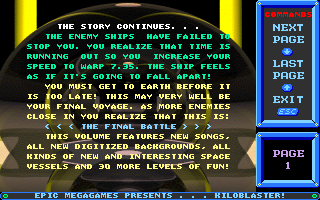
Storytelling in Kiloblaster is kept deliberately lean. You are a lone fighter pilot tasked with defending the galaxy from an onslaught of alien raiders. There’s no heavy exposition here—just a classic “clear the waves” premise that focuses your attention squarely on the gameplay. If narrative depth is what you seek, you may find this approach refreshingly straightforward or, conversely, a bit scant.
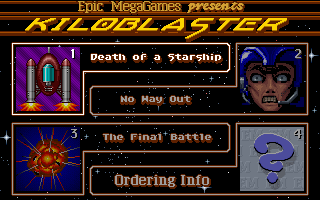
The shareware model divides Kiloblaster into three episodes. The free first episode establishes the core conflict and challenges you to master the basic arsenal. Purchasing the next two episodes unlocks additional levels and boss battles, with each episode designed to ramp up the stakes. While there isn’t a sprawling storyline tying everything together with cutscenes and dialogue, the episodic structure offers a meaningful sense of progression as you push deeper into enemy territory.
In place of a novel-length plot, Kiloblaster relies on in-game text prompts and brief mission intros to set the stage. These snippets provide just enough context to explain why you’re blasting fruit-throwing invaders and what your ultimate objective is, without ever pulling you away from the action. For fans of arcade shooters, this streamlined narrative often feels ideal—it’s quick, unobtrusive, and keeps the pace brisk.
Overall Experience
Kiloblaster strikes a fine balance between homage and innovation. Its core gameplay loop—a frenetic blend of shooting, dodging, and power-up management—never feels stale across the first free episode. The shareware distribution means you can sample the action with no upfront cost, and the ability to upgrade seamlessly to the full game ensures that your momentum isn’t lost if you decide to purchase.
Technically, the game shines with solid joystick support, enhanced VGA visuals, and Sound Blaster audio that elevates those laser zap and explosion effects. Controls are tight, the difficulty curve is fair, and the fruit-themed power-ups add a whimsical twist that helps Kiloblaster stand out from its peers. Occasional repetitive enemy patterns may feel familiar to dedicated shooter veterans, but newcomers will appreciate the straightforward challenge.
Ultimately, Kiloblaster delivers a compelling package for fans of retro-style shooters seeking a quick pick-up-and-play experience with modern polish. The lack of an intricate story is offset by the pure thrill of nonstop action. Try the free episode to see if the fruit-filled carnage hooks you—if it does, unlocking the full two episodes will be a worthwhile investment for any shooter enthusiast.


Reviews
There are no reviews yet.