 Retro Replay Retro Replay gaming reviews, news, emulation, geek stuff and more!



Retro Replay Review
Gameplay
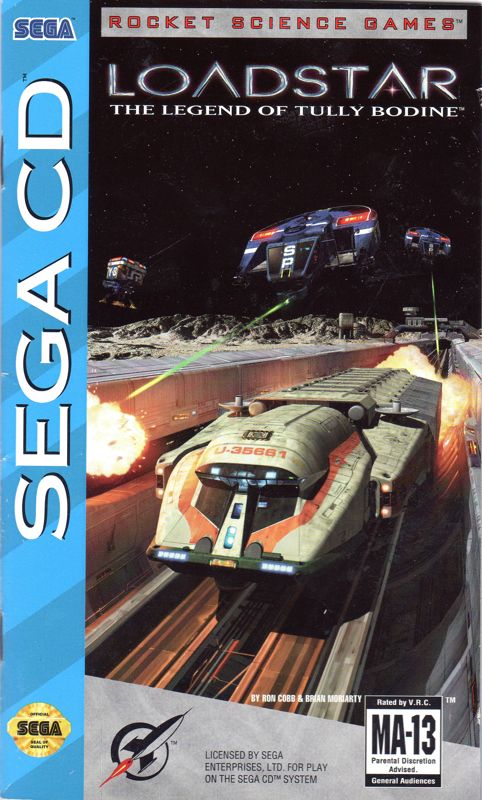
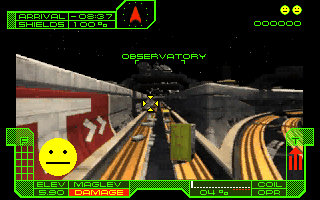
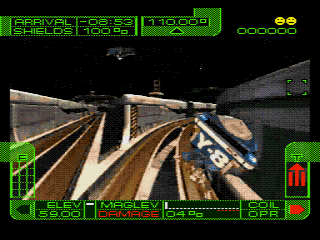
Loadstar: The Legend of Tully Bodine places you firmly on rails as you pilot a hybrid truck–train across the moon’s magnetic track network, blending high-speed chases with on-the-fly shooting challenges. Your main objective is to navigate treacherous routes while fending off robotic cops, mines, and other obstacles that stand between you and your destination. The game’s cursor-based control scheme lets you switch tracks by pushing the cursor to the screen edges, offering split-second decisions that can either keep you on course or send you careening into disaster.
(HEY YOU!! We hope you enjoy! We try not to run ads. So basically, this is a very expensive hobby running this site. Please consider joining us for updates, forums, and more. Network w/ us to make some cash or friends while retro gaming, and you can win some free retro games for posting. Okay, carry on 👍)
Combat in Loadstar revolves around a “tag-and-explode” mechanic: you paint enemies with your weapons, marking them for imminent destruction, while a secondary shield button can capture and reflect incoming shots back at your attackers. This interplay between offense and defense keeps encounters fresh, forcing you to juggle aggressive tagging with strategic deflections. The responsiveness of the aiming reticle and the pace of enemy waves combine to create a tense, adrenaline-fueled atmosphere reminiscent of other FMV rail shooters like Sewer Shark.
The game is structured into three major levels, each representing a leg of your escape route. Between these stages, you’ll encounter abrupt obstacles—such as sudden track closures, detour signs, and environmental hazards—that test both your reaction time and memory of the map layouts. Getting the wrong turn not only sets you back but can also instantly kill you if you’re unlucky, emphasizing precision and familiarity over trial-and-error.
While the core mechanics are straightforward, Loadstar doesn’t pull punches when it comes to difficulty. The pacing never lets up: just as you clear one gauntlet of enemies, you’re thrown straight into the next, with limited room for error. Veteran rail-shooter fans will appreciate the challenge, though newcomers may find the steep learning curve daunting at first. Thankfully, the game’s built-in direction indicators and distant landmarks provide subtle guidance, helping you stay on the optimal path even during the most hectic firefights.
Graphics
Loadstar’s visuals are a showcase of early ’90s multimedia ambition, combining full-motion video (FMV) backgrounds with live-action cutscenes and digitized sprites. The on-rails environments—ranging from dusty moon bases to industrial mining shafts—are rendered in pre-recorded video loops that play beneath your aiming reticle. While the resolution and color palette may feel dated by modern standards, they still convey a gritty sci-fi aesthetic that suits the game’s futuristic cargo-smuggling premise.
Enemy designs are colorful and varied, from rolling drone turrets to larger mechanized enforcers, each exploding in showers of pixelated sparks when tagged. The explosion effects, although simplistic by today’s measures, carry a satisfying weight thanks to well-timed animation frames and accompanying sound cues. Track-side details—such as warning signs, energy barriers, and sporadic debris—add visual interest and serve as gameplay signals, alerting you to upcoming hazards or route changes.
FMV cutscenes starring Barry Primus and Ned Beatty introduce and conclude each level, blending live-action drama with the game’s digitized world. These sequences vary in production quality: some shots feel surprisingly well-lit and composed, while others suffer from grainy compression artifacts common to the era. Nevertheless, they effectively break up the gameplay, providing narrative context and heightening the stakes of your moon-bound mission.
On balance, Loadstar’s graphical presentation may not hold up to contemporary titles, but it remains an impressive technical achievement for its time. The fusion of video playback with interactive shooting sequences still carries a certain novelty, and the game’s color choices—muted greys, industrial oranges, and cobalt blues—reinforce its lunar-industrial vibe.
Story
The narrative of Loadstar casts you as Tully Bodine, a freight driver on the run after a deal goes south, carrying a mysterious cargo that everyone from criminal syndicates to lunar law enforcement wants to claim. Your only means of escape is the eponymous Loadstar, a specialized rail-truck built for navigating the moon’s perilous tracks. The plot unfolds primarily through FMV cutscenes, in which Bodine negotiates bribes, dodges interrogations, and tries to outsmart both his pursuers and his own shady employers.
Barry Primus delivers a gritty performance as Tully, balancing roguish charm with moments of genuine tension, while Ned Beatty pops up in a supporting role that adds gravitas to the shady dealings. The dialogue occasionally veers into melodrama—complete with clipped one-liners and expository monologues—but that campy edge enhances the game’s pulpy, sci-fi-noir flavor. Viewing these segments feels like watching a straight-to-video thriller, which fans of cult cinema may find endearingly nostalgic.
Despite its somewhat linear structure, the story manages to inject stakes into each level transition. When Bodine’s voice cuts in to comment on a track closure or a sniper ambush, it reinforces the sense that you’re part of a larger manhunt rather than simply shooting through identical corridors. However, players expecting deep character development may find the narrative a bit thin—Loadstar is very much a gameplay-first experience, using story as window dressing rather than its driving force.
Overall Experience
Loadstar: The Legend of Tully Bodine is a distinctive relic of the FMV rail-shooter era, offering a high-octane blend of quick reflex challenges, cinematic flair, and campy sci-fi drama. Its unique track-switching mechanic and tag-based combat system set it apart from more straightforward shooters, rewarding players who can memorize routes and maintain composure under fire. While the learning curve can be steep, mastering each level’s layout and hazards provides a tangible sense of accomplishment.
Nostalgia plays a big role in Loadstar’s enduring appeal. Modern gamers may bristle at the limited interactivity, the occasional abrupt difficulty spikes, and the blocky video quality, but there’s no denying the charm of this moon-bound joyride. As a time capsule of early ’90s multimedia ambition, it’s a must-play for enthusiasts of rail shooters and FMV-driven adventures.
Ultimately, Loadstar is best experienced with an open mind and a willingness to embrace its period-specific quirks. If you’re intrigued by live-action cutscenes, inventive on-rails combat, and a dash of cheesy sci-fi storytelling, Tully Bodine’s daring escape is well worth the ticket price. For everyone else, it remains a fascinating, if occasionally flawed, milestone in interactive entertainment history.



Reviews
There are no reviews yet.