 Retro Replay Retro Replay gaming reviews, news, emulation, geek stuff and more!

Retro Replay Review
Gameplay
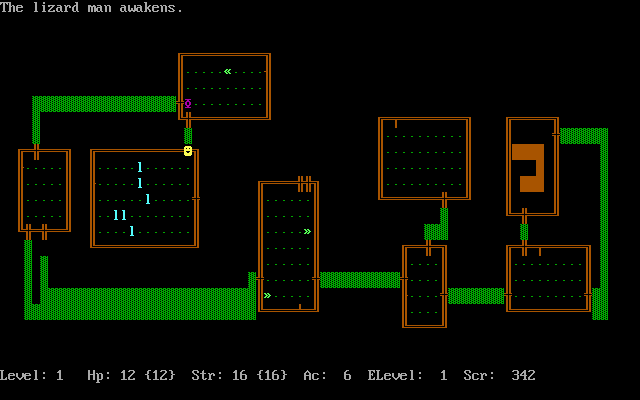
MAG offers a classic rogue-like experience where every descent into the dungeon feels fresh and unpredictable. With over 20 levels of randomized maps, players never quite know what lies around the next corner—be it a hidden trapdoor, twisting labyrinth segment, or room filled with animated vine traps. The procedural generation ensures that no two playthroughs are identical, giving the game high replay value.
(HEY YOU!! We hope you enjoy! We try not to run ads. So basically, this is a very expensive hobby running this site. Please consider joining us for updates, forums, and more. Network w/ us to make some cash or friends while retro gaming, and you can win some free retro games for posting. Okay, carry on 👍)
Combat and exploration mechanics are straightforward but satisfying. You’ll navigate narrow corridors lit by tossable torches, carefully watching your steps to avoid pools of noxious vomit or spring-loaded labyrinth traps that can turn a cautious advance into a mad dash for survival. Encounters with the Imperial Dragons’ minions require strategic use of limited resources, forcing players to weigh risk versus reward at every turn.
Progression in MAG centers around resource management and skillful navigation rather than character-leveling systems common in modern RPGs. You must scavenge healing items, lantern oil, and makeshift weapons scattered throughout the dungeon. This minimalist approach enhances tension, as every torch you light or corner you clear leaves you wondering whether your supplies will be enough to reach the Sudbury Sapphire and claim victory.
Graphics
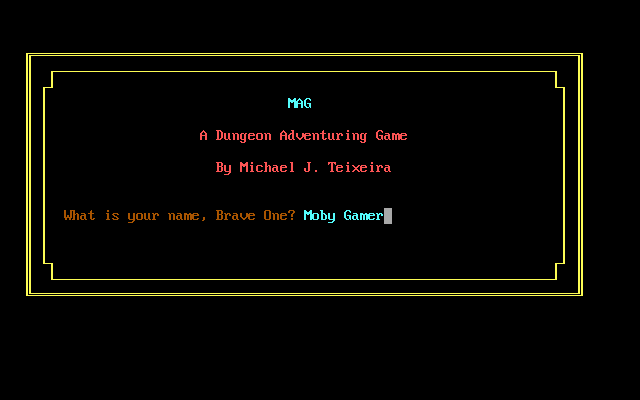
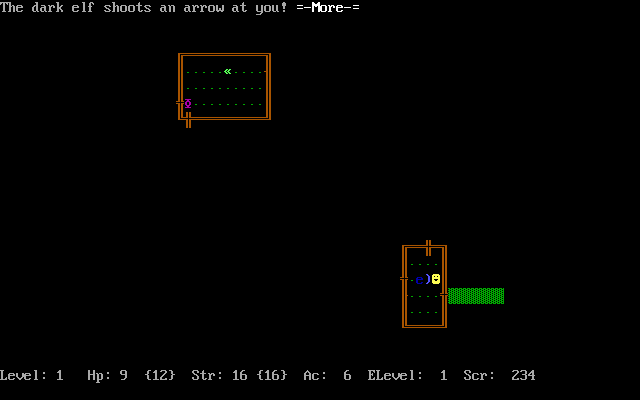
Graphically, MAG embraces its 1985 UNIX heritage with an ASCII art presentation that oozes retro charm. Every wall, trap, and creature is rendered in crisp, high-contrast text characters, creating an almost hypnotic, grid-based aesthetic. While it may lack modern polygonal models or high-resolution textures, its visual clarity is exceptional—each symbol conveys important tactical information at a glance.
The game’s use of simple animations—such as the gentle swaying of animated vines, the flicker of torches on stone walls, or the bubbling ripples in foul-smelling pools—breathes life into the monochrome display. These touches add atmosphere and tension, making you pause when you hear that telltale vine rustle or see a torch’s flame dance. Even the pool of vomit, humorously rendered with tilde characters, serves as both a visual cue and a reminder of the dungeon’s horrors.
For players accustomed to modern graphical spectacles, MAG’s presentation may feel austere at first. However, its minimalism is a deliberate design choice that focuses your attention on exploration and tactical decision-making. The stark, abstract visuals also evoke a sense of mystery, encouraging you to fill in narrative gaps with your own imagination.
Story
At its core, MAG tells the timeless tale of an intrepid adventurer on a quest to recover the legendary Sudbury Sapphire—an artifact coveted by an ancient order of Imperial Dragons. While the narrative framework is minimalist, it provides enough context to motivate each plunge into the labyrinthine depths. The concise backstory allows players to project themselves into the role of a daring treasure-seeker facing formidable, draconic foes.
The sense of lore in MAG unfolds organically through environmental details and sparse textual descriptions. A tattered parchment hinting at the sapphire’s magical properties, scorch marks on dungeon walls suggesting past dragon battles, and the occasional cryptic warning scrawled in ASCII glyphs all contribute to a rich, albeit subtle, narrative tapestry. This approach encourages exploration and speculation, letting you piece together the legend of the Imperial Dragons on your own.
Despite its minimalist storytelling, MAG achieves emotional stakes through gameplay tension. Each narrow corridor or trap-laden chamber becomes part of your personal saga—a chapter in a larger epic of greed, danger, and cunning. The lack of cutscenes or voiced dialogue never feels like a limitation; rather, it reinforces the game’s old-school roots and invites you to become the hero of your own ASCII adventure.
Overall Experience
Playing MAG is like rediscovering a long-lost relic from gaming’s early days: it’s rough around the edges but brimming with character. Its challenging difficulty curve and unforgiving traps will frustrate newcomers, yet those willing to learn its mechanics will find deep satisfaction in outsmarting the dungeon’s many hazards. The joy of lighting a dark corridor or narrowly escaping an animated vine trap never grows old.
MAG’s combination of simple resource management, procedurally generated levels, and atmospheric ASCII graphics creates a uniquely immersive experience. It rewards careful observation and strategic decision-making rather than button-mashing or grinding. For fans of classic rogue-likes and retro gaming aficionados, MAG provides a pure form of dungeon-crawling that prioritizes mood and challenge over spectacle.
Originally developed in 1985 for UNIX, MAG has stood the test of time thanks to its timeless design philosophy. While modern titles may boast richer graphics and more elaborate stories, rarely do they capture the same sense of emergent narrative and minimalist elegance. If you’re seeking a challenging, nostalgia-tinged adventure that puts gameplay and atmosphere front and center, MAG is a must-see for any serious dungeon explorer.



Reviews
There are no reviews yet.