 Retro Replay Retro Replay gaming reviews, news, emulation, geek stuff and more!
Retro Replay Review
Gameplay
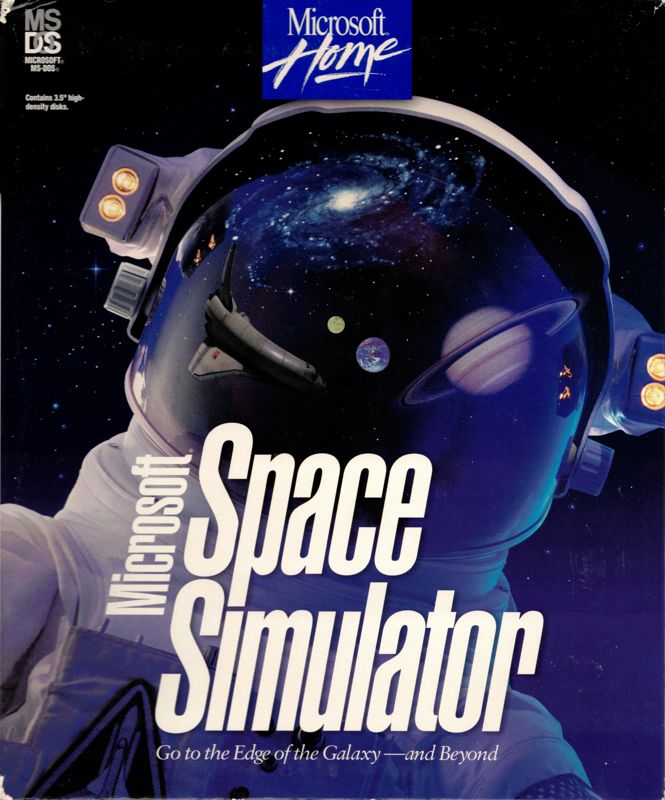
Microsoft Space Simulator builds on the pedigree of the Flight Simulator series by delivering an impressively realistic and highly customizable spaceflight experience. From the moment you launch the game, you’re presented with a suite of options: pick your vessel, set your departure point in the solar system (or beyond), and choose between manual piloting or letting the autopilot guide you. The inclusion of a programmable flight computer means you can script complex maneuvers in advance, freeing you to sit back and admire the stars—or intervene when things go off course.
(HEY YOU!! We hope you enjoy! We try not to run ads. So basically, this is a very expensive hobby running this site. Please consider joining us for updates, forums, and more. Network w/ us to make some cash or friends while retro gaming, and you can win some free retro games for posting. Okay, carry on 👍)
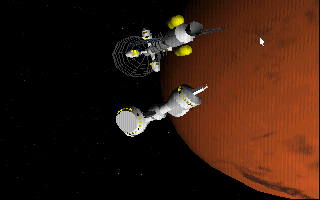
The variety of spacecraft at your disposal ranges from the nimble Manned Maneuvering Unit (MMU), perfect for EVA-style exploration, to the gargantuan Zander Freighter ideal for heavy hauling and cargo runs. Each craft has its own flight characteristics, mass, and thruster configuration, so mastering them takes practice. You’ll learn to manage fuel consumption, carefully plan orbital insertions, and adjust for gravitational pulls. This depth ensures every ascent, transfer burn, and docking maneuver is a satisfying puzzle to solve.
For players who crave structure, nine special missions showcase the simulator’s versatility. These scenarios—such as intercepting a rogue comet or delivering supplies to an orbiting research station—serve both as guided tutorials and standalone challenges. And if you want to dive deeper, extensive configuration menus let you tweak physics fidelity, instrument realism, and environmental effects. The learning curve is steep, but once you grasp the basics of orbital mechanics, the universe truly becomes your playground.
Graphics
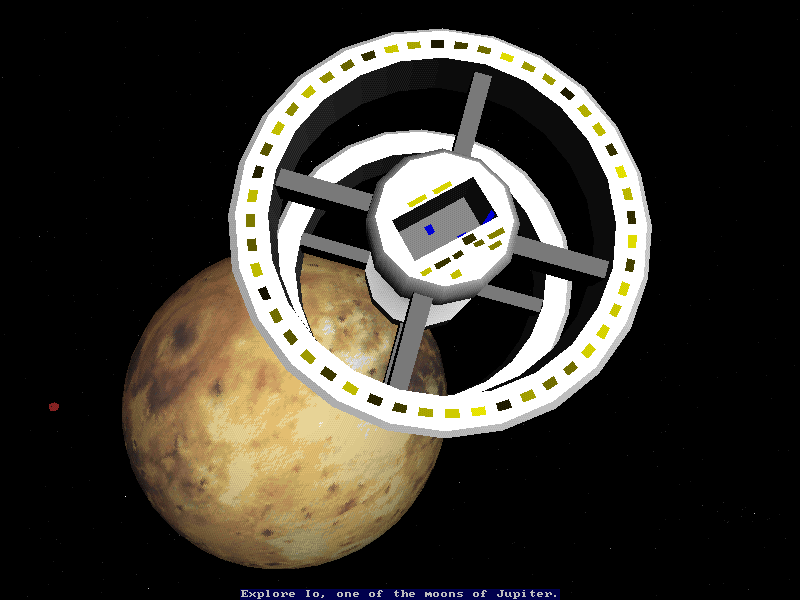
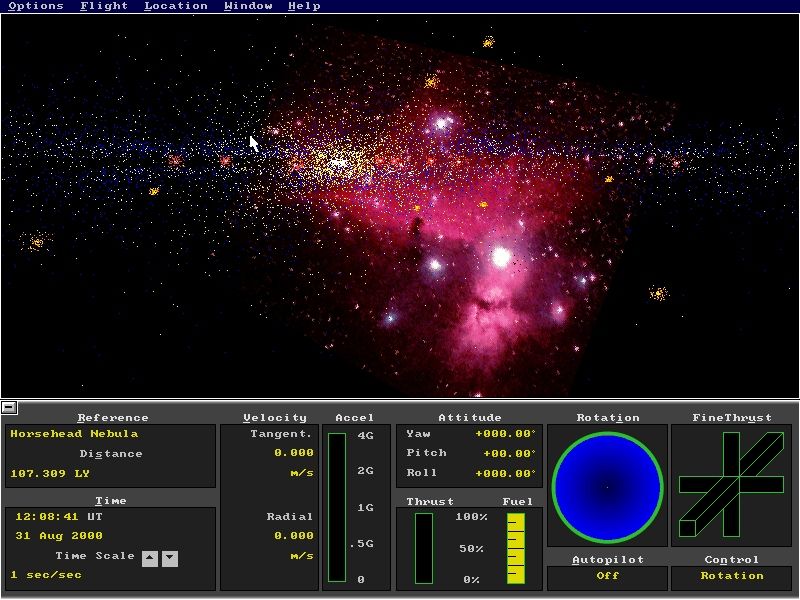
At a time when SVGA was cutting-edge, Space Simulator made full use of Gouraud-shaded 3D models and offered resolutions up to 800×600 at 8-bit color. Planetary surfaces, spacecraft cockpits, and instrument panels are rendered with surprising detail, giving you genuine A-to-B orientation cues during flight. Even the floating array of numerical readouts and graphical nav displays feel like real hardware.
Textures on celestial bodies—craters on the Moon, the swirling storms of Jupiter, or the icy jets of Enceladus—strike a balance between visual clarity and performance. When you zoom out, distant planets bleed into the backdrop of stars with subtle color grading, helping to convey the vastness of space. Nebulae appear as soft, multicolored clouds, while distant galaxies glow faintly, inviting you to chart courses beyond the mapped systems.
Performance on period-appropriate hardware remains smooth, even when exploring dense asteroid fields or executing complex orbital transfers. The HUD options let you toggle overlays, instrument readouts, and target markers, creating a clean or data-rich view depending on your preference. For anyone who appreciates the retro charm of early SVGA graphics combined with true 3D shading, Space Simulator still holds up remarkably well.
Story
Unlike many modern titles, Microsoft Space Simulator doesn’t follow a traditional narrative arc with characters or cutscenes. Instead, it offers nine mission briefs that provide context—rescue an unmanned probe, rendezvous with a research satellite, or tow a wayward asteroid. Each assignment reads like a dispatch from mission control, giving you just enough background to feel invested in the outcome.
The lack of a linear storyline is intentional: the simulator is a sandbox first and foremost. You chart your own course, record flight logs, and craft emergent tales of triumph or close-call disasters. Over time, players often develop personal “campaigns,” such as establishing a network of waystations or mapping uncharted star systems. These self-directed objectives become the de facto story.
Special missions introduce narrative flavor through audio cues and timeline pressures, but the real drama unfolds in your cockpit. Whether you’re racing against a dropping oxygen supply or tweaking your flight plan to skim a planetary ring, each session tells its own tale. The story lives in your decisions, your mistakes, and the breathtaking vistas you uncover.
Overall Experience
Microsoft Space Simulator is a landmark title for simulation enthusiasts. It marries the technical rigor of Flight Simulator with the infinite frontier of space. The game demands patience and study—orbital mechanics can be unforgiving—but rewards persistence with some of the most authentic spaceflight available in its era. Casual players might find the learning curve daunting, yet the satisfaction of pulling off a textbook Hohmann transfer or docking at a space station is unparalleled.
The breadth of content—from full planetary systems to speculative star clusters, from EVA operations to freighter logistics—means there’s always something new to explore. Community-driven mission plans and configuration files further expand longevity, ensuring that even after days or weeks of play, fresh challenges emerge. The autopilot and preset courses help beginners ease in, while advanced users can toggle every detail for the ultimate hardcore sim experience.
In its blend of realism, scope, and customizability, Space Simulator stands as a testament to Microsoft’s simulation pedigree. While contemporary space games may offer flashier graphics or scripted narratives, few match the raw freedom and educational richness found here. For anyone intrigued by the mechanics of celestial travel and the awe of cosmic exploration, Microsoft Space Simulator remains an essential journey through the stars.


Reviews
There are no reviews yet.