 Retro Replay Retro Replay gaming reviews, news, emulation, geek stuff and more!
Retro Replay Review
Gameplay
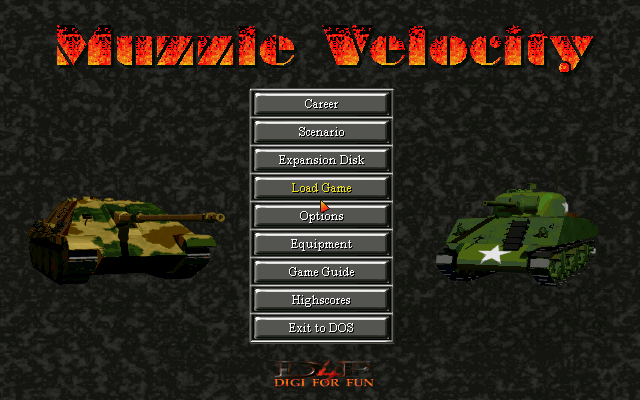
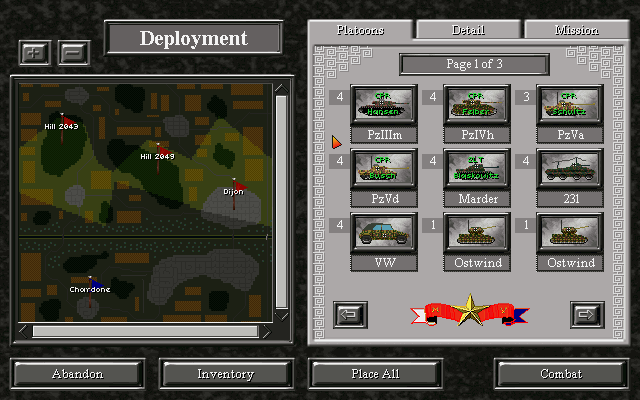
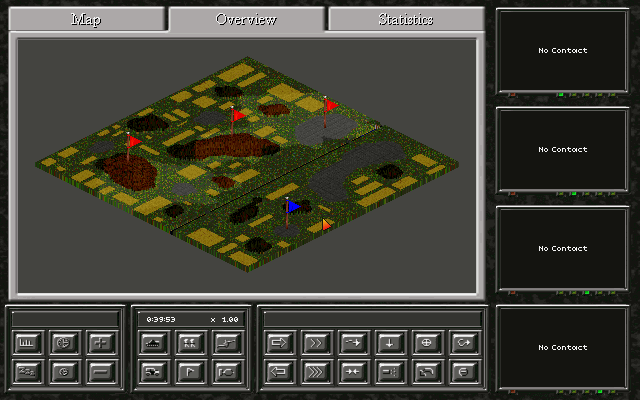
Muzzle Velocity masterfully combines high-level strategy with hands-on first-person combat. On the strategic map, you’ll allocate resources, choose unit compositions and determine placements for infantry, armor and artillery. Decisions made here directly affect battlefield outcomes, making each mission feel weighty—one wrong placement can cascade into a tactical defeat. From the start, the career mode gradually unlocks more extensive command options, so you’ll feel the steady progression of responsibility as you rise through the ranks.
(HEY YOU!! We hope you enjoy! We try not to run ads. So basically, this is a very expensive hobby running this site. Please consider joining us for updates, forums, and more. Network w/ us to make some cash or friends while retro gaming, and you can win some free retro games for posting. Okay, carry on 👍)
When you switch to the first-person view, the game shifts gears into a visceral action experience powered by voxel-based rendering. In these sequences you’re no longer an abstract commander but the soldier on the ground, aiming your weapon, taking cover and coordinating with AI squadmates. The seamless transition between strategic oversight and frontline engagement keeps gameplay fresh, and the duality of roles ensures both macro- and micro-managers can find something to love.
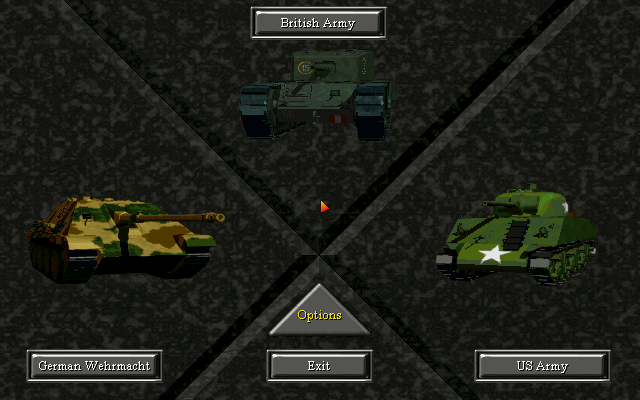
With 150 single-player missions spanning standalone scenarios and a deep career campaign, Muzzle Velocity provides considerable replayability. Players can choose from U.S., British or German forces, each with roughly 100 units that handle differently based on armor thickness, mobility and firepower. Although not every vehicle and soldier trait is exhaustively simulated, the variety is enough to keep tactics from becoming stale. Experimenting with different force compositions on the European front becomes a satisfying puzzle mission after mission.
Graphics
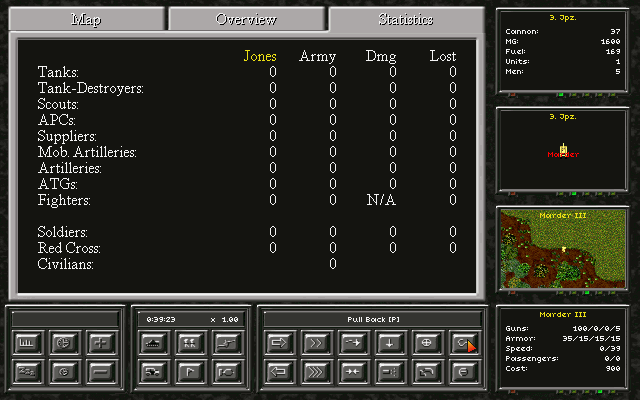
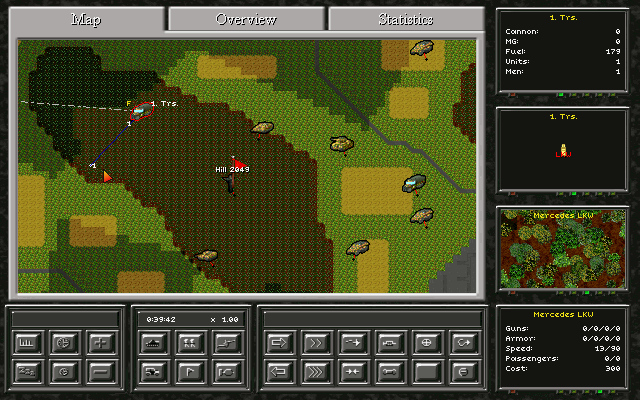
Visually, Muzzle Velocity employs a blend of classic 2D SVGA for its strategic map and cutting-edge (for its time) voxel technology for its 3D action sequences. On the overhead map, unit icons, terrain tiles and UI elements are crisp and clear, allowing for quick decision-making during tense strategic moments. The color palette is subdued, reflecting the grim reality of WW2, yet unit distinctions remain easy to read at a glance.
Switching to first-person segments, the voxel engine renders environments and units with blocky but surprisingly expressive detail. While polygonal titles have surpassed voxel graphics in subsequent years, these sequences still deliver a strong sense of depth and scale. Explosions, smoke and debris are particularly impressive, giving each firefight a gritty atmosphere that keeps you on edge.
Performance is smooth on period-appropriate hardware, with minimal slowdown even in large engagement zones. Camera transitions between the map view and FPS mode are seamless, further immersing you in both strategic and frontline perspectives. Though purists might find the voxel visuals dated, their charm and functional clarity make combat encounters engaging rather than eye-straining.
Story
Set on the European front of WW2, Muzzle Velocity doesn’t follow a single protagonist or scripted narrative cutscene but instead weaves its story through mission objectives and battlefield outcomes. Each scenario—be it storming a Normandy beachhead or defending a German supply line—carries its own context. Briefings and radio chatter set the scene, ensuring you always know the stakes before issuing orders or charging into battle.
The career mode builds an overarching arc as you progress from junior officer to seasoned commander, unlocking more advanced strategic options with each successful mission. This progression feels earned, and the rising tension—from small-scale skirmishes to full-blown offensives—makes your eventual triumphs all the more rewarding. While you won’t find individual character development, the cumulative effect of winning or losing battles gives you a personal stake in each outcome.
Muzzle Velocity also includes period-accurate details: historically modeled weapons, authentic unit names and real battlefield locations. Though the game doesn’t dive deep into the moral complexities of war, it respects the historical setting by portraying both sides’ capabilities fairly. As a result, players gain a broad appreciation for the tactical challenges faced by commanders on each front.
Overall Experience
Muzzle Velocity’s greatest strength lies in its fusion of strategic oversight and first-person immersion. Players who enjoy grand tactical planning will find satisfaction in managing unit placements and supply lines, while action seekers can drop to the frontlines and lead charges themselves. The dual gameplay loop rarely feels gimmicky—instead, it underscores how high-level decisions shape individual firefights.
Though some aspects feel dated by modern standards—particularly the voxel-based graphics and the absence of in-depth unit simulation—the core design remains compelling. The blend of 150 diverse missions, three major WW2 factions and a steadily escalating career mode ensures hours of engagement. Difficulty curves are well-balanced, so newcomers can learn the ropes before tackling the most complex operations.
For buyers seeking a unique hybrid of strategy and action set against an authentically-styled WW2 backdrop, Muzzle Velocity delivers a memorable experience. It may not satisfy those looking for a strictly narrative-driven campaign or cutting-edge visuals, but as a niche wargaming title with real hands-on combat, it stands out in its genre. Whether you prefer directing armies from above or storming bunkers on foot, this game offers a rewarding blend that keeps you returning to the front.


Reviews
There are no reviews yet.